An Inside Look at FitLogic—the Intelligence Engine Powering TriDot & RunDot


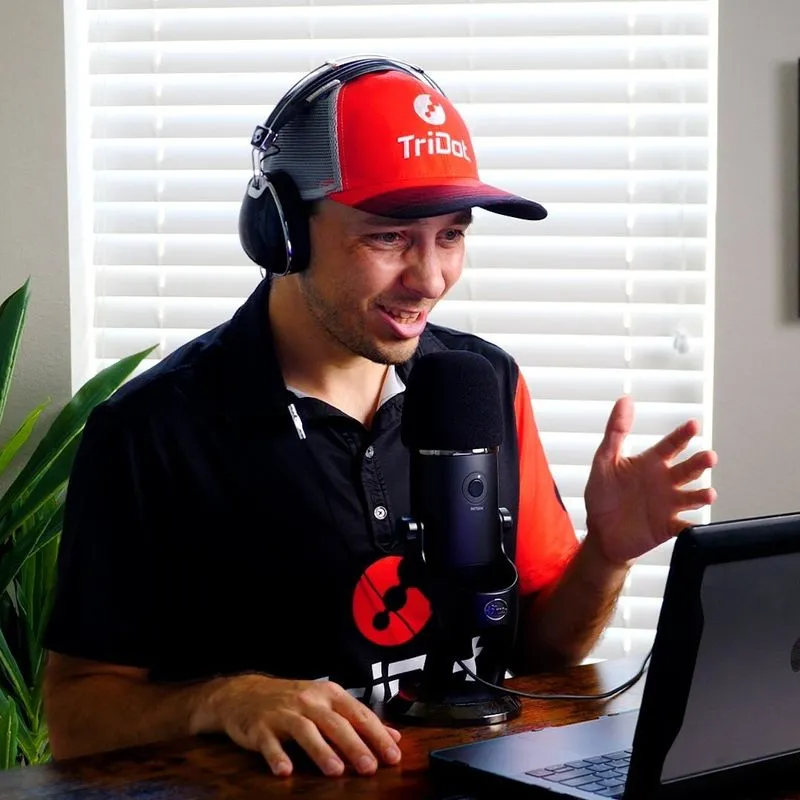
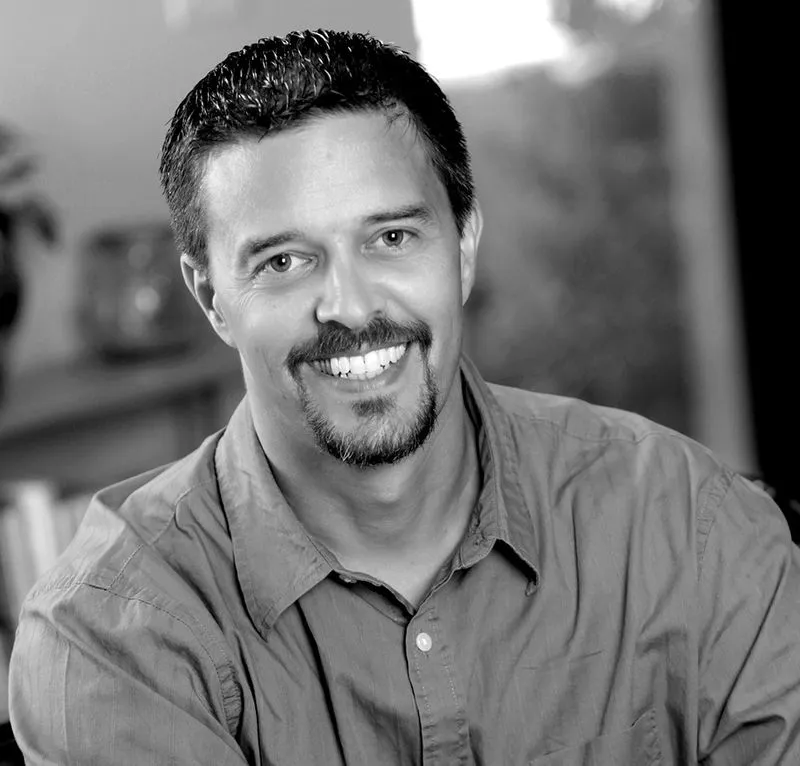
In this special TriDot and RunDot crossover episode, Andrew and Carrie are joined by Predictive Fitness CEO Jeff Booher. The three of them explore how TriDot and RunDot are revolutionizing training for triathletes and runners. Jeff shares his journey as both an athlete and coach; explaining how his own athletic ambitions inspired the tech breakthroughs that power TriDot & RunDot. Jeff explains the role AI plays in endurance training and breaks down the four phases of training design. We'll meet the purpose-built FitLogic Intelligence Engine that sets TriDot and RunDot apart from other "AI" training platforms; And learn more about the role of a human coach in the modern sporting landscape. Packed with insights and personal stories, this episode will leave you inspired and convinced that FitLogic, TriDot, and RunDot are game-changers in endurance training.
TriDot Podcast Episode 316
An Inside Look at FitLogic—the Intelligence Engine Powering TriDot & RunDot
Carrie Tollefson: Hey, everybody. Welcome to the show. I'm Carrie Tollefson, Olympian, broadcaster, and your guide to the world of RunDot.
Andrew Harley: And I'm Andrew, the Average Triathlete, host of the TriDot Podcast. Today, we've gathered our triathlete audience and our running audience, so that we can all learn more about how TriDot and RunDot use AI to optimize endurance sports training.
Carrie Tollefson: I'm super excited for our guest today. He is the one and only Jeff Booher. He's the founder and CEO of Predictive Fitness, the company behind TriDot and RunDot. And I can't wait to learn more about all of this—the TriDot and RunDot training, how it trains runners and triathletes.
Andrew Harley: We treat the show like any good workout. We're going to start off with our fun warmup question, settle into our main set conversation where we'll learn all about this from Jeff, and then we'll wind things down by having Jeff answer an audience question on the cooldown. Lots of good stuff. Let's get to it.
Intro: This is the TriDot Podcast, the triathlon show that brings you world class coaching with every conversation. Let's get started with today's warmup.
Carrie Tollefson: All right, the warm-up. Now, Jeff, some sports give their champions a trophy. Some give a belt, a ring, or a jacket. Some, like the Olympics, give a medal. There's even a sport where the champion receives his wife's weight in beer. For our warmup question today – not just for you, Jeff, but for you too, Andrew – across all the sports, what winner's award do you think is the coolest?
Jeff Booher: I don't know. There's a lot that are creative. I've seen a lot of funny stuff—small festivals in local towns, very local stuff. But I guess for a major, I think the Heisman Trophy is a really cool trophy, just because it's the actual pose. And so you can grab it and strike the Heisman, American football pose, stiff arming somebody. And I think that's pretty cool. I like it. It's kind of nostalgic, too. Kind of the old helmet, the way that football was played back in the day.
Carrie Tollefson: And I totally did that wrong. I did the bolt. It's like–
Andrew Harley: We're like dabbing over here.
Carrie Tollefson: Isn’t it like– what is it?
Jeff Booher: It's a stiff arm.
Carrie Tollefson: It’s not like that.
Jeff Booher: Yeah.
Carrie Tollefson: It’s a stiff arm. I went—I did both. I am so– my question or my answer is so nerdy, too. I'm just such a runner that I went to bolt and then—but mine is the laurel wreath. I think that it's so cool when any runner gets to wear the laurel wreath, and it doesn't happen very often. I think it's at the New York City Marathon, at the Olympics. When I was in Athens, they did that. But I also love—I don't know if you guys have seen it, the Houston Marathon. They'll put big cowboy hats on.
Andrew Harley: Yeah.
Carrie Tollefson: So at least they did it, I know for sure, at the Olympic trials, they had it. And it was so funny to see. I think Kara Goucher and Des Linden had theirs on, and they both had them on different. And anyway, those are the two I thought.
Andrew Harley: Carrie likes championship headwear, apparently. Championship headwear of any kind.
Carrie Tollefson: Yes, I do! What about you?
Andrew Harley: Jeff, just for our non-American audience, can you explain how a football player wins the Heisman?
Jeff Booher: It's just the most—I don't know. It's voting, I know, throughout the whole season.
Andrew Harley: It's college football. College football.
Jeff Booher: The most impactful player. It's typically a quarterback, running back – offensive, almost always. I don't know if it's exclusively. I know they have a Lombardi Award for the best defensive player of the year, but the Heisman Trophy is kind of the big one of every year.
Andrew Harley: Very, very good. My answer here, I want to say that the most recent award I won was this little trophy right here. You can't really see it, but there's a little iridescent tennis ball in there. Because I won a tennis tournament a few weekends ago, and my wife's like, they sent you a paperweight? And I was like, “No, this is a trophy, people. This is a legit trophy.”
Carrie Tollefson: I actually really like it, though. It's pretty.
Andrew Harley: Thank you, Carrie. Thank you. My answer here is the Stanley Cup in hockey. I love following hockey. I just follow pro sports in general, like a lot of sports fans do. But of all the trophies that teams get, or individuals get, the Stanley Cup is such a cool tradition. Where, just over the years, when a team wins the Stanley Cup in the NHL, every player on the team, their name gets engraved onto the cup. And your name goes on there forever. There's just that moment where every player gets to skate around the rink holding the Stanley Cup over their head. I'm not a hockey player. I've never played hockey. I can ice skate, barely, a little bit, but it's a cool sport to follow. Of all the trophies out there, and all the traditions with trophies, I don't know, the Stanley Cup is really cool. After a team wins the Stanley Cup, since there's only one trophy and the whole team shares it – I’m sure the trophy lives at the team’s headquarters all season – every player gets one day with the Stanley Cup, where they can do basically whatever they want to do. And you'll see on Instagram, oh, this player went to Disney World with his family, and they took the cup around Disney World. Anyway, it's always fun to see what the players do with their one day with the Cup. I thought that was a really cool tradition. We're going to throw this question—hey, Carrie, are you a hockey fan being in Minnesota?
Carrie Tollefson: I am. And actually the Stanley Cup has been to my kids' elementary school.
Andrew Harley: Really!
Carrie Tollefson: But you have to wear certain gloves, and you can't touch it. But because we have a partnership with the Wild, and they have the Stanley Cup, and they come and read with the kids, some of the players and people there. No, it's really cool. I haven't gotten to see a Stanley Cup, but the kids have. All three of my kids have.
Andrew Harley: Well, the Minnesota Wild and the Dallas Stars are in the same division, I think. So we're enemies, bitter enemies there, Carrie. We're going to throw this question out to our audience, so make sure you're following TriDot and RunDot on all the social medias. Our team's gonna put this question out to you to see what you have to say. If you're watching us on YouTube, or you’re watching us on Spotify, you can comment below, right here on this video. I go check those comments and see what you guys have to say. Of all the sports out there and all the different awards, or trophies, or belts, or headwear, or medals an athlete can win, what do you think is the coolest way to crown a sporting champion? Can't wait to see what you have to say.
Main set: Let's go.
Andrew Harley: Whether you are running with RunDot, or triathloning with TriDot, or neither but you're curious about endurance sports training, I'm excited to have Jeff Booher on a microphone today for us all to learn more about effective endurance sports training. Jeff, many of our longtime listeners will already know you pretty well, but for those that don't, let's just get to know you for a second. How did you get your start in endurance sports, and what has been maybe a few of your favorite experiences in your time as an athlete?
Jeff Booher: Well, I've always loved sports ever since I was a little kid. I’ve always been a runner. My dad ran. He did sports throughout his life. But I remember, even 5 and 6 years old, he'd go out for a long run in the panhandle of Texas and come back in the last mile, and I'd run with him around the block at five or six years old. I loved it. Great memories. I did 5Ks, 10Ks. I did all the sports in US sports: football, baseball, basketball, track, martial arts – everything that I could do. Loved it. And wasn't until 2002, actually, after I was out of the army as a young guy, I did a triathlon, and I just loved it. It was a local sprint triathlon. I think what drew me to it wasn't so much the endurance – that was a piece of it – I love the multi-sport aspect. I love the variety. I thought that was super cool. So I love that. Got hooked. And as far as favorite experiences, over the years, I've done four IRONMAN Distance, a lot of shorter ones – halves, and, olympics and sprints. But I really love doing it with my family there. We'll go on a vacation– we went to the Grand Canyon, we did Coeur d'Alene, Arizona IRONMAN. So that was a great recovery. That was probably the best experience. I worked with the guy that arranged after the race, we got a limo from the visitors bureau there in Sonoma, and they took us in a limo to all do wine tasting and set us up really nice. That was a recovery day I'll never forget.
Carrie Tollefson: When was that one?
Jeff Booher: That was like 2008, 2009, somewhere in there.
Carrie Tollefson: Charlie did that one. They don't have it anymore, right?
Jeff Booher: Right. It became Santa Rosa 70.3, and they had a Full as well, for just a few years. But it was before IRONMAN bought it, so it was only like 800 to 1,000 people did the race, but it was, man—
Andrew Harley: 800,000?
Carrie Tollefson: 800 to a thousand.
Andrew Harley: 800 to a thousand, yes. Sorry.
Jeff Booher: Yeah.
Carrie Tollefson: Can you imagine swimming with 800,000 people, Jeff?
Jeff Booher: Yeah, that’s big.
Carrie Tollefson: Well, along the way though, you weren't only just an athlete. Like you became a coach, and you, kind of, got every certification you could possibly think of. So talk us through that a little bit. And then how did you transition to TriDot and RunDot?
Jeff Booher: Yeah, I've always loved helping people, coaching in the army. In college, I was a trainer. I'd lift and train. I was a captain briefly, and I loved helping others learn. So I was kind of a personal trainer back then with weights. In the army, they'd bring me all the guys that had trouble running – running faster, meeting standard – and I just loved doing that. When I did my first triathlon – actually what led to trying it, was really a selfish, more selfish, start. I did the sport, loved it, but I was very competitive. I met with a couple guys who were on the podium, they're winning, and they started telling me, “Oh, you gotta train 25-30 hours a week, and you're gonna get injured,” and all this stuff. I'm like, this is not a contact sport. Why are people getting injured? And I said, I have three kids, young kids, and wife and career. I'm not training that much. So it was really, how do I become more efficient? I want to win and improve, but I don't want to train as much as everyone's training. That kind of set me on a quest to become a student of the sport and really learn. When I started researching– I got certified USA triathlon, track and field, cycling, and read every book I could get back then as VHS, you could buy that and watch the program. Subscribed to everything that I could for a number of years. I used my local training group as guinea pigs because I found that there’s a lot of people that talked about data-driven training. Smartwatches just came out about 2003. Power meters. Price was coming down; they were becoming more constant. People were saying data-driven, but they were just looking at the data that agreed with their philosophy. And I was reading books and seeing these video series that had coaches and world champion athletes. They're brilliant people, but they're saying things that were very different. How can they both be data-driven, yet be so diverse? That’s what set me on a quest to learn, and to capture data, and to be very methodical. That group of people that I was writing training plans for grew from dozens, over the next several years, about 2008/09, to several hundred. The universal problem was people wanted better results in less time with fewer injuries. They were time starved, and they were an executive or parent with young kids. “I don’t have time, but I want to improve. I want to keep getting better. I want to scratch the competitive itch, or I just want to conquer a goal. I want to train for an IRONMAN, but I don't want to spend that much time. I need it to be approachable and doable for me, and I don’t want to get injured.” So better results, less time, fewer injuries. It led to that point. I realized along the way – as I was learning and innovating, and abstracting data, and creating different frameworks for how to make it more custom for people – that there’s a real value that I could deliver value not only to coaches, but to athletes– or to athletes, but to coaches. We started TriDot in late 2009, and I pushed about 13 or 14 professional triathletes, and five of those became the very first five coaches. So when we started, we didn't have an uncoached option. It was coaching from the start. It wasn’t several years until, seven years after that, that we added a non-coach subscription where someone could come just get the training plan without working directly with a coach. That was after learning about, in triathlons, about 85% of the market does not hire a coach. Running, it's 92–93% of the market doesn’t hire a coach. They just don’t do it. So you have all those people that are getting injured, spending too much time, not doing as well as they could. And when you translate that, they're not just spending too much time training, but they're missing time with the family, they're taking time away from work, they're doing stuff that's leading them to injuries that are unnecessary, just because they're not doing the right thing when they're training. I think that the number one decision any runner or triathlete makes about the sport is how they spend their training time. That's the one most consequential thing. How much time you spend means how much time you're spending away from other things, how often you get injured, how much you enjoy it, how much you improve. All those things are driven to how you spend your training time. And so my vision was, I wanted this technology, the system, the engine that was built behind it, that later became FitLogic, the intelligence engine. And just put that out there, not with my name on it. It's not my philosophy, it's not my approach—we go where the data goes. But put that in the hands of coaches and athletes, so they can do that – they can get better results in less time with fewer injuries.
Carrie Tollefson: Okay, so I am not this techie gal, really. It took me a long time even to just let Strava have my training. I like to write it down. But—and I know that there's tons of TriDot episodes at the TriDot Podcast, there with Andrew, but we've done a few starting this–
Andrew Harley: We've done a few. We’ve done a few.
Carrie: Yeah, 300 or so, right? And this is just the second RunDot Podcast. So I need you to help me, Jeff. Even AI, I'm just starting to use ChatGPT. I'm trying to use it a little bit for my research, when I'm doing commentary and things like that, but I still don't fully trust it because I still want to go and triple check everything. So you talked a little bit about this engine. It's a FitLogic intelligent engine. Is that AI? Did you build that? You kind of touched on it a little bit. But explain to me – the person that has always just gotten almost, like, a sheet of paper from a coach every Sunday and said, “This is what you're going to do, Monday to Sunday.”
Jeff Booher: Yeah. So AI—it is very broad– and when you're describing technology, AI, anything, it's not like a product that you can point to and see features and touch. I want to try to paint word pictures here. I use some analogies to walk through, make some comparisons, so we can understand it. The first thing is that the FitLogic, like you mentioned, that's the engine. It's a training intelligence engine that powers RunDot and TriDot, and soon VeloDot for cycling. But not all AI is the same. So it is AI. It uses AI, but it uses data science and other things that are technically not AI. It's science and different things with the data. Think of it like the word ‘vehicle’. Vehicle is a means of transportation. A cycle vehicle is a road bike. You’re riding a trek. But a vehicle is also a Tesla. When you're comparing which is better, a Trek or a Tesla, well, they’re two different categories. They're both vehicles. Or sometimes people say TriDot is the most advanced AI training app out there. That's like saying Quintana Roo is a much more advanced bicycle than- or Tesla is a much more advanced bicycle than Trek. They're different categories. It’s not an advancement. They’re completely different. They work differently. They're built for different purposes. The technology is different. Understanding and demystifying AI is important when you're comparing one AI-powered app to another AI-powered app, because the powering, the thing that’s doing the powering, can be those different categories. But also, like you said, how do you trust it? When you’re comparing AI apps to human design, the training, how can you trust that? How does one type of AI, compare to what a human would do, compared to what another? So it’s important – app to app – to understand the categories, but also, different categories have different relation to how you say, “Is that better than human, as good as human?” Some AI is built to mimic a human, others is to do more than a human can do. So, first of all, AI is not new. It's been around for 60-plus years. In the 60s. I was designing neural network models 33-34 years ago in college. It's been around a long time.
Carrie Tollefson: Really?
Jeff Booher: What's new is the processing power and cloud computing, which has made it possible to do it at scale, real-time. So that’s where you see this boom. Most people, when they think of AI, they think of ChatGPT, all of the different open or other large language models, LLMs. If you’ve ever heard that ‘LLM’ abbreviation, it’s large language models. Those are not new. They’ve been around since the 80s. People have been working on the science and technology to discover the patterns in language, looking at all this content on the internet— learn the relationships between words, and sentiment, and what's a question, and what’s a joke, and what's sarcasm – how do you interpret all of these things so you can generate, translate, and comprehend language. So language, LLMs, ChatGPT, that’s not what FitLogic is. That’s not our type. That's like a Trek. That’s the bicycle. It's learning from technology about training. It’s not from the training, it’s learning from internet text about training. So that kind of LLM, those kinds of applications, AI-powered apps, they’re automating a template, or they’re automating someone’s philosophies, or are trained on internet text, in general, about training. So that’s not–
Andrew Harley: And we know how reliable all corners of the Internet are, Jeff.
Jeff Booher: Correct. And that's where you get the garbage in, garbage out. If they're trained on good data, it's better, and bad data it's not. However, they're not trained on training data. They're trained on training philosophy or training text. Our FitLogic is a purpose-built intelligence engine. So it's trained on more than 20 years of training and race data, specifically for triathletes. It's trained for this purpose. It's a one-of-a-kind application. So I think a better analogy, other than ChatGPT, you know there are, we talked about all the different kinds of AI. Your autocorrect on your phone is AI. It's created for that purpose. That's more of a chatbot. Think of it more like a flight control system in an airplane, okay? That flight control system is AI, is learning stuff. A human would be able to fly a plane based on what they can see in the daytime, clear weather, but they'd be limited to that. But with a flight control system that the pilots have access to, that can fly, can look over the horizon for a weather system that you can't even see with your eye, but knows to deviate, you can tell if you're in a headwind, or a side wind, at night, or you're not going to run to the side of a mountain because it's bad weather at nighttime. It’s doing all of those thing, so it's more than what a pilot can do on their own. So it augments their ability. It can handle all of those other—take in all of that data that a human being can't. It's not just trained on-- it's not an LLM trained on books about how to fly. It’s actually taking in data uniquely, that a human can't be processing it so fast and be able to fly the plane. In the scenario where we’re training, we’re looking at your training, generally, from the texts about training, you know some generalities about training, training principles, that’s great. After that, I look at, well, how much do I train? Am I training enough, not enough? And how much quality am I doing? What should that quality look like? How many sets? How much reps should I do? How much residual training stress am I carrying? What if I’m older? What if I’m 55, 60? How should that training be different? But what if I’m 60, but I’m a really good athlete and I’ve been doing it 20 years? What if I’m a heavier athlete? What if I’m outside, and it’s really hot versus cool? All of these different things come into the cloud, so directionally, like, yeah, older, you’re going to be able to take less training stress and need more recovery. But specifically, how much? And then when you inject all of these different unknowns, it’s just impossible for a person to take in that data, so all that data just gets ignored. So it's like there is the engine, you don't have to be an expert at everything in there. You need to understand that it's happening and what it does. You need to know what the categories are. It's like in an airplane, I'll maybe wrap it up with this. In an airplane, if you're sitting in the seat and you look down the aisle and you see a cockpit door, you don't need to know what that flight management system is doing, but you want it to be there. If the pilot came out, came on the loudspeaker, and says, “Hey guys, I'm turning off the flight management system. I've been doing this 30 years. I have a PhD in aviation. I got this.” You'd want to get off the plane. So you may not know all that's happened, but you understand what it does, and you understand it does more than what you can do, and you want it there. You want the pilot there, too. But I think that level of knowledge, understanding, is really important to understand how FitLogic works, how it turns data into actual intelligence, and it actually uses it when it's designing your training programs.
Carrie Tollefson: Does it look at your Garmin or your Apple Watch now, too, and read your biomarkers, and things like that, and then shift things if need be?
Jeff Booher: Absolutely. So it takes in your data. It takes in a lot of information when you onboard. Maybe we can walk through that in a couple minutes, just specifically. It takes in your data from all the different devices. It takes in the weather around you, and it analyzes it after your workout, before your workout--
Carrie Tollefson: So cool.
Jeff Booher: --prescriptively changes it. If you're working out in the morning and it's 50 degrees, and then you say, “I don't want to work out in the morning, let's go in the afternoon when it's 90,” it's going to change your paces and your intensities, so that it's appropriate for your environment. So it's just hypersensitive, adaptive to the actual person and their environment.
Carrie Tollefson: That's really neat.
Andrew Harley: Carrie, before I was training with TriDot myself, I had a Strava account. And I loved going out for a run or going out for a bike session, and then you're jumping on Strava and seeing all these graphs of what I did in that session. And it's fun to see the graphs. But then as an athlete, what do I even do with that information? What does any of it mean? It's cool to see and it's cool, they'll tell you your fitness is going up, and up, and up, and really, it's just—no, I've just worked out more, and so you're equating that to increased fitness. And when I started training with TriDot, after a year or so, it was like, the only reason I even kept Strava was just so I could see what my friends were up to. Because TriDot was actually taking all those pretty graphs and the data that was coming in from my Garmin watch, and from my other devices, and it was giving a meaningful—“Hey, we saw how your training went this week. Here's what you should do next week.” Okay, cool, thank you TriDot. Now we go do the session. Jeff, you said something, like, talking about ChatGPT, because I think a lot of people equate AI to something like ChatGPT. And I've seen coaches in the marketplace, almost as this ‘gotcha’, like, “Oh, you don't need an AI tool for your training, because I asked ChatGPT, what should a triathlete do for their training, and it said this, this and this. Look at how ridiculous this is.” And I'm like, okay, one, that's not a ‘gotcha’ because that's not what we're doing. What we're doing is a whole lot deeper than that, and you just expound on that a little bit. But there's a lot of confusion there, because people equate that. So just, let's unpack more about what our AI, FitLogic, actually does in relation to endurance training, both for RunDot and TriDot training. They're powered by FitLogic. So what does the FitLogic intelligence engine actually do behind the scenes to optimize our training?
Jeff Booher: Awesome. Perfect question. And that's exactly right. I think a lot of those types of posts, one, is they're not informed about what it is. They don't know the difference. And that shows you they don't know the difference between ChatGPT and something that's purpose-built, proprietary for that topic. I mean, it's the same as the pilot using ChatGPT for, “How do I get from here to Madrid?” And it's not what it's built for. And that's another thing. People look at it and think, well, at best, if they have that mimic mentality, it's going to mimic a human's behavior, at best, it could be as good as a person. Not the purpose built. This can be far exceeding what a person can do. So let's walk through those. It's a garbage in, garbage out. Data, raw data itself, is not intelligence. You have to have data science, and algorithms, and mechanisms that convert that raw data to intelligence, to knowledge, to wisdom. And it knows how to apply that wisdom to your training. And so that's a process. When we specifically look at the training design, and redesign of your training programs, there's four phases that need to go through. Whether it's a human doing it, or a system doing it, or AI doing it. It's assessment, prescription, evaluation, and prediction. You have to assess the athlete, adequately, accurately, then prescribe the training, then evaluate what was actually done, and then based on that athlete, what was prescribed, what was done, predict an outcome, and be able to know, based on that outcome, here's how close I came. Here's how close our actual output is to what we predicted. Now, we can close the loop and learn, and adapt, and grow. The system can get smarter. If the system can't do all of those things, it can't improve, and it can't learn. And so what I'm going to go through is probably a dozen here, four sections, but about a dozen different technologies that only FitLogic does, only TriDot and RunDot do. No other platform can do any single one of these items. So the first one is assessment, assessing where an athlete is. A lot of people, they'll do a 5k, and say, “I'm a 26-minute 5k runner.” And so they build a training plan or get a template that's 12 weeks to my race. But when we're assessing an athlete, the first thing that we do, we have what we call Dot Scores, and that is a 1 to 100 scale of your threshold ability, your anaerobic threshold, ventilatory threshold, it all happens at about one spot. So it's a measure of that functional threshold ability for that particular athlete, with one being barely moving and 100 being world record pace, or right at world record pace. So now we have this continuum, and we know where on that scale each athlete is from that baseline. So that's a standard. It seems pretty important to have a standard. You can't build a house without a ruler. You need some constant. So that's the constant. To correlate data to that, we do one thing, it’s called Environment Normalization. So if you're doing a performance, or a workout, we need to know, well, when you did a workout this week, it was 85 degrees and 60% humidity. On this other week, it was 60 degrees, 20% humidity. Or you're at elevation, or altitude, or undulating terrain. So we're environment normalizing not only your ability, but every single workout, to bring them back to a common scale, that common standard ability. So the Dot Score, the Environment Normalization is key. Then we do what we call a Persona-line, which is to the person, age and gender normalization. And so for one athlete, they might be a 65 at age 25, but an athlete running that same pace at 70 would be at 80 or 90 for their age, if you took into account their ability. So when you think of why this is important, think of, let's just use running, because that's common to both triathletes and runners. If you had an athlete that's running a 26, say 27-minute 5K, is that good or bad? You're like, ah, judgment, it’s kind of in the middle. Well, what if I'm telling you that's an 18-year-old cross country runner? Well, maybe that's not that great. What if it's a 63-year-old female athlete that just started running? That's exceptional, based on age. So that relation. What if one did it in the heat and one did it in the cool? It's a big difference. So even when you evaluate an improvement, 27 minutes to 26 minutes—so a 27-minute to a 26-minute for a male, high school cross country runner, that's not a big improvement over a couple months. But if you had a 63-year-old going from 27 to 26, that's a very big improvement. And so that sets you up for, not only what's done, but it helps you set expectations about how much should we gain over this next training cycle? What should those results be? How can we make meaningful improvements? So you can't goal set, you can't evaluate results. Beyond that physical ability, in the assessment section, we do what we call Physiogenomics, which is actually looking at your genetics. So it's optional. You can, if you have 23andMe or Ancestry.com, you can download your genome, import it into our system. FitLogic will take that, and it will look at your injury predisposition, how likely you are to be injured, your recovery rate, inflammation rate, how you respond to different types of training, and your training potential, genetically. And so we're able to see all of those things inside, because different athletes are very different based on their genetics. And so now we're accounting for the athlete's ability, the environment around them, the DNA inside of them. So now we have a very clear picture of what we're dealing with when we start to prescribe training. The next step beyond that, before we prescribe, is what we call a Training Stress Profile. And that allows us to look at, okay, for this athlete, age, all the different things that we're taking into account, how much aerobic stress, threshold stress, muscular stress, neural stress can this individual take for an individual session, a micro cycle, and a mesocycle. So now we know how much can they beneficially tolerate, without causing injury. Now we know how to start prescribing training. So, again, no other application in the world does any of those things. And that's just the start. So that's just the assessment piece.
Carrie Tollefson: That's crazy. I have to interrupt you, though, because I was just listening to your Physiogenomics. I mean, this is wild, Jeff. I had a hernia-- and I know this is just fluke, but I got to tell you. I had a hernia— I had a number of hernias. I had six hernia repairs.
Andrew Harley: Nice. Great.
Carrie Tollefson: But my grandma had a hernia the exact same time. She lifted her riding lawnmower off the—from going off the curb. And she was 88 years old, still doing her lawn, and she got a hernia. My dad had plantar when I had plantar. My mom had osteitis pubis when I had osteitis pubis. It's so weird that, actually, you can go back into your genetics, and see on your heritage, and see maybe what kind of injuries you're more likely to get.
Jeff Booher: It's more—we did that research starting in about 2014 until late 2018. So it's about four and a half years, we just saw that data, and we didn't roll it out until, I think, October of 2018. We're able to look at, for most, it can be bone density, it can be high likelihood of tendinopathy, how your tendons, and ligaments, and lower extremities—that's where a lot of running injuries happen, so if you're just very prone to those types of things. But recovery rate, there's so many different things that we're able to see, I don't know, more than a couple dozen SNPs, which are, you know, genes within your genome.
Andrew Harley: And to be clear, if you're an athlete using RunDot and TriDot and you have not uploaded your genome file, you don't have access to that, you've never done any kind of testing like that— there’s so much, Jeff just went through a list of so many different things that TriDot and RunDot are also using to optimize training for you, so the training is still extremely, extremely optimized. It just gets that much better when that file is in there. And for me, for example, when I finally uploaded mine, I didn't see these massively overwhelming changes in my day-to-day training. There might be certain workouts that I don't get anymore, because I'm a more easily injured athlete. There might be some sessions where, instead of having this much recovery in between each quality interval, maybe it becomes this much recovery. So it's more minute changes. So I do want to say that. Jeff, as you were going through each of those pieces of technology in the assessment phase, I was just trying to picture -- if I'm an endurance sports coach trying to do this on my own, without technology, how on earth would I look at an athlete's data coming in and be able to actually make intelligent decisions for all of my athletes with different body types, different ages, training for different races, and it feels overwhelming already. And so when we talk about these four phases, number one being assessment, people have to remember, if you're being coached by somebody not using FitLogic, not powered by TriDot and RunDot, they're kind of having to guess at all of this, because they still have to do this. They have to assess you, they have to prescribe training for you, they have to evaluate your training. They're just kind of guessing from their personal experience and knowledge. Whereas we do it with the technology, we do it with the data, and we empower coaches to do it with the data. So Jeff, as we slide from assessment into prescription, how does our technology prescribe sessions to athletes?
Jeff Booher: Yeah, well, you kind of nailed it there. When you're thinking about it, it's not that they're guessing at some of those. Some of those things, they're not even considering. We know that all of those factors matter, but human beings don't have—they don't know how to apply it. I know that your genetics matter. It's not the coach's guess at your genetics. They just ignore that data. The data isn’t there. So there's a lot of the data that they can't use. And so what data they do have, then that's where they guess, and an educated guess. This is not a knock on coaches any more than a flight system is a knock on pilots—they're brilliant people. They make a lot of money. They're educated—
Andrew Harley: We want them in the cockpit.
Jeff Booher: Yes. But it's a matter of the tools and the data that technology can provide. So when you go to prescription, it starts with the quantification of training stress. Training stress is a good thing. You stress your body. It's a progressive overload, and how you distribute that and increase that in your progressions is—that's how you manage training. We're the only platform in the world that quantifies, accurately quantifies, training stress. So I'll pause a second. How is that? I see my heart rate. Your heart rate is a response to training stress. It's a reactive response to training stress. So let me give an example of that. When you go out and do a workout, and then the next day, Carrie, you mentioned your father and your heart rate, 42, 38, low heart rate. So the next morning, your heart rate is elevated, or your HRV is lower, or after the workout, wherever you say, if it's resting, if it's the next morning, if it's after the workout, you see this response to your heart rate. Oh, our training stress is high. Well, what does that tell you? Does that tell you that that workout was too hard? Does that tell you that the workout from two days ago was too hard, and you're not recovered from it? Does that tell you that the work that you've been doing over the last 6 weeks has been too hard, and you have this residual fatigue still lingering? Does it tell you that you got a lack of sleep, or that it was really hot outside, or you're dehydrated, or you're starting to get sick? There's all of these things that can impact that. And so it's a shadow metric, a lagging metric, that shows the result, but it doesn't show what caused the result. And so the more that you can identify going in-- and you can look, you can start to look at, well, I looked at your rest, you got eight hours, and you can do some of those things, and start, if you spend a lot of time guessing at some of the things. But one of the things that's real key is actually measuring the training stress. And that's not just how much time you spend. We use Normalized Training Stress, NTS, which is a metric for that, and it takes in all of those different things. Some triathletes on here, runners may not be as aware of the term TSS, Training Stress Score. That's what's used on another platform. It's out there. It's more popular in cycling and triathlons. But that's about a 23-year-old metric. It was great for its time. It was the first one. We had power meters and got started cycling. But there's some very outdated, inaccurate stuff that comes with that. It's almost a quarter of a century old. For example, it uses your average intensity over the whole duration of a workout. And so your average intensity for the duration. Anyone would know, if you're going to go do a 30-minute tempo run, that the second 15 minutes of that 30 minutes is way more stressful than the first 15 minutes. So there's an exponential relationship between stress and duration. The longer you hold an intensity, it gets more, and more, and more stressful. Same thing with intensity. If you increase your intensity by 10%, it's not just 10% more stressful, it's exponentially—if you got another 10%, another 10%, and all of a sudden, it's so stressful you can't do it. So there's an exponential relationship between intensity and stress. Then there's the environment normalization itself. When you're taking into account one was done indoors or outdoors, or in the hot of the day, or other environments, humidity, that's not taken into account. You have to account for that or you're undervaluing. It looked like you went really hard that day, but you didn't—it was just really hot. So your stress by your pace, or your power output, looks low. But it was really much more stressful, because you did that in the heat, and it's not taking into account all of that. Another thing is stress is not just one big bucket of stress. You have aerobic stress, threshold stress, muscular stress, neural stress. So there's different zones, and the more intense it goes, those are different, and you have to separate the stress being imposed during the workout and measure them differently. To measure that stress, you could be really high in one area but low in another. If you have a lot of neural stress, for example, that very high-end work, you can still go do low-end stress. You're fine there. That's not going to stress you out, if you're not doing high. And so being able to determine that intensity mix during your week, during your workouts, is key. But you can't do it if you're not measuring it. The next thing with that is being able to separate your NTS, your training stress, from the residual training stress. And so I'll get to that in the evaluation a little bit separately, but it's not the same thing. The half-life of the decay—how that stress goes away over time after the workout is different for different ages, different people, and based on the type of stress it was. You'll recover from a very low intensity workout, even if it's really long, has the same NTS score, you can recover from that very quickly. The same score, a different workout, higher intensity, it might take you a week to recover. So you have to separate those, not just accumulation of the training stress. So we have normalized training stress, then residual training stress. And they're very different. You have to account for environment and all those different variables. And again, that's something that a person can't do. A person can't look at all the workouts, run all those scenarios, all those relationships. There's no other application software that can do that. And so that's what we put in front of the coaches. So when they're working with athletes, or athletes having their training prescribed, it's accounting for all those things. So again, that's something else that's behind that cockpit. It’s happening. You understand that it's happening, you want it to happen. But it's more than you would ever put a pen to paper or jump on an Excel and try to figure out.
Carrie Tollefson: I love the fact that, I mean, you can use the app by itself, but you also have these coaches that you all train, internally, and they all know the system and all that, too. So the system isn't even just guessing. You also have a human that's trying to follow the data, as well. So that's kind of cool.
Jeff Booher: Yes, for sure. It's good to spread that expertise, working with so many different athletes, seeing all these different scenarios, and then how does that translate to real life—the data that's not in there. When you account for so much of the data that you can account for, that frees you up. Now, you can look at marital stress, job stress, kid stress, illness, injury, all of these other things. You're able to account so much more. You're able to adapt for that and work with the athlete for the things that are not contained in the training data. There's no data that shows that kind of stuff. And that's the human aspect. That's just critical.
Carrie Tollefson: Yep.
Andrew Harley: Jeff, you're talking about TSS, that a lot of athletes and coaches listening might be familiar with, versus NTS, normalized training stress, that TriDot and RunDot utilize. And I know coaches that come on the podcasts, both shows, I know coaches that are on our staff, that was one of the winning things for them. When they were looking at, “This is how I'm coaching. I'm thinking about using TriDot and RunDot for my coaching, for my athletes.” And that was the winning ticket that made them realize, “Oh, I want TriDot in my corner. I want RunDot in my corner. I need FitLogic powering my training, because even just that metric alone is so much more accurate in quantifying the stress my athletes are getting put on their bodies than TSS, that most of the industry, unfortunately, is still using.” And so that's coming in, and it's just one of the pieces to us trying to evaluate—how is an athlete's training is going. That's the third phase here. So for our technology, how are we evaluating how the training is going, how their fitness is improving or not?
Jeff Booher: Yeah, there’s a lot. So there's fitness improvement that you need to evaluate, the residual training stress, and then actually, how much are they doing what you've asked them to do? All those things. There's a lot of things.
Andrew Harley: Athletes don't do exactly what you ask them to do?
Jeff Booher: No, they don't, sometimes. They just don't do what you say. Life gets in the way. Kids and things like that—that's part of life. But you have to have a technology that can adapt to that. Sometimes it's just you want to go out on a ride or a run and I'm doing with some friends. I'm not doing the workout, I'm doing what I want to do. But you got to account for that, to say, okay, well, how do we need to change things later, for next week? What does that mean for my progression as I'm leading up to a race? So in all of those, it is fair game. It's essential. So residual training stress, I touched on a little bit before, but it's that residual effect, the lingering stress that is still in your system for a while. There's a half-life. So that stress decays over time. And the more stressful it is, the longer it takes for your body to recover from it. Lower stress takes less time. So that's residual training stress. When you go into a workout, and we're prescribing, here's new training stress, I need to know what the makeup of that residual training stress is while I'm giving you the new training stress. And so no other app has that. They're just giving you new. And it's usually, they look at what we call vanity metrics, which is how much you train, how many miles, how much time, how fast. So you're looking at these things, and those are not the right metrics. So it's not so important that I've trained 10 hours a week, or 7 hours a week, or 12, or did 20 miles, 30 miles, 40 miles. How did you spend those 7, 8, 10, 20, 30, 40 miles? Like, what did you do, and how do you evaluate the effectiveness of that and the impact on your training stress? A lot of times, when people use-- or almost all the time, when you use those other metrics, you get more of what you measure. There's a saying out there, you get more of what you measure. So if you're measuring miles, people equate, if I want to get better, I need to do more miles. Or if you're looking at time, I need to train more. I'm doing this longer event, harder event. I want to improve more. And so the response to seeing the metric, quantification metric, is more. Plus there's a bragging rights when you post to social, “Just finished my 8-hour shot run today.” Or, “My 8-mile short run.” There's this brag about that. So we have another metric. It's called TrainX score. It's your training execution. That's what TrainX stands for, training execution. And it's how well did you do what was prescribed. So it's regardless of if you're training 6 hours a week or 16 hours a week, whatever you're doing, do whatever's prescribed well. If you say, based on my life, I can train 6 hours a week, I can run 4 times a week, whatever, 3 times—do that well, and focus on that. So that becomes the focus. And so we look at the types of workouts that you do. So if it's a long run, the duration is what matters the most. We're building stamina. We need you to get the minutes at the proper pace. Another workout might be, maybe it's a 45-minute run, but it's 20 minutes of intervals, and then 25 minutes of easier running. In that workout, we want the intervals, that's what matters. So if you only get 15 of the 25 minutes, that's not a big deal. You got the bulk of what we needed you to get in that workout. So it's evaluating the workout according to what the physiological adaptation that you needed from the workout and how well you did. So if you are supposed to do an easy run, 20 minutes at an 8-minute pace, and you go a 7:30 pace, your score is going to come down, if you go too far, too hard. And so it's not giving you bonus points for doing too much. And so it keeps you spot on, doing that spot on, 20 minutes at an 8-minute pace. That's what you need to do for the next quality run that you need to have, you need to be recovering from it. You need to execute well. And so it helps you overtime with every single workout. That TrainX score is a one to a hundred. And when athletes first start, they don't always do their workouts that great. Usually starts in the 60s, 70s. Average is mid-70s for most athletes, as they start dialing in, doing more even intervals and watching their pace better, recovering better. So they hit them better in the workouts. And then we have a training score for the week, and that looks at overall, all of your sessions for the week, and how consistent are you being with the week. And that keeps athletes doing—we have a saying that goes: it's about doing the right training right. So TriDot helps you, RunDot helps you, do the right training right. It's not a matter of just having the right training built, but you need to do it right to get the most benefit out of it. We actually did a study--
Carrie Tollefson: That’s how you hook them. You're hooking them that way, with the TrainX score.
Jeff Booher: That's right.
Carrie Tollefson: You can tell we are overachievers. We want to keep getting it better.
Jeff Booher: Yeah, if you get 100, you actually get a unicorn, and that was funny. It's like, you get 100, this thing comes up. And I was—we had a user come on, a long time ago, he goes, “I see people telling me they’re getting 100s, I don't believe it. Is that a unicorn?” It's kind of a joke. He goes, “But I finally saw one. I finally got my first unicorn.” Kind of joking, and we adopted as the name, it's a unicorn. And you get—if you get multiple in a week, there's different fun stuff, but we did—we do research all the time, and try to boil it down. It's extremely granular and complicated. But a simple way to look at it—we looked at how much does it take, if you had a training score on a hundred point scale of a 60, and you improve that 60 to a 90, that's going to equate to almost six times more improvement than a 30% increase in volume. So if you just keep training the volume that you were, the hours per week, miles that you were, and improve what you're doing—so your TrainX, your training execution goes from a 60 to a 90, not perfect, but good. That's more, five to six times more improvement than increasing your entire volume by 30%. It's massive. And it's less than that if you're at the high end already, but it's still substantially more. It's like three times more, even when you're at the very high power to weight ratio. And if you're more a beginner, it's even more. Doing the right training is so important. So how you train is far more important than how much you train, and TriDot and RunDot help you do that.
Carrie Tollefson: Quality versus quantity.
Jeff Booher: That's right.
Andrew Harley: Carrie, when you were in your professional career, how did—you're going through your training week, your coach is giving you training. How were you deciding at the end of the week, end of the month, end of the training cycle, “Oh, that training went really well. I trained the right amount.” How are you evaluating your training before technology, as a pro?
Carrie Tollefson: Yeah, we weren't super techy, I mean we didn't have a lot of—we had the heart rate monitor, and that's what we could see. We would base off of our heart rate, obviously. But more importantly, we looked at how long our rest was in between intervals. And so we would do similar workouts week to week, whether it was 6 x 1200, or 8 x 1200, and we would try, over the season, to see how quickly our heart rate dropped, along with watching those paces drop. So we did do some of that. But a lot of it was by feel. I get that. I think that's fun. But I just always found—and I don't really love a ton of extras. I didn’t really love, I'm not really training a ton, right now. But I did really like seeing the measurements. Once I fully committed and learned the system, then I was like, oh, I love seeing that. I love seeing what my heart rate has done from year, to year, to year. I love watching all that. But I also really loved having—and I know we can use the app on its own, but I, for me, will probably have to use a coach when I'm really getting serious about something, because I needed someone to help reiterate what I was looking at.
Andrew Harley: Great point.
Carrie Tollefson: And I liked that a lot, when I would go to my exercise physiologist, and they would be like, “Okay, here we go. We're going to get your VO2 max test done. We're going to look at your blood lactate threshold,” whatever those things are. And we would do all that stuff, and then he would explain it to me, and then help me train through it. So a lot of it, though, was just heart rate.
Jeff Booher: Yeah. The one thing that I found very fascinating, because you have coaches at that Olympic level that are so smart, so talented, know so much, but if you think about what they're doing at that level -- I'm not taking away anything from that -- but from a data standpoint, when your coaches were working with you, you were running with other females, you were all about the same age, you're about the same body composition, you're about the same performance level. The whole bunch of those variables were the same. And so you're really working with a much, much narrower—and to get that level, your genetics were all probably very favorable toward endurance sports, as well. So they were working with more of a homogeneous body type, person physiology. And so when you start saying, okay, let's do that program, but here's a 63-year-old, and 43-year-old, and a heavy person, a light person, someone brand new, and someone's been running for—all of those variables change, that's overwhelming. So as much time as they spent on what, on the data that they were looking at for you, the bulk of those variables were not present. They were not variables anymore. They're consistent. So they weren't having to account.
Carrie Tollefson: Yeah. And it's really interesting that you say that, because most of us could use the 220 minus your age formula, and it was pretty dang close. But there were a couple times where I had training partners that it did not work for them, and they did get injured, or they did see fatigue levels that they just couldn't get out of. They couldn't dig themselves out of holes as quick as I could. So it's very interesting how different everyone is, even at the highest level. But yes, there's a lot of similarities at the same time.
Jeff Booher: And back when I got started, that's one of the things -- I did all the research back to the original papers, and the original works, and studies, and so many of them, if you go back and look at what current coaches use to base their philosophy on, that are not using the data, they're using studies that was usually 30 untrained cyclists, generally male. So a lot more of the studies were done on male, especially than now, and they're young, almost always under 35. So when you interject all these others-- well, how do 50-year-olds, 60-year-olds, females? There's all those things that they learn, relationships in the studies, they're not accounting for everything, but they're only taking in one data set-- either untrained or trained. They looked at either 30 untrained cyclists, or 20 elite cyclists, or runners. So it's really not applicable to everybody. But it's very important work, and it has value. But there's so much more that we need to do when we're looking at the everyday runner, triathlete, cyclist.
Carrie Tollefson: Yeah. And we can get—we'll have to, I mean we're going to have you on a lot. So we’ll have to get into some more things. But I think the maturing athlete is such an interesting topic, because I'm there, right. I'm getting closer to 50, and I've been through menopause, and the training that I was doing during perimenopause and menopause, now, is like, my body's so different, and my body temperature fluctuates so much. Well, before some of the hormone replacement that I'm doing. But I just think like, guys go through this as well, in their own way. It's not as evident as it is for a female. But as we get older, this stuff probably makes even more sense, because we have to see what we're doing. And you even said, just with the stress levels, our stress levels are way different as we get older. And yeah, I think that's what's—that'll be really cool for us to get into on another podcast, just the maturing athlete, and how we can use this to help us. Because I keep looking at you on the screen thinking, but all of my markers are going to be way worse than they ever were. I'm never going to PR again, ever. Let's just face it. So how are we going to use this? But I have to think of it in different ways. So we have lots of podcasts to come, I just know that.
Andrew Harley: I can just say, I know Carrie, at her peak fitness, her 5k time was right at 15 minutes. And at my peak fitness, my 5k time was right at 18 minutes. So I'm only 3 minutes off of Carrie, an Olympic athlete.
Carrie Tollefson: That's pretty good.
Andrew Harley: I can claim that. Jeff, the fourth phase we want to talk about—it's so cool, just phase by phase, just knowing what the technology is doing for us as an athlete. And the final phase, the fourth phase, is prediction. Talk to us about what the FitLogic Intelligence Engine is doing to predict our race outcomes.
Jeff Booher: Well, since we're not just relying on a philosophy, or theory, and just saying, here's the training, we actually want to say, okay, if you do this—if we know, here's how we've assessed you, here's what we're prescribing for you, here's what we're measuring, what we've done, we should be able to predict an outcome, both race outcomes and training outcomes, and be able to compare how did we—how did our prediction compare to the actual outcome and account for the variance? And that's how you learn and get smarter. And again, all of these I've been through, we're the only platform that does any of these. But this one's the one that ties it all together. If you can't prove your own efficacy, how can you improve? How can a coach improve? How can Coach A say my training is better than Coach B, if neither one can assess the athlete, quantify what they're prescribing, what they're managing, evaluate what they actually did, and compare their outcome to what they thought was going to happen? And that's why they have—they adopt a philosophy, and you just go with it. But unless you have that prediction-- you have to have that prediction. That's just key. So we have many ways we do that in the training. Outside the training, to the racing is probably the most fun part. We call that RaceX. It's race execution. So when we predict an outcome, we'll take into account—say, here's what your threshold is in Minnesota. You're going to go do a race in Boulder, or Florida. And so we adjust your threshold to account for that particular environment. The heat, humidity, the terrain, elevation. If it's a triathlon, and we're doing a race prediction—so here's on that actual course, with undulations. We're looking at, I'm going to be on a bike course at 10:15am, and riding in a bearing of whatever, with the wind angle coming from this, and the yaw angle is that, my draft coefficient—we're accounting for all of that, in the mix, to predict the outcome, and predict, here's your optimal bike pace. We actually give athletes, they can download their bike pace, and say, here's the power that you should push on your power meter on these different hills and sections of the course, into the wind, out of the wind, on this incline, this descent. And then runners, same thing. Here is your target pace for this environment. Is this going to be a hot, four-and-a-half-hour marathon, or is this going to be rather cool, 4:10? How long are you running affects what pace that you can hold in that environment, in that humidity. And so that part's key, being able to predict the outcome. So it's really key, all of the things, from assessment, prescription, evaluation, and prediction. And even the workouts, that's another thing prescriptively. At Predictive, we give you the right pace. So if it's a hot day, we're going to adjust the paces for you, in the workouts. And in the races, the same, so we can account for athletes at different environments and all those different unknowns. So wrapping it all together, maybe, FitLogic, the whole system, it is going through this whole process. All of those phases are things that need to happen for you to have the best training plan for you. Most coaches, most technologies don't do those things, because they don't have the data necessary to do those things. And if they do a portion of it, they prescribe something, it’s based on theory, or guesswork, or educated guesses, or a philosophy. It's not based on the actual quantification of the data. So being able to turn that data into actual intelligence is key. And all of those different things I mentioned, all of them are critical components, capabilities, for machine learning or AI. If you're not accounting for those things, you can't do AI. It's not that the AI is bad, or less advanced, or machine learning. You can't do AI. If you're AI-powered, and you're not doing all these things -- you're using the LLM, and your training is based on Internet text about training, it's like a book about flying an airplane. It's not about the actual data that it takes to fly the airplane or design the training. So it's applicable to both. All of this, that we've gone through here, is spelled out on—we have a separate website, aside from RunDot and TriDot. It's called fitlogic.tech. And it walks through each of the different component technologies, the data set that we've accumulated over the 20 plus years, the intelligence engine, and does some comparisons, even it walks through these four phases, as well. So you understand, okay, here's how that intelligence is actually applied, and here's the data going into it. And so it completes the picture. So athletes can understand, what's behind that cockpit door.
Carrie Tollefson: Yeah. And how much they have to enter, I think, too, that's interesting. They don't have to enter the weather, right? They don't have to do any of that. That's all populated before you hit—you go out for your run.
Jeff Booher: Yep. You connect your devices. That's it. Enter your race. Connect your device, enter your race, and start doing your training. It's like wake up and take your medicine. And you can move things around, you can edit it. Coaches and athletes, you can change whatever you want to change. You can knock it, do it, blow it off, do a group workout instead. Adapt to that. But it gives you—here's the best thing. If you want to do the best thing, no other considerations. If you need to change for life and stuff, go for it.
Carrie Tollefson: Yeah. You're out on a run, and you see your friend, and she's doing 2 x 2-mile tempo, and you have a 4-mile tempo, and you alter it. It'll just keep going with you.
Andrew Harley: It sees that.
Carrie Tollefson: Yep.
Andrew Harley: That's cool. And Carrie, that brings up an interesting thing. It's interesting to nerd out for 40, 45 minutes about what the tech is doing for us. And the other side of the coin is what do we, the athlete, then have to do? Because the tech side, if you're not tech savvy, can sound tech complicated. But for the athlete, Jeff, you just wake up, open the app, and do your training session. It's so easy and straightforward for the athlete. We can hear how advanced the tech is. We can get this 30,000-foot view of what FitLogic is doing for us. But Jeff, for the athlete, what are the tangible benefits of having this tech in our pocket as opposed to not having it generating our training?
Jeff Booher: There's quite a bit in different ways. We use a smartphone, I mean, we pick that up and we're using a device that is extremely complicated. It's taken decades to develop. It uses satellite technology. If we think about all of the technology that goes into a simple phone. But you just pick it up and use it, and you do so many things with it. So I think a lot of those intangible things, it's really fun. It's satisfying for me. That's where I came. I want to have peace of mind. A lot of people don't want to be a student of the sport and to learn all of this stuff. They just want the stuff done. Just do it for me, worry about it, and I won’t worry about it.
Carrie Tollefson: That'd be me.
Jeff Booher: Yeah, exactly. So it’s the same as a cockpit door. I want to know that there's a flight management system up there, flight control system. I don't know how to run it. I just want to know that it's being run and being used, someone's using it. I think there's time saving. You don't have time to design your own training plan, figure it out, use philosophies and manage all that stuff. So you just don't worry about it. So the confidence, the time savings, training time savings. You can train fewer hours and get better results. And so if you want to train more, great, you're just going to get better results. But if you want to train less, back it off, that's great. You have less time to train, but it means so much that you can say yes to more things. You're not missing activities with kids, or dinner with your spouse, or time away from work. And a lot of times, that time savings means events are more accessible. So a lot of people say, “I could never do a full, an IRONMAN event, because I have to train so much.” But if you don't have to train so much, that becomes possible. Maybe I can do that. Maybe I can train every year, and not every other year, for a bigger race, because I'm not having to sacrifice so much. I think another intangible benefit is injuries. They're not putting the wear and tear on their body. They're doing the right training. They're not doing too much intensity when they shouldn't. And so that excessive volume, the excessive stress, when they shouldn’t be doing it leads to training injuries. So there's money savings with that. They're not spending dollars with the PT, or the ortho, going to get things fixed and looked at. They're not getting those types of injuries. As long as they don't crash their bike or something, they're going to stay healthy. I think they’ll save money. So if you look at time savings, I'm able to work more, do more, pay more bills. There's that literal time, value, money, or the opportunity cost of money. I think, then there's the better results, is a big thing for some people—it was for me. I know for a lot of people, it's just a social, fun. But I wanted to do better. I wanted to improve. So when you're getting—if we compare, we actually compare -- we have surveys, we ask people, if you're not using TriDot or RunDot, what would you do, and track that—you get 8 times better training than training on your own. I mentioned the other one about the TrainX score, improving your TrainX score versus more volume, if it's coming to doing your own training is 8 times more improvement than training on your own. It's 3 times more than purchasing a professional plan, like buying a plan, you're going to increase your improvement 3 times more, 2.5 times more than even working with a coach that doesn't use FitLogic. So a coach without all the information or tech, you're going to improve two and a half times more than that. So for people who want results and want to do better, it's very important. And then the last is kind of like the confidence up front, but it's more of the regret after. A lot of people do big events, running events, and they want to do, “I'm only doing one.” It's a bucket list. I'm doing one marathon. And I know, for me, I would want to do my best. If I'm doing one, I want to do really well. I want to do the best that I can do. I want to look back and know, I won't use a 15:04, but say it's a 3-hour, so I've got a 3:04 marathon, but I could have got a 2:59, and I'm only doing one. I want to do the best I can. So there's that regret element about it, that just, the confidence of knowing that, hey, I gave it all I got. I took advantage of the opportunity and what was available to me, and I did it, and just be satisfied with that. So I think all of those things, and it's different for different people. It's a different mix of those different things, but those are the type of benefits. When we say better results in less time with fewer injuries, that's what we're talking about
Carrie Tollefson: Oh, we all need more time to do other fun things in life. So that's perfect. Andrew, you've been training with TriDot, though, for like 7 to 8 years. What's your experience been?
Andrew Harley: Yeah, I was an athlete for years before I met Jeff, and conversations happened, and all of a sudden, I'm on the team working on our podcast. But for me, it changed absolutely nothing, and it also changed everything. And what I mean by that, it changed nothing in the sense that I get off work and I do a training session, that is the same. I sign up for races; I go do those races. So it didn't overhaul my journey as an athlete. Because one thing, I honestly, when I first signed up for TriDot, I didn't think I was going to like it, because I liked being able to get off work, as a triathlete, and oh, I feel like swimming today, I feel like biking today, I feel like running today. And I thought that was going to get taken away from me. Like, oh, this program is going to tell me to do this, this, this, this, this--
Carrie Tollefson: Be real rigid.
Andrew Harley: And I, immediately—so it didn't change that. I'm still doing all the sports. I'm doing all the sports on the correct day. I get off of work, I go for a training session, I enjoy the training session. All that is the same. What it changed is exactly what we promised—you can train less time, you get better results, and you have fewer injuries. I've had way fewer injuries training with TriDot. I've had my best results ever. Before TriDot, just to speak to my runners and triathletes, I was trying on my own. My dream was to go sub-20 on a 5k, and I had hit a 20:34, a 20:43, the mid 20s was the closest I could get on my own. Three months into TriDot, and I had a 19:30. And a year on TriDot, and I had—and that's training triathlon. That's training all three sports, not just the run, right? And like we joked earlier, my PR is an 18:12, 18:14, something like that. My half marathon PR, before TriDot, was a 1:40:40. I literally, I was hoping to go under 1:40, and I'm watching the 1:40 pacer in the distance cross the finish line, and I came through—Yeah, it was horrible. It was horrible. I've hit a 1:38 in a half IRONMAN. So that's doing the swim, doing the bike, and then running a 1:38 off the bike. And that's my half marathon PR, to date. But anyway, it revolutionized my performance, because instead of me getting off work, and doing my workout, and just doing what I wanted to do, I was given what to do. And it's like Jeff's talking about, it's the right session, and if I do the right session, in the right way, on the right day, my performance has just skyrocketed. Because before that, I was just guessing at what I should be doing. And the other thing that's interesting, as an athlete, is it's met me where I'm at, in what season of life I'm at, because for awhile, my first maybe 4 or 5 years on TriDot, my focus was how good can I get. How fast can I get? How strong can I get? What PRs can I set at this distance, this distance, that distance? And in this season of my life, we have a two-and-a-half-year-old—longtime listeners to the podcast who have heard me talk about my parenting journey from birth all the way to now. And my priority, with my time, is my girls, my wife and my daughter. And so TriDot has met me there. I'm not PR-ing right now, but it's recognizing that I want to, when I have time to train, I want to make the most of that training time. And it helps me do that. So anyway, it's changed nothing in the sense that I get off work and I do a training session. It's changed everything in a sense of it's the right training session. I'm making the most of my time. Jeff, I've heard you say over, and over, and over, again, that even with the AI doing all of this, you believe in the power of having a good coach. Carrie just said, when she starts her RunDot training journey, she still wants to have a coach making sure she's doing it the right way. We believe in coaches. We're not—there are some AI platforms out there that are trying to be your coach. For me, to back up a step, when I first joined TriDot, it wasn't in my budget to hire a coach. Coaches have a price tag. They earn that price tag over, and over, and over, again. It just wasn't in my family budget. So I started without one. And as the budget grew a little bit, and I started doing more ambitious races, I brought on a coach. So you could go both routes with TriDot and RunDot, and for good reason. But we believe in the value of—you believe in the value of a coach. With the AI doing all the things that we've talked about today, what is the role of a coach in modern endurance training?
Jeff Booher: That's a great question. And it changes. Going back to the pilot analogy, real quick, there used to be, 50 years ago, 60 years ago, on the flight deck, there was a navigator position. One of the crew was a navigator. The navigator's position was obsolete as of 1983. So for the last 40-something years, there has not been a navigator as one of the roles within the flight crew. You still have pilots, but one of them doesn't do that job. They do planning ahead of time, but the flight management system, flight control system, does that. So AI doesn't replace jobs is the way to think about it. It replaces tasks. So the problem is, if a person's job is only a task, then they become obsolete. So there's a process, technology progressing and AI, specifically, there's a decoupling between coaching and plan design. So if all a coach is, if all of the value that they're delivering is designing a plan, those coaches will be obsolete. So coaches find other ways to provide value besides just a plan. There's more to it than just a plan. Cutting and pasting—here's your next two weeks. Here's your week. Let me tweak things around a little bit. So AI is not going to replace coaches. Coaches who use AI are going to replace those who don't. So just like the flight navigator system. So coaches do much more than just provide a training plan. If you think about the motivation, the education, building relationship, taking into account injury, sickness, illness, travel, relationship, other kinds of training stress, motivation, nutrition, form, debriefing, mental skills, goal setting, accountability. I mean, there's so many things that you need a person to do, only a person. Technology can't care. There's technical things, they can handle the data, they can't care. And so that's important, that human connection. And technology, using TriDot and RunDot, allows coaches to do more of that. They're not having to spend their time figuring out, applying that philosophy, or working through, tinkering with the training plan. They can spend more time with their athletes. So it gives athletes more of what they want from a person and more of what they want from technology. Let technology handle the data, and the coach handles the person. And coaches that don't do that, don't provide those other values, they need to do that. That's just part of any career. Any career you're in, technology's coming in, and it's going to replace certain tasks. Like you have physicians out there that are using MRI machines to diagnose things that they used to have other means. If those physicians don't know how to use the tools and have other bedside manner, or all the other things that make a great doc, they're going to be obsolete. No one's going to go to them. You have to use the technology. And there's a window of time that that transition happens. So whether it's a year from now, 3 to 5 years from now, coaches that are not using AI, and using the tools, and upgrading their skills, are not going to be working with athletes. Athletes are going to select the ones who are doing both of those things. They want coaches to raise their game like athletes need to raise their game. They need to learn, they need to grow. You don't get a certification as a coach, and you're done learning. You need to keep learning in the subject matter expert, the domain, but also the technology and the other tools at your disposal.
Carrie Tollefson: So every time I'm listening to you, I keep coming back to what is it going to look like if I start using RunDot or TriDot? Is it overwhelming at first or is it not? When I go for a run now, I just come home, and I upload my Strava, and that's my training log, now. I used to write it all down, like I said. So I have gotten with the times, and at least I have it now on my computer screen. But what does an athlete do with RunDot or TriDot?
Jeff Booher: Yeah, it's really simple. You log in, you're going to provide basic information. It'll connect, if you're logging in on your mobile device, it'll connect, and it'll pull stuff from your phone. It says here's your name, your location, so we can know how to environment normalize, ask you those basic questions. It's going to connect to your device. So depending on what kind of device, it could pull in back data, like, here's the last 90 days of my running or cycling, and so it learns things about me in that way, and then it'll guide you through—connect the device, you'll verify your threshold ability, that Dot score, that one to 100. I’m sure a lot of people listening are like, “I wonder what my RunDot score is.” You want to adjust it for your age, and gender, and all that stuff. And so you'll go through, we'll guide you through that. If you know it, some athletes know what it is, you can just enter it. Others, it'll guide them through a couple questions, or you can go out and do an assessment. Do a 12-minute run, 5k, a 10k. There's different runs that you can do, based on your ability level, and we're going to dial into what it is initially, and then we fine tune it, improve it over time. So first impressions, it's not overwhelming, it's very easy, there's a lot of support, but it's that simple, going in. After you connect your device, one of the things you can do is enter a race, if you're training for a race. If you're not training for a race, you just start training, and it's just going to make you faster and allows you to—it'll ask for your schedule. How many times a week do you want to run? And then it'll let you move the schedule around. So if you have certain days that you want to do certain things on, I want to do a long bike on this day, and my long run on that day, you can set all of that to your preferences, and then it's going to design your training around that. A lot of athletes, their first thought is this is, “Wow, that was less than I thought.” And so some of them have to trust-- some of them would want to train more, and they can increase their volume if they want to, but it's best just to train what's prescribed, and they're going to get more results and more recovery, more refreshed and better results. They can increase it, decrease it. Those are the basic things. It's very straightforward.
Carrie Tollefson: So you're saying it's easy.
Jeff Booher: I'm saying it's easy. It's not a plan either. There are other things. Some athletes come on and they're expecting a plan. I'm doing a marathon, it's on this date. So I need to select a 12-week run plan for beginners, and it’s going to load a plan. This is a subscription that just keeps changing. You just say what race you're doing. “I'm doing Boston next April.” It's going to figure out how much time is between now and then, and it's going to design your training and keep changing it as you change, as you train, as you miss workouts, as you go on a vacation, as you have consistent 3 weeks. If you add another, “Hey, I'm doing a half marathon in January.” Add the race, it's going to add that in there. It's going to be part of your plan. You don't have to scrap my Boston plan, load in this other—now I need a 10-week plan for this other race. It's just constantly changing for you as an athlete. If you go in the morning, like I mentioned earlier, it might say, “I need you to go 7:30 pace for this run in the morning,” and then you change your mind and go outdoors instead of indoors, or in the heat instead of the cool. It's going to change your paces for you. So those kind of things are just going to be happening. You don't have to think about it. You just open up your app, push the workout. You can push it to your Garmin, your Apple watch, and just do the workout.
Carrie Tollefson: It's cool.
Andrew Harley: Jeff, RunDot, as an app and a platform, on the product marketplace, is fairly new, right? It's been around about a year or so, and already, thousands of athletes using it to optimize their run performance. Hundreds of thousands of triathletes have used TriDot over the years to complete their races. And so like you said, the technology here has been 20+ years in development. Athletes using it, for their performance, has been happening for a long time, as well, on both apps. And so I know there's a lot of good stories of athletes who have had breakthrough performances, who have had light bulb moments, who have gotten on the training, learned to trust the training, and just seen huge benefit from the training. And so let's maybe end our main set together by just hearing, from all the stories you know, of athletes experiencing success here, harnessing our technology, putting it to use for their training and racing, what are a few of the stories, and testimonials, if you will, that just stand out to you?
Jeff Booher: I think there's countless age group stories. I'll tell a couple. They're unique though—they're not, at least -- I think the story like yours we hear that all the time. Like, “I wanted to beat a 20-minute 5k,” or, “My 1:44 half marathon, and I did that. I wasn't even trying to do it. It was in a workout.” That’s been the most experiences, and it is super cool to hear those. I'm going to share two. One is Billy Monger, and this is definitely an anomaly. He's a double amputee. He was a Formula 4 driver in the UK, lost both of his legs, but he came back, he wanted to do IRONMAN World Championship in Kona, and he did it last year, and used TriDot with a coach. They adapted a couple things to take into account, you know, he wasn't running with both legs and cycling, so it changed a little bit. But he and his coach, Will Usher, were able to beat the IRONMAN World Record for double amputee by more than 2 hours. So crushed it. It was incredible. His first one, and now they're training for the LA Olympics, so olympic distance is different. But so that's like the same physiology that’s happening. You adapt it a little bit. That's where it gets—it's not so regimented for a particular person. There's that flexibility, even when you're double amputee. Another one that I think is great, this is more recent, is Andrew Hall. We saw him race in Nice, IRONMAN World Championships, he was fourth overall amateur, and his results there were just phenomenal. He's a couple minutes from second place overall. And he won IRONMAN Texas last year, that was a North American Championship, in an 8:30. So if you think of that time, an 8:30 IRONMAN. It’s broken fast. So there's several things why I love this example. One is he beat 40% of the pro field. So he's a top finishing age grouper, and he won the year before, too. So he won the year before and this year, 2025. He won 2024. He beat the next person his age group by 12 minutes—massive margin. But he beat 40% of the pro field, as an amateur. And he's 40 years old. So in Nice, the three people that beat him were all way younger. So he's a 40-year-old, beating 40% of the pro field, who are all 10 years younger and more, 15 years younger. So that's huge. Most elites at that level are training 25 to 30 hours a week, when they're doing 8:30 IRONMAN finishes. He trained an average of under 15 hours a week. So he's 40 years old, beat 40% of the pro field, winning by convincing margin, training about 40% less. If you look at that background, that's 10 hours a week, on average, over a year. If you say eight hour days, that's three months of eight hour days that he has, and he's a busy professional. Eight hours, three months of eight hour days, he didn't spend. So they spent so much more, had so much more injury risk, time away, expense, all those things, and he produced better results in less time with fewer injuries. He also didn't have a run background. I've shared that before, early on, and a couple people said, “Oh, yeah, he’s probably a runner in college.” Actually, he started in his early 30s running. He didn't have a run background. He started running to do triathlons. So about seven, eight years ago. So that's just a massive example on that level. And again, I don't know how many people are going to win amateur North American Championships, or even qualify for Kona, for that matter. So it's not a matter of that peak performance, but at that peak level, for a regular person to accomplish those types of things, with that moderated amount of time, a disciplined, hey, here's how much time I have. I have a wife, a career, whatever that is for you, and being able to draw those lines, but still excel, and perform well, and get the satisfaction out of the sport, your running, your triathlon, I think is huge. So I love that one, because I think it relates to a lot of different people in a lot of different ways.
Carrie Tollefson: That's so cool. I mean, Andrew Hall, you said he's 40 years old?
Jeff Booher: Yes. Yeah.
Carrie Tollefson: Oh, there's still hope.
[Transition Sound Effect]
Carrie Tollefson: Okay, here's the cool down question. And this kind of relates to Andrew Hall being in his 40s. Melissa wants to know, “Can TriDot and RunDot be used with youth athletes?” So the opposite end, the young ones.
Andrew Harley: The opposite end of 40. Because 40 is—
Carrie Tollefson: Yes. I mean, 40 is still young. He's way younger than me.
Jeff Booher: Yeah, 40 years old is pretty far back there, in my rearview mirror. But yeah, yes, it can be used for youth athletes. I actually coached a youth and junior team. That's how Andrew and I — Andrew here -- we met. We met on deck at a swimming pool. I was coaching a junior team, did that for 12 years. A performance team, national champions, multiple national champions, traveled across the country doing that. It's best used for older athletes, and those are training somewhat independently. So here's the factors. I use a whole lot of the principles, the learnings from TriDot, in that training. But there's some big, big differences for youth athletes, especially younger. One, is the physiologic data set is primarily adults, so it's not children. The reason is, it's not -- for a lot of different reasons, but one is when you're in adolescence, the hormones, the growth spurts, all of those things are unpredictable. You're not seeing it in the data, and they're very important. And so we don't want a youth athlete to feel, you know, slave to their training, and do things because we don't have eyes on a person, a coach, a parent.
Andrew Harley: Yeah, so true.
Jeff Booher: Use with caution there, especially young, but once past growth spurt, it's much better. And we did—I did have athletes that worked with our squad, but I had remote athletes that absolutely used TriDot, and qualified for nationals, and do all that kind of stuff. Another thing is that youth athletes tend to have limited control of their schedule, so it's less predictable. I have a homework assignment. I need to stay up all night doing this. Or I'm doing scouts, or all kinds of different things, family vacations, other siblings have stuff that they can't do their training. So it's not as predictable, and you need to do a lot more adapting, in that sense. Just, a lot more. And also other sports. I always encouraged all of the athletes, until they were certain age, to do other sports. Go do soccer, and dance, and gymnastics. Do all these other things while you can. Specialize when you need to, based on talent, ability, passion, commitment level, and all that. So that was a huge difference. But one of the most important things, kind of there with the adolescents and the whole hormone stuff, was the social aspect of training. And it was so important to so many of the kids on the team to do stuff with the team. And so in that team environment, a lot of the workouts, I needed to adapt for them to do it in groups, so they're not doing isolated workouts, they're doing it in groups. Which is easy to do, but if they're all individually having their own plan, that doesn't work. If you're doing that in a group, you can set different—even adults can set up the same weekly pattern, saying, I want to do the same number of sessions a week, days a week. And so you're having the same workouts, or same types of workouts, on the same week. So you can get some of that social aspect as adults. You can go to masters together on the same day. And we did some with the juniors, where we're working with them on the same types of workouts. But that social is so important, to build that in, because that's part of the development that they're doing. They're not just doing physical development, they're doing social development at that age, as well. So that needs a real important part of it.
Carrie Tollefson: That's huge. I love that. I might have to-- I have a run club that we started at 5:45am right outside my house, called the Horseman Run Club. And we might need to do that. You can do it in a group that's really cool. I didn't even think about that, Jeff.
Jeff Booher: Yeah, that's up to the coach, to adapt that. So the app itself doesn't adapt for groups, but that's actually something that’s common.
Carrie Tollefson: But you can set the same plan. Like, you can set the same goal, or whatever, and do similar workouts.
Jeff Booher: Run the same route so you have the same thing. Yeah. It's awesome.
Andrew Harley: So, Jeff, the answer for Melissa is yes, it can absolutely be used for youth and juniors. Best done under the guidance of a coach. And you would still encourage, if possible, join a local youth and junior triathlon team, if you have one in your area.
Jeff Booher: And best for older triathletes. Post adolescent would be best.
Announcer: Thanks for listening to the TriDot Podcast. Help us out by leaving a rating and review on your listening platform of choice. For more opportunities to learn from our coaches, check out our YouTube channel and follow @TriDotTraining on social. Ready to train with us? Head to tridot.com and get started for free. Until next time. Happy training.