Battling Burnout: 7 Ways to Reignite Your Triathlon Passion


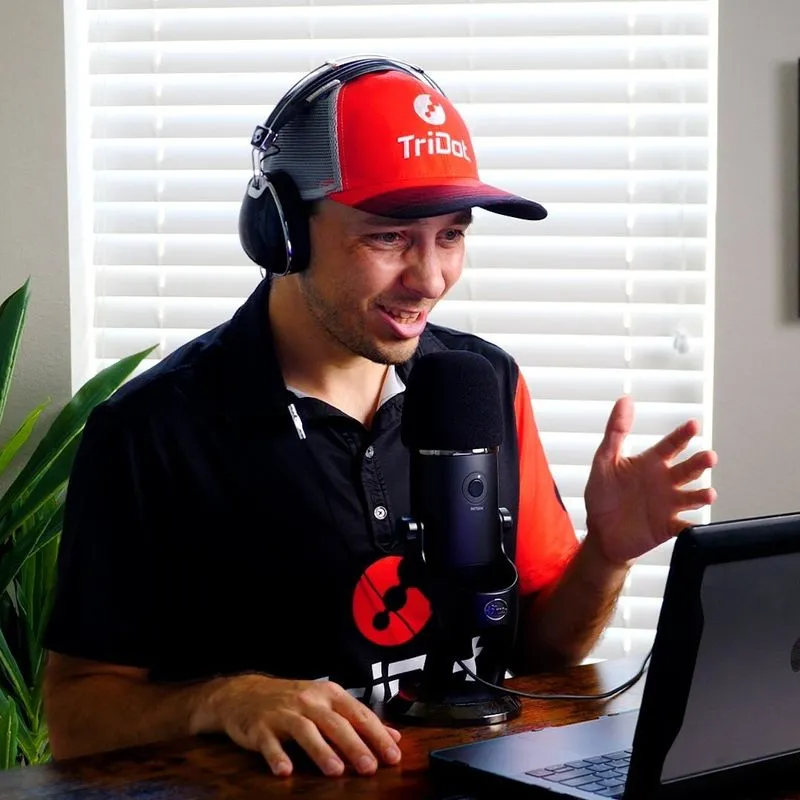
The ebbs and flows of triathlon motivation are real, and many athletes can face burnout at some point in their sporting journey. It’s a normal part of the athlete journey, but it doesn’t have to derail your love for the sport. This week, Coaches Stephen Horan and Matt Davies join Andrew to share seven practical tips for preventing and overcoming burnout. From taking intentional breaks in structured training, to actually racing more (yes, really!), they dive into how variety, community, and even a bit of retail therapy can keep your motivation alive. Whether you’re feeling drained or just want to stay ahead of burnout, this episode will help you reconnect with your “why” and get excited to jump back in when you’re ready.
TriDot Podcast Episode 320
Battling Burnout: 7 Ways to Reignite Your Triathlon Passion
Andrew Harley: Welcome to the TriDot Podcast. Today we are talking through the seven ways a triathlete can prevent burnout. I've got two excellent coaches for this conversation, Stephen Horan, Head Coach of Ironmind Endurance, and Matt Davies from Precision Coaching. Both joining the show to help us enjoy the triathlon lifestyle season, after season, after season, without getting burnt out, and dropping off, and going to a different hobby. I'm Andrew the Average Triathlete, Voice of the People and Captain of the Middle of the Pack. We treat the show like any good workout. We'll start with the warm-up question, settle into our main set conversation, and then wind things down by having our coaches answer an audience question on the cool down. Lots of good stuff. Let's get to it.
Announcer: This is the TriDot Podcast, the triathlon show that brings you world class coaching with every conversation. Let's get started with today's warm-up.
Andrew Harley: Alright, Coach Matt, Coach Stephen, when an athlete joins TriDot, as they onboard, there's a couple really fun questions they're prompted to answer. And some of those questions is how long have you been a runner, a swimmer, a cyclist, and a triathlete? And that kind of identifies, in the system, what we call an athlete's sport age. And it's just one of the many factors that goes into building an athlete's training. And so I'm just curious to hear from you guys, and to hear from our audience as well, how long have you been a swimmer, a cyclist, a runner, and a triathlete? Coach Matt, kicking us over to you first.
Matt Davies: Cheers, Andrew. So yeah, first up, I was a swimmer as a kid. I was fairly decent back at school age, but at 5 foot 9 on a good day, I realized at quite an early age that I'm never going to—
Andrew Harley: You had some limitations.
Matt Davies: --be like those giants. Yeah, so I was actually much better at breaststrokes. I swam at sort of county level and did a bit of breaststroke, and until fairly recently -- in fact, until I went along to TriDot Pool School, I could still do a 100 quicker breaststroke than I could freestyle. So yeah, I fixed that at Pool School but that was a limitation. So I swam for a long time, but gave it up because of the fact that, yeah, when I stood on deck I came up to roughly the top of their short line and realized I'm never going to beat these guys. Yeah, so 30+ years as a swimmer, I guess, on TriDot. I ran, did loads of road marathons. So I did quite a lot of running in middle of the those years, so probably a runner for 20 years. And cycling, I only took up cycling when I decided to take up triathlon, so five or six years ago. Yeah, I was one of those guys that had never ridden a bike with clip-in pedals and just decided to go do an IRONMAN.
Andrew Harley: Yep, yeah, same for me. My numbers are all the same, except for running. I was a runner first. When I got out of high school and got into college, I just started running to stay in shape. And so I've been a runner for 19 years. So you can do some math on when Andrew graduated high school and went to college. It was 19 years ago. And then all three of the other sports, swimming, cycling, and triathlon, all came in the same year. Because once I started swimming at the pool, at the local gym, it was like, “Oh, I kind of like this.” And then shortly after, signed up for my first triathlon, and bought a bike, became a cyclist. And so that's 11 years, for me, that I've been in triathlon, swimming, and cycling, as well. So my numbers are 11, 11, 19, and 11. Coach Stephen, over to you.
Stephen Horan: So very similar to you, Andrew. I am not a swimmer by trade. So I picked up swimming and running-- or, excuse me, swimming and biking when I started my whole triathlon career, back in, really, 2002. So again, when you look at that, thinking, 13 years to be able to do that. Now -- excuse me, that is not 13 years, but I guess 23 years, in that sense. But I was a runner by trade, and I started running in 1992, did my first marathon in 1996, so been doing that for kind of a fairly long period. But like I said, I was not a swimmer. I mean, I did swim as a child, but not competitively. And so I had to learn to swim, I had to really learn the bike. We all have, well, I shouldn't say all, but we have bikes that we can kind of jump around to be able to do, but I was not somebody to be able to go clip in, had to go buy a bike, and had to be able to get all of that pulled together when I started triathlons.
Andrew Harley: Very, very good. I'm excited to see what our audience has to say here. So if you're watching this on YouTube, or if you're watching this on Spotify, let us know in the comments below, how long have you been a cyclist? How long have you been a swimmer? How long have you been a runner? What is your sport age, so to speak? Very excited to see what you guys have to say. You can also find a post on all of our social media accounts. We'll blast this question out to find out, from you guys, how long have you been in the sport? Curious to see what you guys have to say.
Announcer: Let's go.
Andrew Harley: On to our main set, where myself, Coach Stephen, Coach Matt, we're going to be discussing burnout. If you're in this sport, you hopefully want to stay in this sport for a hot minute, and we would like to see that happen. TriDot training certainly can help make that happen. And hopefully, the advice of our coaches today can help make that happen, as well. And so in just a few moments, we're going to walk through what we've identified, as a panel, the three of us, as the seven ways to prevent burnout in triathlon. And guys, as we just talked about, the three of us have been in this sport for a while now. We've been swimming, biking, running, triathloning for a little bit. None of us are new to it, and we're all still here enjoying it and racing. So I'm just curious, to kind of get the conversation rolling, have either of you ever felt a moment in your triathlon journey where you felt a little burned out on the sport? Coach Stephen, over to you. The first time, guys, if you haven't heard, Coach Stephen came on the podcast, and the first time he was on the podcast was a few episodes ago, and he talked to us about the 20 lessons he's learned from his 20 full distance IRONMAN races. So, Stephen, you've done a little bit of racing yourself, to kind of pull from, here. Along the way, did you ever feel burnt out on tri’s?
Stephen Horan: I think, I highlighted, I've been doing triathlons for about 24 years. Kind of gone through all these cycles of ups and downs. So I think that burnout, lack of motivation, really occurs for everyone. And I think something you have to manage, as an athlete, to be able to kind of continue forward. But I did find, and we'll go through some of these a little bit, but really it was the community that kind of helped pull me along. And a lot of it, especially at the very beginning, because it was, yeah, you're getting all these gains, you're able to move forward. But when it started and I didn't have people working with me at times in the community, I was like, “Okay, why am I doing this? Why do I want to continue forward?” So it is something I think everyone's going to run into. And I think as we go through that today, we'll find that there's really some good ways to be able to help keep from burning out.
Andrew Harley: Yeah, I think I've seen friends of mine come into the sport after I did. I've seen new TriDot athletes come along that I get to know at races or get to know through the TriDot community. And I see them jump in with so much enthusiasm, and they go so hard on this new hobby they found, and they do every workout to the T. They sign up for 10 races a year, and I look at them like, I don't know if this is going to be sustainable for you. And sometimes they flame out, sometimes they kind of learn how to pace themselves for a long triathlon journey and not a quick triathlon journey. Anyway, we'll talk about that a little bit more in a little bit. Coach Matt, same question over to you. Just in your years in the sport, have you ever encountered any feelings of burnout along the way?
Matt Davies: Yeah, I mean, for me, it was probably more with burnout with the running, because I was doing quite a lot of road marathons, and that kind of, it just no longer presented a challenge, I guess. And that's kind of why I ended up in triathlon, because I was looking for something different. So for me, burnout definitely is a thing with my athletes. I label it slightly more as kind of boredom, of just if the challenge remains the same year, after year, after year, that's where it becomes boredom/burnout. And I definitely had it in my running and was searching for something more. So first I found ultra-running, and then I found triathlon. So yeah, it was more boredom than burnout, but definitely been there.
Andrew Harley: Yeah. And for me, I've had one season where I really felt this way. And longtime listeners of the podcast will probably have heard me express this, but I did my first IRONMAN in 2022, and I signed up for that first IRONMAN in 2019. And we all know what happens in between, right? A lot of races were canceled, and for me, in particular, I was signing for IRONMAN Texas, and that sucker got canceled twice in a row. And so I went through the training cycle for an IRONMAN two years in a row and didn't get to do my IRONMAN. And so I'm two and a half years into training for a full distance race before I finally got to do the thing. And so a lot of athletes will do a 4-month, 5-month, 6-month training cycle to gear up for an IRONMAN. I did that for two and a half years, trying to stay in IRONMAN mindset, to finally do a freaking 140.6-mile race. And I finally got to do it and check it out of the bucket list. But along the way, I got real sick of that long training, and I got real sick of just that one specific race being in the front of my mind day after day, week after week, training session after training session. And when I got on the other side of that, man, I was burned out on the daily grind of the training, because it takes a lot of effort, mental load, physical load. It can be a grind if you don't have a certain motivation in mind. And we'll talk a lot along the episode today, but I kind of combated that with mixing up my races after that, going back to some short course, sprinkling in some relays, having some fun with the sport again. But yeah, I got through that IRONMAN, and I didn't want to touch a training session for a while. And I literally have a triathlon podcast. So I did. I stayed in the sport and stuck with it. But yeah, so that's the one time I felt this, was very specifically tied to that experience of training for years for one specific race before I finally got to do the thing. And that really burned me for a little bit there on the sport. And it took me a little while to get to a really healthy place of wanting to wake up and go do my training every single day. But as you guys coach your own athletes and kind of have conversations with your own triathlon friends, peers, fellow coaches, what are you hearing from athletes that are a bit burned out? What are kind of the warning signs of what burnout looks like? What are they feeling when they are burnt out? Why do you think athletes encounter burnout, for one reason or another? Coach Stephen?
Stephen Horan: I think the biggest thing I'm hearing from athletes, it's really trying to, “Hey, I'm not hitting my goals, I'm not able to go do that.” And I think one of those things that I'm finding, and how I try to coach my athletes, is really talking about not focusing on the outcome, but focusing on the process, right. And I find that we get so stuck in the outcome, “Oh, I got to hit this goal. I got to hit this race.” And if you're not doing it, we're finding athletes just kind of back away and say, “Hey, I can't go do this.” And what I try to really hope and motivate people to be able to go do is to kind of really focus more about that process. And the other thing, that I also find, is Strava is awesome, so you can be able to go and link with community, but so many people get so involved with, “Oh, this person is doing this, and why am I not at this level?” And trying to get people to really focus on themselves and not everyone else. And continuing to have that benchmark in front of themselves, like, “Hey, this other person in my age group, they're able to go do it.” I mean, you don't know everything that they're doing. And the great thing with TriDot, right, is we're helping manage the overall process, and making sure we're not overdoing it, and doing the right training right, but when you see somebody else doing 100 miles every week for six weeks at a time, it almost sets that aspect, the mental aspect, for the individual. It's like, “Why am I not doing it?” And so it almost demotivates them at the same time. And so I really try to help my athletes try to think beyond themselves-- or excuse me, beyond the others, and just focus on themselves, and also ensuring that they're really not just focusing on the outcome, but really that overall process.
Andrew Harley: Yeah, love that. And Coach Matt, same question over to you. As you're talking with peers, coaches, athletes you work with, what are you hearing when they say, “Hey, Coach Matt, I'm feeling a little burned out.”
Matt Davies: For sure, with athletes, the one thing I hear most is that they've kind of almost forgotten why they're doing it, right? They started, came in -- most people come into this sport with such a strong, passionate reason why. It might just be, I want to become an IRONMAN, or it might be to prove to my kids anything's possible, whatever that thing is. And once you've done it once or twice, and maybe got a little bit better, a little bit faster, they almost need to come and find a new why. But if they haven't done that, and they've just ticked that box already. It becomes a hell of a lot harder when that alarm goes off at 5am, and you've got that, especially here in the UK, we're talking about the UK winters and stuff, when you've got to go out at 5am into sleet, and rain, and kind of miserable weather. If you've lost that why, or that's no longer there pushing you, it's a hell of a lot easier to feel burnt out and slightly disenfranchised with it. So, yeah, I try and get my guys to rethink at the end of each season. What's the why? What's the driving force?
Andrew Harley: Let's get into the seven ways to prevent burnout. The three of us have been on Microsoft Teams, pinging messages back and forth, narrowing down our list of what we've identified as seven things athletes can do to help prevent burnout, help reignite, spark joy, spark enthusiasm for our training again. And I'm just going to introduce these one-by-one and just hear what you two have to say about these. So, way to prevent burnout number one is to take periodic breaks from structured training. Now, at TriDot, we obviously very much believe in the power of structured training to keep you healthy, and to keep you performing well, and to keep you enjoying the sport. But 365 days of structured training can lead to burnout. Guys, talk about how an athlete, and why an athlete, can and should maybe take a break here and there.
Stephen Horan: Yeah, I mean, this is both physically and mentally important. I mean, I think we have to realize there's a physical side, and TriDot does a really good job so we can continue producing physically. So I'm really good from that standpoint. But from a mental standpoint, taking that break is really important. And I'll just use my example of this year. I mean, I always try to come off of a race, I try to do a little bit of celebration right afterwards. I try to take about two weeks, overall, to kind of just really break away mentally, get away from that really structured training. Yes, TriDot backs you down to Zone 2, but go do something a little different. It doesn't mean you got to jump on the bike every single time and really trying to think about that. And also, I mean, I also get rid of my watch during that time. And I find that structure, breaking that away a little bit also helps, because we get so locked into, hey, I got to do this pace, I got to do this heart rate, I got to be able to go do it. And really trying to break away from there and just almost getting back to the fun of it again. I mean, I really find that structured break makes a big difference in me mentally, to be able to kind of ensure that I'm able to kind of continue on and then go to that next session, and really, that next cycle of training.
Andrew Harley: I really like that. And so, Stephen, just to be clear, it's kind of whenever you have a big A-race, you kind of take the next couple weeks to just have fun with the sport, not tick every single training box, not worry about your TrainX score, not even wearing the Garmin. Just enjoying, after those big A-races.
Stephen Horan: Yeah, that's typically how I try to approach it. And again, I mean, now, we'll talk through. If you find yourself getting into it, where you're feeling burned out, even as prep for that, I think that's another good strategy to be able to just kind of back away. Take about two weeks, really, to kind of just reset yourself and to be able to kind of get away. But yeah, sometimes I use my A-races and then that break afterwards, and it's been able to help me continue on, to be able to then set that next A-race and be able to get them in place.
Andrew Harley: And I could see an athlete, Stephen, just kind of taking that mindset, and even if it's not after a big A-race, if it's just kind of, “Oh, I know I'm going to unplug for a week or two around the holidays,” or, “Oh, I know I'm going to unplug for a week or two in the middle of the summer for family vacation week.” Just kind of identifying, I think there's this natural mindset that, oh, there's in-season and there's off-season. In the off-season, I'm going to take a long break, and in-season I'm just going to train constantly. But you don't have to do it that way. You can kind of give yourself almost micro-breaks, is what you're suggesting, at whatever cadence makes sense for you, to just unplug from the structured training, have some fun. And to be clear, I'll say this, and then I'll kick it over to Matt for his thoughts. To be clear, a very cool thing with TriDot is with TriDot training, you don't have to take an offseason. You don't have to take off days every single week. You don't have to take big breaks, because unlike traditional training methodologies, TriDot drips the training in just right every single day. It's managing your training stress just right every single day, to where an athlete can train 365 days a year for years and not get injured, not get over trained, not get physically drained. But like Coach Stephen is saying, sometimes you just need a mental unplug for that motivation, to reset your desire to do the sport. So athletes are surprised sometimes. They come over to TriDot, and they kind of get through their race season, and they get to that first, what could be an offseason, and say, “Hey wait, TriDot has me training every day still. What's going on?” Because they're so used to taking an offseason when you don't actually need it. So anyway, so that's where we're talking, here, very much about, managing that for yourself, and recognizing in yourself, what are good times of year just to unplug for a week there, to keep your motivation topped off, and to keep your mind fresh for the grind, so to speak. So anyway, just wanted to say that about TriDot. We're not saying you have to take breaks from structured training, because the structured training is very, very well programmed. Anyway, Coach Matt, same thing over to you. When you hear this tip on how to prevent burnout, taking periodic breaks from structured training, how do you implement this with your athletes through the season?
Matt Davies: I resonate a lot with what Stephen was saying, but I can see and hear triathletes around the world coming out in hives at the thought of doing a workout that isn't recorded on Strava. Although, if they run with a Garmin at the moment, that could be happening very soon, anyway. Off topic. I tell my guys exactly that. Physically you don't need to. That there's training that I'm going to program via the platform is going to be the right training for you to keep going. But sometimes people just want to get off the hamster wheel. They want to take that mental break. So it's a balance, and I try and get my guys to think of it like a bit of a pick and mix, as well. So take that. The recovery week is vital to help you kind of begin to feel human again after a big A-race. So some nice Zone 2 stuff that's in the plan, but just try to disassociate that mentality of every single workout needs to be hit to get there, to actually, now you have, for a couple of weeks, you've got a choice. Do some of the workouts, miss some of the workouts. If it's a 60-minute Zone 2 bike, and you only feel like doing 30 minutes, then follow what's there, but just don't do all of it. Just try to take that mental pressure away without feeling the need. With trying to take that mental kind of drive away, but still keeping the body moving so that you're not completely going sideways.
Andrew Harley: Yep. And just to put any athlete at ease, a lot of triathletes, especially triathletes that listen to a triathlon podcast, and sign up for structured training, and have coaches, we have a lot of type-A personalities, right. That like ticking the boxes, like doing everything exactly how it's prescribed. So just to put people's minds at ease, if someone takes a week off, two weeks off, moves the body a little bit, isn't following their training, Coach Matt, are we losing fitness in that time? Like how long do we have to be on the sidelines before we start losing fitness?
Matt Davies: I mean, it will vary athlete to athlete, and I guess it depends largely how much of that two weeks is a complete break, and how much am I still dipping in and doing little bits. Regardless of how much you lose, if you need that break mentally, you need it, simple as that. If you go backwards a little bit, then frankly, if it's your last big A-race for the season and there's nothing coming up till next year, it will come back really, really quickly. There's no kind of fixed number, “Oh, you'll drop 10% of fitness in two weeks,” or whatever it is. It really does vary. But it, whatever the number is, for you, as an athlete, you will get it back remarkably quickly. It will be a lot harder to get it back if you force yourself, bloody mindedly force yourself to keep going, and then break down mentally further down the line and take a break then, at a more critical part of your training, because you haven't had that break in the first place.
Andrew Harley: Really, really good. Moving on to way to prevent burnout number two. This is to add variety to your training. For me, and I imagine a lot of the athletes listening, and you guys, as coaches, can certainly weigh in, that there's certain sessions I like going and doing on a track, or I like doing upstairs on Zwift in ERG mode, or I like doing at the pool versus in open water. And when we're trying to do every workout as well as we can, sometimes it can be a little hard to work variety in there. We just find ourselves doing in the same training environments time after time, day after day. But how can we add variety into our training routine, while doing the training right, just to keep things fresh and help prevent burnout. Coach Matt, what do you think?
Matt Davies: So, specifically, particularly for the Zone 2 stuff, where we're really just trying to build that endurance engine, the heart and lungs kind of don't really know why they're in Zone 2. They're just in Zone 2. So if you really, really searching for a bit of variety, jump on a rower, jump on a static bike, even just a static bike in the gym versus a static bike at home, just to give you that different environment, the feeling of training around people. Just even tiny little changes of variety can, mentally, make a big difference. And particularly on those Zone 2 sessions. If you do 60 minutes on the rower at Zone 2, versus 60 minute on the on the cross trainer, versus 60 minutes on a treadmill, the physiological benefits are very similar. You're still getting much the same benefits from a physiological point of view, but you're mentally doing something a little different.
Andrew Harley: Coach Stephen, same question over to you.
Stephen Horan: I agree 100% with Matt, what he's talking about. The other thing I want to just highlight, I do think, and just very traditionally, a lot of athletes just go in and say, “Hey, I got to go do long rides. I got to go do long runs.” And that was one of the things, when I started running, that's all I did. I didn't vary some of the intensity, so I think that's an important part, also. TriDot does a really good job, varying intensities, just to kind of change it up, so you're not doing the same workouts all the time, every single time. I also really appreciate Matt's input there, in the sense of, hey, changing the locations is massive. Going in the pain cave when it's in the winter and it's sleet outside, you're like, hey, that sucks. And so being able to go and change that up, and to be able to kind of have fun, the great thing from when I started to where we are today, you can train with others now also virtually. So that also helps a lot, kind of break some of that monotony by training with others, getting other people involved also, because I think that makes a big difference by varying that training up. Because sometimes we get stuck in the rut and say, “I got to go run the treadmill this day. I got to go hit my bike in the basement this day,” and it's, once you get into that routine, breaking that and changing that makes the biggest difference in the world. And you're like, man, this is fun. The other thing is, I think this is a perfect opportunity, because Zone 2, it doesn't matter. Go run the trails, go do something different, because that gives a very different aspect and just kind of changes it up. Because I know, when I'm training hardcore for an IRONMAN, you're doing the same routes all the time. So switch it up, take a little bit of time and go differently, into different places. Because power is power, right? And heart rate is heart rate, right? So it doesn't matter where you're doing it from an overall terrain standpoint. And just kind of getting that differences makes a big change overall, makes it easier. So you're not getting burned out.
Andrew Harley: For me, this looks like-- the way I do this, personally, as an athlete, and someone listening can certainly follow this, or you can do it a little differently than I do, but I try to approach it where, when I have a big A-race on the calendar, and I've got a goal for that race, I try to stick to my training to the T, every single session, as often as I can. And it's not that I won't – like, if I get an invite for a group ride on a holiday, or if I get an invite to go for a trail run, I might go here and there, but I, 99% of the time, am doing my sessions in the best possible way. When I don't have that big A-race, or I got on the other side of that A-race, or I'm nine months, ten months out from an A-race, but I've got some C-races coming up, that's where I make sure I'm adding more variety to my workouts. Way to prevent burnout number three is to do races. Sign up for races, go do races. And the follow up here, make those races fun. Not every race has to be a super serious big goal. I've got to be fast, I've got to be strong, I've got to crush it, A-race, you can have some fun, some in there for funsies. So as you guys are talking with your athletes, and you're talking about the races they're going to do on the calendar, what do you tell them about races, in terms of preventing burnout?
Stephen Horan: Yeah, I mean, number one, I think getting a race on the calendar always helps me moving. Period. Whether it's, hey, want to go super-fast? I mean, it just almost holds you accountable, inadvertently, because it's there in place. So I really try to motivate all of my athletes to get a race scheduled as soon as possible, and if you can, even before your race is actually in place, like, your A-race is complete. So I think that becomes really important. The other thing, and I agree with you, Andrew, I mean, if you can figure out find a race to be able to go have fun, a race-cation, having something there just makes it very different. And so almost alleviating, saying, “Hey, I'm going to this area, going to Europe, and I'm just going to go have fun, to be able to go do it,” versus kind of having that target race time. So again, having that race scheduled as soon as possible, I find really just helps, and even me, just motivates me to that next one. Like I already signed up, before my A-race this year, for my race next year. And just keep those calendars rolling with those races.
Andrew Harley: Yeah. And it's honestly, when I go back to that season of burnout that I had, where I finally got through freaking IRONMAN Waco. I became an IRONMAN after 3 years of training for IRONMAN. What really re-sparked my drive to train, was a full month later -- maybe it was a month, almost two months later -- a bunch of us from TriDot went down to Daytona, Florida, and did Clash Daytona. We talked about it on the podcast a lot. Really cool race where you're riding your bike and you're running around Daytona Motor Speedway. And for me, it was being out on that racecourse. I had done some training between now and then, but I wasn't really in shape or really trying to -- I wasn't following all my training. I was a little burnt out. But I'm like, I'm out on that racecourse, like in the middle of the race, dying because I wasn't really trained for it. But it was like, “Oh yeah, this is really freaking fun. This is why I'm in this sport. This is so much fun.” There's TriDot-ers cheering me on in and out of transitions, I had friends at that race, and yeah, getting back on a racecourse in a non-serious way, for me, kind of was that jumpstart that got me excited about my next season.
Matt Davies: Yeah. So a couple of good examples, and one of them actually involves Clash Daytona. So I've got a really young female athlete over in America, collegiate sort of level, nationals level. Last year, she had probably too many races in the calendar, to be honest. But what we had to do was try and take the A-race mentality away from some of them. So lots of races is good, Stephen, I totally agree that having a race there is great to keep that focus, but only if you can treat some of them as genuine C-races and some of them as A-races. And we agreed, at final race of the season this year, that we would measure success in how many smiles, not how many miles, I think is how we phrase it.
Andrew Harley: I love it.
Matt Davies: And I just said I want to get 15 pictures of friends and family taking photos of you on the way around. And if you're not smiling in every one of them, then I consider this a failure. Whether you win it or come last, that is the target. And she loved it. Absolutely loved it. So that's a really kind of-- yeah, lots of races definitely helps, but only if you then treat some of them as fun and not get sucked into that, “I need to perform at my absolute best for every one of them,” because then I think it can have the opposite effect.
Andrew Harley: Yeah. Smiles, not miles. I love that.
Matt Davies: Yeah, sorry. And then I've got one other guy, a guy I'm currently coaching in Italy, who's done two or three IRONMANs. His TrainX, in the final four weeks leading up to his most recent one, was 9. We kept getting on calls, we kept trying to kind of cheer him up, and he just wasn't, just couldn't get going. And he was one of those athletes that, as a coach, we see them all the time, where they come along, and they train with you, and then after a while they go, “Thanks very much, Coach. Loved working with you, but my time is done.” And I really thought with this athlete that was going to be the conversation, because it was so clear in the run up that he just wasn't there. And for him, we had to sit down, relook at that ‘why’, but also, he's gone away and come up with a new challenge. He said, “IRONMAN just doesn't scare me anymore. I need a bit of fear, as well as a bit of excitement.” So he's gone away. He's gone away and come up with a challenge. He wants to do a local to him, in Italy. Swim 28k, open water from an island across to the coast where he lives, 1000 kilometers on gravel bike, piecing together some different rides he's always wanted to do, and then a 250k ultra-marathon at the end, because he needed that totally fresh look. So there was no race out there that did that. So he's come up with his own, and approximately halfway through the email, when he explained it all to me, I had already replied, and said, “I'm in.” So I've committed to. I'm doing that with him next year, as well, because it reminds me a bit of when I was doing road marathon after road marathon and getting that fatigue. If I’d just signed up for more and more road marathons, the fatigue would have increased gradually with each one. But by mixing it up and finding new races that are different races and different challenges, that can be a real motivator, as well.
Andrew Harley: I want to be very clear. There are certainly athletes out there that just, somehow, always have motivation. There's triathletes that love IRONMAN, that full distance. There's triathletes that love just doing sprints or love just doing 70.3. And there's runners that are just junkies for the marathon. There's people that can just do the same race distance over and over, time after time, and never get tired of it. Good for you. I love that. Happy for you for. For the rest of us, Matt, I love what you just said. It's good-- we just talked about variety in training, it's good to have variety in your racing. If you're only doing local sprints, eventually, that might start feeling a little tired. If you're only doing IRONMAN or 70.3, that might start feeling a little tired. Mix it up. When I started kind of coming back to racing after that IRONMAN, my next couple races was half distance at Clash Daytona, I did a relay at a draft-legal sprint distance relay, super sprint relay, at USAT Nationals. I did a relay at a middle-distance race. I did a local olympic. I mixed up what I was doing, because I was so burnt out on training for full distance for a while, and that can be good. I've seen a lot of TriDot-ers, just that I'm friends with on social media, they'll do triathlon for a while, they'll be neck deep in it, and all of a sudden, for a couple months, I just see them posting about trail running. And they'll do an ultra-trail run or two, and then all of a sudden, I see them registering for an IRONMAN again. And so it's a good thing to add that variety, keep your endurance sports experience fresh and exciting. There's a lot out there to do, and just always come back to triathlon, because we love you, and we want to see you doing that. Way to prevent burnout number four is to engage with the triathlon community. Coach Stephen, talk to us about this.
Stephen Horan: Yeah, I mean, this is probably what's motivated me the most to be able to continue on, and especially as long as I've been in, I've gone through cycles where I lose people and then you get new people starting. But I mean, continuing to have that social ability and bringing people along. I mean, one of the things I've also found is creating kind of group racing. And that also helps, because you're getting people aligned with you, on the racing that you're doing, and then you're going as a family and community, together, for races. So I think that's a big part. The other part is giving back. So I think it's not just kind of working out and training with others but also trying to give back. I mean, I always find that giving is sometimes better than receiving. And in that sense, giving that back just really almost motivates you. You find what the passion is for others, and that passion becomes contagious, even back to you. And so when you kind of see that excitement again, I think it makes a big difference. So I think it's both with working out with others, training with others, racing with others, but also kind of going out and giving back to that overall community. So I just find it really helps, and I try to help motivate athletes to be able to do this.
Andrew Harley: I love, Stephen, the notion of giving back, because there's been so many times where I've traveled to the races for TriDot, and at a lot of those races, if we have enough of us there from staff or just TriDot athletes, we'll volunteer together. We'll either run an aid station together, or we'll man T1 or T2 together. And it is like, I can have four or five races on the calendar, and if I'm at a race volunteering, you just get the itch, right? You get the itch to sign up for another race, because you're like, man, this is so fun, just being a part of this. And just going to a race event without the pressure of racing yourself, whether it's just to cheer or to volunteer, it really reminds you of why you love this, and what that atmosphere is on race day. Coach Matt, what do you think here, just in terms of engaging with the tri community as a way of preventing burnout, staying excited about the sport?
Matt Davies: Absolutely. Again, we're all different as athletes. There are a few out there who like to be that lone wolf and the idea of community is against it. And that's fine. That's absolutely fine. Personally, I'm all about the community. Obviously, TriDot has its very vibrant community, and I love -- I've got quite a few athletes in the US, actually, and I love the fact that -- I can't fly over and go and watch them race, but I know that there's a family of TriDot coaches over there that I can plug them into, and I've done that, quite successfully, with a few different athletes this year. But with the same at Precision Coaching, we've got quite a big community. We do Tuesday morning, Thursday evening Zwift rides, where we're just on discord, and suffering on your own is miserable, but suffering in a group of people just somehow seems that little bit less painful, right? So, that side of community is great. And next year, I mean, at Precision, we're targeting races, where we're encouraging our athletes to go do the same race. And, taking over, feeling like you've almost taken over, and having 20 of us in kit, or 30 of us in kit is such a great feeling. We're doing a couple of UK races, and six of my athletes have decided to come and race Vitoria-Gasteiz with me, in northern Spain. I like to think that's because of the community angle. I fear that it's six of them just—well, I feel it's more because they all just want to come and smash the coach, which is helping to motivate my training a little. But, undoubtedly it's going to be amazing. And I'm already -- if ever I have a morning, a Monday morning, when I'm like, “Another ride to get up and do at 5am,” partly the idea of being beaten by all my athletes, but partly the idea of how fun that weekend is going to be, it drives me on. So yeah, if you're feeling that burnout, then get involved in the community, and undoubtedly, it will help.
Andrew Harley: Yeah, and we were just talking about adding variety to your races. I mean, it absolutely adds variety, and flavor, and life to your race weekend, when you've got a couple dozen members of your team, of your group, of any kind of group that you're plugged in with, it definitely adds a layer to your race weekend. I'm an introvert, which people are surprised by, me being a podcast host. I love conversation with a few people at a time, like this. I hate walking into a room and making small talk with a 100 people for an hour. Anyway, so I was surprised how much, when I’d done triathlon for a few years, I just kind of, I rolled into the weekend, my wife was there with me, and I do a local sprint, and then we go home. And when I finally joined a local team, and started kind of making friends in that local team, and seeing them, hanging out with them before the race in transition as you're setting up your gear, and hanging out poolside before you'll jump in the pool together, waving on the race course, it added this layer to the race that I didn't expect to enjoy as much as I did. And now, being a part of TriDot, I have that on a global scale, which is amazing. So, yeah, really like this one. We've got three to go, and way to prevent burnout number five, grab your wallets, it's retail therapy. Coach Matt, talk to us about retail therapy igniting a passion for our training.
Matt Davies: Yeah, absolutely. The best way to make a small fortune is to start with a big one and take up triathlon, right? There's no shortage of things that we can buy that we think are going to make us faster, and lots of them do. You can buy speed. It's a fallacy that you can't buy speed. The question is, sometimes, is it worth the money that I'm investing for the tiny amount of extra speed it might give me, versus actually, if I just go and work on the engine, instead of the bodywork, that actually, the car will get faster. But there's nothing like a shiny new bike or a new pair of runners. It just gives you that little bit of joy. Sometimes, they might actually work and make us faster. Sometimes, they just make us feel good. And both are equally good. And even if the kit that you want to buy doesn't actually make you faster, if it encourages you to get out and train like a demon for a month, that in itself is making you faster. So yeah, I'm a big fan, and we all had loads of money before we took up this sport. It's just something you have to come to terms with. It's part of the game, and we all love it.
Andrew Harley: Yeah, nothing like new running shoes to spruce up the run routine. And if you don't need new run shoes, or on the budget for new run shoes, grab a couple pairs of really cool run socks from a high end run sock brand. When was the last time you refreshed your swimsuit lineup? Throw out those two, three that you've been rotating, and buy new ones, and go down to the pool. In the swim training, every now and then, I'll just buy a new pool toy, right? I have fins, but I'll buy a different pair of fins. They have a different shape. And just having a new gadget to play with in, one aspect of your training, can sometimes really liven up the training for, like you said, a month or so, in that one discipline. Coach Stephen, have you done this? Little retail therapy?
Stephen Horan: Yeah, I think we all have. You want to go out there, you want to look fast, you want to, really, just kind of help motivate yourself. But I mean, again, I mean, it's kind of light-hearted in this. But it really does help motivation, right, where you're kind of giving yourself that reward. Maybe it's even setting that as a reward saying, hey, this year I'm getting a new bike helmet, or I'm getting this new one. But having that, and just kind of continuously rewarding yourself, can help push you and motivate you to kind of continue on, right? And so, did you want to use it, if you buy it? And that becomes the other part. Every once in a while, you'll see somebody out there, “Hey, I bought this bike and never used it.” But if you go buy it, it's going to help motivate you. It's kind of like setting that race in front of you, but really kind of getting that new bike, new shoes, whatever it is, to help kind of keep that motivation in place.
Andrew Harley: Yeah, you could be really creative with this, right? We've talked about some of the obvious ones, like new run shoes, new run socks, new swim goggles, new bike gadgets. But just two other things, two other ideas that come to mind, this could be nutrition, right? Go to your local tri store, bike store. They usually have a lot of different products on the shelf. Go to something like thefeed.com, where you can look at just a lot of different products at once, and just order a variety of stuff. Gels, chews. And you might find a new product that just floors you, that becomes a key part of your next race fueling plan. But at minimum, you'll have fun trying some new stuff over the course of your next training sessions. Another one that I think of, is if you're doing some indoor training, a lot of people like Zwift, some people are Fulgaz truther, some people love Rouvy, but you can hop from platform to platform, right? I got to tell you, I was on Zwift for a long time. I still am on Zwift, but when we integrated with Fulgaz, where you could finally push your TriDot workout straight to Fulgaz. We did a couple podcasts with the Fulgaz team. We got to know them a little bit, and I had never done Fulgaz, but I was kind of curious to try it out. So I got Fulgaz on my iPad, and for five to six months, man, that really refreshed my pain cave routine. Instead of looking at my animated avatar in Zwift Wattopia, I was looking at actual IRONMAN courses. And every single training session, I would fire up a different IRONMAN course. And I'm never going to go race IRONMAN Leyte in Finland, but I know what the course looks like, and that's kind of cool. I'm a geography nerd. Something like that, maybe it's inverse. Maybe you're on a different one and you go to Zwift. Just check out Zwift. Just thinking through the different ways to train that are out there, and how can you freshen it up, that's a different form of retail therapy, in my mind. So way to prevent burnout number six, and I'm excited to hear you guys talk about this, Coaches, change the focus of your training, even for a short time. So we've talked about taking a break from the structured training, adding variety to the workouts, but this is a little different. We're still working out with intention, but we're kind of changing what we're focused on. How can this be beneficial to preventing burnout and improving us as triathletes along the way?
Stephen Horan: I mean, I'll just use a real-life example. I just came back from traveling over in Asia, and it's a little hard, sometimes, training while you travel, and just be able to go and do something a little different. I mean, I got to run around in Asia, because I wasn't able to cycle. I didn't bring my bike. I didn't care to sit on the one in the gym, right, with the fat seat, but I really just -- my whole time, for ten days, while I was traveling, was just focusing on running, and I got back to the enjoyment of running. I was running in new places. But really taking that as, maybe make it a little bit more real for a lot of folks, but really kind of going in and say, “Hey, I'm going to go focus this area.” And say, “Hey, I want to go focus on swim, because I know that's what I need to go work on. I want to go work on running, I want to go work on cycling.” And it really just breaks up that monotony. And I think it kind of, that's really what that's doing, is changing that focus to be able to break up that monotony and almost give you that next goal to be able to go work towards. But again, I think there's a lot of different ways to apply that. Like I said, I just applied it while I was traveling, but it really just breaks up. And I'm like, I wanted to get back on my bike this morning. I wanted to be able to go do it. Just to be able to kind of change that up, really just says, hey, makes that excitement. I actually want to go back to the pool tomorrow. I'm not a great swimmer, and I hate swimming, but I mean, that's like, I want to go back to the pool and to be able to go spend that time. So kind of switching that around and always kind of taking that break. I mean, this is where you're going to have to work with different people to be able to shift that around, because you can't overdo it, also. That's the other part. If you're not used to running all of that, you may not be able to go run for seven days straight. So I think that's something you also got to pay attention to, even though you're shifting that focus. But it just gives you an opportunity to break up the monotony of just, hey, run, bike, swim, run, bike, swim, and kind of doing that rotation.
Andrew Harley: Love that. Something I did for a summer -- I had one summer here, in hot, sunny Texas, where I took an extra emphasis on doing my run drills. We all know you fire up your TriDot run session, and there's going to be a handful of run drills as part of your warm-up routine, and those get you warmed up for the workout, but they also have a lot of benefits for reinforcing good form, connecting neural pathways. We have podcast episodes about it. And I always do -- I usually do my run drills, but sometimes there's more intention than others, and I'm more focused in that time period than others. And so I took a summer a few years back, and I really was like, man, I'm going to be extra intentional with my run drills. I'm going to do extra run drills, just on afternoons where I have a pocket of 10, 15 minutes, to just get in the driveway and do some extra run drills. And I just want to see what difference it makes. And man, did that liven up my run workouts. I was still doing my run workouts, but it really, like you just talked about, Stephen, I was excited to get out there and just see, okay, let me get out there and do it, let me get out there, and it just gave me-- so I think that can be really powerful. For folks who maybe struggle with their swim, you always have swim drills thrown in. Spend a block of training where, man, even if you don't get your full workout in, really focus on your swim drills for a little bit. Really focus on your bike form, your bike handling, for a little bit. There's some exciting things that you can do here to add some extra intentionality your training for a little while. Coach Matt, what do you think here? What do you have your athletes do to kind of change up the focus and what they're thinking about in their sessions?
Matt Davies: Yeah, I think we're at that time of year, aren't we, for Northern Hemisphere athletes, where we're entering the offseason, and classically, we all go, “Right. We're going to stop skipping all those strength sessions that we don’t do.” Shh, no, no, no, we all do them, honestly. But it's that time of year where we focus on that. And it's really easy to sit and say, “Right, I'm really going to nail that, knuckle down and do my strength. I think I'm really going to work on my swim technique in the pool.” But it's a really easy thing to say, and a less easy thing to actually then make yourself do, if you're in the bad habits of not doing those, or not doing those with as much intention as you want. So we talked before about different races. So, look outside of triathlon, and do a HYROX, or do a CrossFit, or do a obstacle course race, or have something that means that you don't just have that New Year's resolution mentality of I'm going to work on this this winter, but actually put something in the diary that means you've got no choice and you have to. So, yeah, I'm a big, big believer in that.
Andrew Harley: Way to prevent burnout number 7, the final one on our list. And I'm not going to say much here. I'm going to step out of the way and let you guys address this one. Get a coach. It's get a coach. Now, if you have the budget for a coach, I don't want anybody overspending, or blowing up the family budget, because we say get a coach. That's part of the beauty of TriDot. You can have great training at very practical price points. But if you can afford a coach, coaches are invaluable, and they can really help prevent burnout, if you're starting to feel that way, because they can help you do a lot of the things we've talked about today. Coach Matt, what would you say about getting a coach, in terms of livening up your triathlon routine?
Matt Davies: Yeah, look, I mean, there's a couple of things there, right? Firstly, the reason we're coaches is we've been there and done that. All of those things that you, perhaps, if you're training away on your own, are feeling and not sure if, “Is this normal? Is it not normal? I don't really know.” The coach has been there, and done it, and probably felt those same things as you, but they're also coaching a group of other athletes who are also probably feeling those same things as you at similar points in the year. So that shared knowledge is the first bit. And accountability and encouragement, it's a big part of why you're paying for a coach. It's literally our job to help you through those periods where there's a bit of burnout or a bit of lack of direction. So again, the coach, that's part of what you're paying for a coach for. Obviously, it's the technical side as well, but a lot of it -- a lot of people use a coach to help specifically with this topic and to help encourage and support. But also most -- we also touched on it earlier in the pod, as well, most coaches will have a reasonably big group of athletes as well, and it's plugging into their community, as well. And that can also help, becoming part of something bigger. I'm really fortunate at Precision, it's not just me, but we've got 12 coaches now, so it's a really big community. So again, it's plugging into something and feeling part of something a bit bigger than you on your own, planning a lonely furrow out there, on your own.
Andrew Harley: Yeah. When you hear coaches on the TriDot Podcast, 99% of the time, they are working with TriDot, and I know them, I endorse them. If you ever click with somebody, or just really like the advice you're hearing from somebody, reach out to them. They can absolutely become your triathlon coach, that's for sure. Stephen, you were a longtime triathlete before you became a coach. And you obviously know the value of it and want to help other people, as well. What would you say here, in terms of how a coach can really help liven up your triathlon routine?
Stephen Horan: Yeah, Matt highlighted some key things, but a couple of others is, number one, being objective. I mean, a coach gets to step above and kind of look at the holistic aspect of an athlete. And sometimes, as an athlete, you get stuck and very close to your own views. And so you got to have something that's a little bit more objective, and a coach can help you do that. The other thing is the personalization that a coach brings. The coach can actually help make some different recommendations. Matt highlighted that, yes, we've been through it, we have other athletes that's been through it, but being able to make some personalization for that athlete and say, hey, maybe go do a run session all this week. Or go do a swim session, or, hey, go try something a little bit different, like HYROX, or doing some of those different things. And I think that's what the value of a coach ends up bringing, right? I mean, yes, it's the experiences, But it really, kind of being objective, and really help making something more personalized for that individual athlete.
Andrew Harley: Final question of our main set, that I really just want to hear, personally, from you guys. Coach Stephen, what has kept you, personally -- what's the number one thing that's kept you in the sport this long?
Stephen Horan: I think consistency. When I reflect back, it's really trying to make it a lifestyle. Being consistent and realizing, I use this all the time, it's progress over perfection. We got to step back and realize that it's not always going to be perfect. You're going to have these ups and downs. It's not just a straight line going up, right? And so I think reminding myself to be consistent, realizing that it may not just be that hour workout, but saying, hey, can I just get 30 minutes in? And making it truly part of my lifestyle has just been the biggest part. If I don't work out now, I know I'm missing something, and so it's become part of my day to be able to go and do those different things. So being consistent has been really the biggest part and realizing that it doesn't have to be perfect.
Andrew Harley: Coach Matt, the number one thing that's kept you in the sport this long, what is it?
Matt Davies: We've talked about it quite a bit already, but community.
Andrew Harley: The TriDot Podcast. The TriDot Podcast.
Matt Davies: Well, TriDot Podcast is a very good example of this. It's the community. It's doing it together. What's the African proverb? If you want to go fast, go alone. If you want to go far, go together. And it's, even as a coach, even when I -- ignore me and triathlon as an athlete, me and triathlon as a coach, I started on my own and it was very lonely. And then I had this opportunity to join Precision Coaching, and now there's 12 of us, there's hundreds of athletes, there's 12 of us as coaches, and I undoubtedly have far more love for the sport and will be in it now for the rest of my days, because I'm part of something bigger. So yeah, for me, and we are all different, but for me it's the community that keeps me energized, and excited, and can't wait for the next big challenge.
[Transition Sound Effect]
Andrew Harley: Onto the cool down of our show. And we're going to close out by asking a question from the audience to you guys. I saw this question on our Facebook group, and it was such a great question, I decided to throw it out on the podcast to the two of you. Jason says, “I've only been riding a tri bike for the past two years. I now have a gravel bike and would prefer to do some outdoor riding instead of all indoor trainer rides. If I'm sticking to paved and well-packed gravel roads, can I alternate between my tri bike and my gravel bike and still use TriDot? If I do, should I retest on the gravel bike to have different power goals for each?” What do you guys think of this? What do you guys think of having very different -- we talked about adding some variety to your training today, so I thought this was an applicable question. If somebody wants to kind of add some variety to their bike sessions by training in different environments on different bikes, what's the best way to do that while maintaining the integrity of your TriDot workouts?
Stephen Horan: Yeah, I mean, number one, yes, you can absolutely transition between your tri bike and gravel bike. So I think that's not really a question. I would ask, and again, it always depends, but what really are the main goals? Where are you at in your training cycle? I mean, again, power is power, heart rate is heart rate, it doesn’t matter. And I, personally, would not recommend doing a separate FTP test on that gravel bike, because you don't want to change your power zones. And fundamentally, you should be maintaining the same power zones for what you're racing for, especially if you're in that season. Now, if you're in maybe an out season, and kind of in that development phase, you could go and test on that gravel bike, but you want to kind of balance, and again, not changing your power zones overall for what you're trying to train for.
Andrew Harley: I totally agree. I think redoing that FTP test just kind of adds an unnecessary layer of complication to the whole mix. And there's a TriDot Ambassador named David Pagan, who's an officer in the U.S. Navy, and something that I've heard him say many times, that I loved, is he looks at the principle of commander's intent. When I'm out in the field, I've got to make calls, and the decisions I make, I'm just trying to follow my commander's intent. And he applies that to his TriDot workouts. Okay, I may not get a 100 TrainX score, but if I follow the intent of the workout and gotten a pretty good score, I'm happy with that. And so if you do a session indoors in ERG mode and score 100, great. If you do that same session a month from now, and do it outside on your gravel bike, on a well packed gravel trail, and score a 78, because your intervals weren't quite perfect, but they were pretty good. Well, you still followed the intent of the workout, and you've done a good job. And you've added variety to your training, and you're going to be happier and healthier for it. So don't, I would say don't stress about it. Do the best you can when you go out on that gravel bike to replicate the workouts. But have a good time, enjoy it. Coach Matt, over to you for your thoughts, and we'll call it a day.
Matt Davies: Yeah, echo all of the above. Different workouts have different goals. So yeah, the intent of the workout. If you're mixing it up, and you want to sort of switch from one to the other, your midweek interval rides, where you really want to hit those intervals, stick to the indoor trainer, the TT bike on the indoor trainer. When you want to go out and do your longer rides, and you want to soak up some nature, get some sunshine, or some cold and wet and drizzle, if you're here in the UK, then it's probably, it's quite likely that that session is going to be a heart rate based session anyway. So your FTP really doesn't matter. So just get the Garmin watch on, measure your heart rate, off you go. Enjoy some trails, enjoy some scenery, and get some vitamin D, as well, hopefully, while you're at it. And yeah, the intention of the workout is exactly the point. Horses for courses, as they say. But yeah, definitely wouldn't. Unless you're making a very permanent switch from one to the other and not planning on swapping back and forth, then leave it as it is. Go and do your best, and get as close to the intention of the workout as you can without getting stressed.
Announcer: Thanks for listening to the TriDot Podcast. Help us out by leaving a rating and review on your listening platform of choice. For more opportunities to learn from our coaches, check out our YouTube channel and follow @TriDotTraining on social. Ready to train with us? Head to tridot.com and get started for free. Until next time. Happy training.