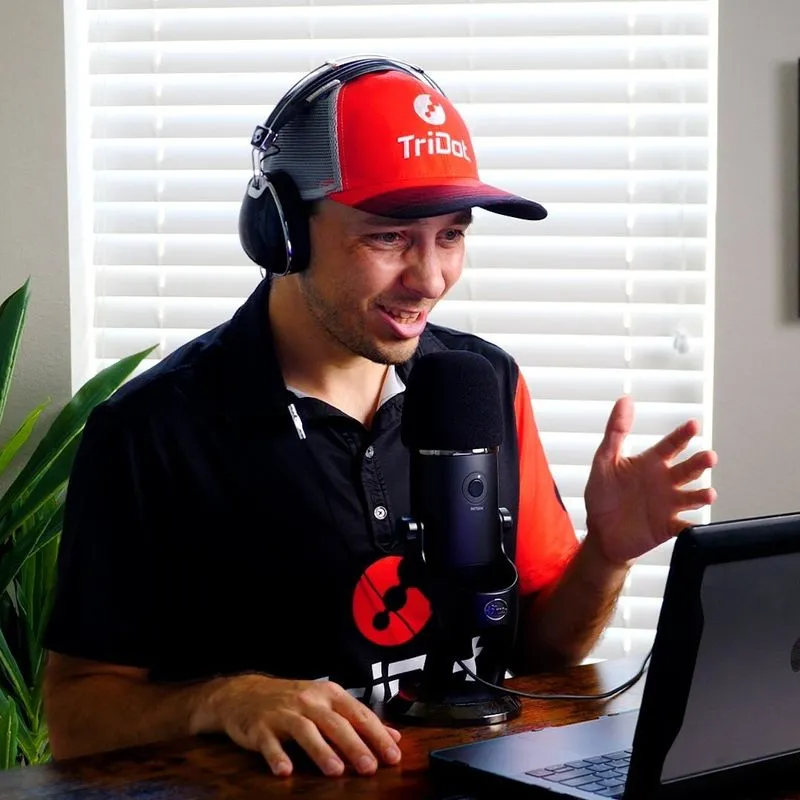
Returning to Triathlon Training After an Injury


Whether it’s a nagging niggle or a major surgery, injuries are an almost inevitable part of long-term triathlon training. In this episode, Physical Therapy expert Dr. BJ Leeper and Professional Triathlete Elizabeth James share valuable insights to help you return to training stronger and smarter. We’ll cover smart strategies for easing back into training, how to know when to push forward and when to pull back, and even practical tips on modalities and tools to support your recovery. BJ and Elizabeth discuss the mental and emotional challenges of injury recovery, sharing encouraging advice. While we can’t provide one-size-fits-all prescriptions, this episode is packed with actionable guidance to help you return to the sport you love!
TriDot Podcast Episode 309
Returning to Triathlon Training After Injury
Andrew Harley: Physical Therapy expert Dr. BJ Leeper and Professional Triathlete Elizabeth James, they are joining us to talk about how to return to our triathlon training after an injury or a surgery, specifically. There's a lot of reasons why we can take a temporary pause on our training, and returning from injury and surgery, you got to be careful. I'm Andrew the Average Triathlete, Voice of the People and Captain of the Middle of the Pack. We treat the show like any good workout. We'll start with a warm-up question, settle into our main set conversation, and then wind things down by having Dr. Leeper and Elizabeth answer an audience question on the cool down. Lots of good stuff. Let's get to it.
Announcer: This is the TriDot Podcast, the triathlon show that brings you world class coaching with every conversation. Let's get started with today's warm-up.
Andrew Harley: Big or small, triathlon-related or triathlon-adjacent, what is the most recent injury you have had, and how did you get that injury? Very excited to hear what our folks have to say. While we're talking about coming back from injury, I thought let's hear about the last time the three of us were injured. So, Elizabeth, tell us about your latest injury, mishap, whatever it was.
Elizabeth James: All right. Yeah. So my most recent injury was a sprain of the ligaments around the big toe joint, which is also known as Turf Toe. I now understand what that is and just how painful it is. So, it happened while I was pacing a friend in an ultra, just super rocky terrain. It was at night, stubbed my toe on a rock, and as I said, now, I can fully emphasize with what Turf Toe is, and it seems like such an insignificant thing, but it was so painful, and it just lingered forever. This is one I found incredibly hard to rehab, because the big toe is so important. We use it every single day, just walking around. So Turf Toe, that would be my most recent.
Andrew Harley: All right. It's when you hurt your back, right? You can't do any-- or your neck. You wake up because you slept on your neck wrong. You can't do anything without your back and your neck. Definitely highlighted, for you, the importance of the big toe. Yeah, I love it. Dr. BJ Leeper, Turf Toe or something different?
Dr. BJ Leeper: Oh man. I didn't have anything good for this question until just this last weekend. We went camping, and I decided to be a dad hero, and all the kids were jumping off this 15-foot cliff near where we were camping and taking the paddle boards out. And I decide, oh, I'm going to dive like I used to do in middle school and high school at the high dive at the pool. And I haven't done a dive for 30 years.
Andrew Harley: How hard could it be?
Dr. BJ Leeper: Yeah, exactly. And I get out there and I jump. And apparently, I did not go as vertical into the water as I thought I was going to go. And all of a sudden, I thought I literally dislocated, tore my shoulder off, because of the impact of the water at that height is enough that you don't want those limbs exposed or at weird angles. And it took my left shoulder and just completely subluxed it and was sore the whole rest of the weekend. And I just was so frustrated, because here I was thinking I was still 16 again, and my body's like, "Nope, you're not."
Andrew Harley: BJ, mine is actually similar to yours. Mine is me trying to be a little younger than I am. July 4th holiday of 2025, we traveled to Florida to spend some time at the beach with my Florida family. And so it's me, and my siblings, and their kids, and so a bunch of nephews, and nieces, and aunts, and uncles all hanging out at the beach. And one of my sister's sons -- shout out to my nephew, Lane -- he plays soccer, and apparently is, on every team he’s been on, the fastest kid on the team. He's at an age now, in junior high, where he's faster than all the adults in his life. And so all of the Florida family is like, "Oh, well, your Uncle Andrew from Texas is pretty fast. I wonder if you're faster now than Uncle Andrew." All of a sudden, this chatter from early in the trip becomes me turning around, and the three other uncles and some of the nephews are all getting in a line and determining how far we're going to run for a foot race. I'm like, "Guys, I don't think you understand. If I go from zero to a dead sprint, right now, without a warm-up, I'm going to pull a muscle. I'm going to. There's a greater than 50% chance I pull a muscle if we race right now on the beach." But everybody's lining up. None of them were concerned about it. None of them thought they were going to get injured. And I start walking that way, and my wife's like, I mean, she knows how easily I can get injured, and she's like, "This is a bad idea." And so all of a sudden, I'm not really ready, and somebody says, "Go," and everybody starts running. So I'm now behind. And so I start running. I have to kind of kick in the third and fourth gear to catch everybody. I do catch everybody. I do pass everybody. I take the lead with plenty of room to go. And right as I'm kind of surging ahead, I, sure enough, as predicted, feel a pop in my quad. Is it, BJ, is the quad on the front of the leg?
Dr. BJ Leeper: Yeah, quadricep.
Andrew Harley: Between quadricep and hamstring, I forget which one's the front and which one's the back. So I feel a pop in my quadricep, and I start hobbling. And everybody else goes by me and finishes. And everybody was like, "Yeah, you hurt yourself." I'm like, "Yeah, I'm 37 years old. I'm an easily injured athlete. I have to warm-up before I do something like this." Hey, guys, we're going to throw this question out to our audience. I'm excited to hear what was your most recent injury? From Turf Toe, to shoulders, to pulling quadriceps, hopefully you guys have some good ones, and hopefully they were good stories, but weren't too bad of an injury to recover from. We'll throw this question out on all of the TriDot social media accounts. So go find the post asking you what was the most recent injury you had. Our podcast is now on YouTube, it is now on Spotify, in both those places as a video podcast. So you can watch us have this conversation. You can watch BJ Leeper share the story of him diving into the Montana water and separating his shoulder. But in those places, YouTube and Spotify, you can answer this question, as well, and we look forward to seeing what your most recent injury is.
Announcer: Let's go.
Andrew Harley: All right, on to the main set, where Coach Elizabeth and Dr. BJ Leeper are going to talk to us about coming back from an injury. If you do a sprint race on the beach, and pull your quadricep, and you're coming back to training from injury, how do you go about doing that? How do you go about making sure you're easing back into the training correctly? And BJ, before we start getting into specifics, I have a two-part challenge, here. I've got a challenge to both of you, to give us today, as actionable of advice and as practical advice as you can, because I know the answer to every question I'm going to ask today could very well be, "It depends.” It depends, it depends, it depends on the athlete, the situation, the injury, their history. I know that. So please, my challenge to you, try to give us as actionable of advice as you can. The challenge to our listeners is to do the best you can to hear what Elizabeth and BJ have to say, and put your thinking cap on, and apply it to your situation, because they can only get so specific today with something as variable as returning to injury. So there's my double disclaimer - the challenge to the audience, challenge to our experts. We're going to do the best we can to give some practical advice today and some learning opportunity. But BJ, in light of me joking but not jokingly saying that, how individualized does a return to training plan need to be for an athlete?
Dr. BJ Leeper: You've already taken all of my context away, of using that "it depends", because that's pretty much every answer. And to your point, Andrew, we know it's individualized, but I think there's some general things we can focus on that are helpful for anybody struggling with an injury or going through that process. And I always break it down into two things. It's strategies versus tactics. And I think a lot of us tend to get so wrapped up in the tactics of what do I specifically need to do, but I think you need to keep that lens on, of looking at the overarching strategy of how you're approaching your return. So there's certain principles and guidelines that can definitely be applied to almost all of us as we're going through that return to training approach, following injury. But obviously, depending on the injury, the approach will need to be individualized, as it should be. But one thing I think that's a big nugget to hang on, as we talk about return to injury, is one of the main goals, as you're returning to injury, is to reduce the risk of further injury or future injury, obviously. And that is one of our biggest indicators, especially in the medical world. One of the first things we ask, as we work with athletes and patients, is, "What's your injury history?" Because the biggest indicator of future injury is previous injury. So I think as we look at trying to prevent future injury, we have to be realistic and understand the history, and obviously, that history for each person is individual.
Andrew Harley: Yeah, no, great BJ. Thanks so much for giving us just a framework for this conversation through that answer. And again, for athletes listening today, I mean, there is no telling what your injury stories are, and what you'll experience in the future. And so as you hear the advice today, the wisdom today, try to take what you hear and apply it to your situation when you get there. And I'm sure, like Elizabeth and BJ will probably tell us in this episode, work with a specialist in your area, if you can, if the injury is bad enough. But we'll get to that here in a little bit. So let's get right into the big question. And this is, when we are out for an injury, how do we determine when and how to return to training? What are the factors and our body cues that we should consider before making that return? Dr. BJ?
Dr. BJ Leeper: Yeah, and these are two huge questions, right? The ‘when’ and the ‘how’. One thing I always – and I think I've shared this story before, even on a previous podcast, but one thing I always reference in addressing the question of even just ‘when’, is going back to high school, and this car that I drove in high school. Starting as a sophomore in high school, I had this old '92 -- at the time, it was pretty hot car. It wasn’t—
Andrew Harley: BJ, we're a video podcast. I can pop this on the screen if you send us this picture.
Dr. BJ Leeper: Yeah, we’ll pop up a picture. It was a '92 Toyota Celica. And I drove that car from sophomore year of high school, literally, 20-25 years, because I just loved that car. I drove it forever. Even as I got older, everybody at work was like, "Why are you still driving that thing?" But I just loved it. But the funny thing about it was, occasionally, being an older car, as it got advanced in years, it started to have the check engine light that would pop on, occasionally. And at first it was like, "Oh, what's going on?" I took notice. And then over time, I'd realize, well, I didn't do anything about it. And here it is, two days later, it's gone. So I'm like, "Well, I guess, out of sight, out of mind. I don't need to worry too much about it." And then as it got older, and as I got older, it would start to come on and stay on for weeks, to the point where I was still hoping it would just go away, but still didn't want to do anything about it, because I was just -- it was a reliable car overall, but I was just lazy at that point. I'm like, "I don't want to deal with it." And it got to a point where I was so annoyed with that check engine light being always on that I would take a strip of black electrical tape and cover it over the dashboard, so I didn't have to see it. It was just, in my mind, if it could be out of sight, I wouldn't have to worry about it. If I didn't see it, it wasn't a big deal. And I think that's often how we deal with injuries, especially when there are those check engine light warning signs on. Even if we know there's been an incident and we've been injured, it's like that ‘when’ of how do we know when we're ready to go back? When should we take it in and shut it down and really deal with it? And I think there's certain red flags, those check engine light indicators, where we just have to really know our body and really be in tune with it. For example, if you're taking ibuprofen every single session in order to just execute it and get through it -- we always joke, it's even Vitamin I, we call it, because ibuprofen becomes a staple. Those are indicators, those are red check engine lights that need to be looked at. If you're having pain, not just later in the activity, but right from the onset of activity, and it doesn't improve as the activity goes on, that's a big red flag. If basic movements -- just squatting, stepping, reaching to touch your toes, when you get out of bed in the morning -- if those basic movements are painful, it's no longer a fitness issue, it's a health issue.
So I think as triathletes, and we're probably the worst at this, because we're known to push just through anything, I think it's, number one, when should you return to training? It's like, well, when are those check engine lights, obvious cues, obvious indicators, off the table? If those are off the table, then, okay, let's start to approach training. And then how do we do that? It's like, well, there's no exact science answer to it, but I think there's certain indicators you have to look at. And I always use the strategy of a 3-point pain check principle. So meaning, if you decide, okay, red flag indicators off the bat are off the table, I'm getting back into training, do I have pain at any point during that training? If I can check ‘no’ on that box, okay, did I have pain or discomfort due to that activity or training later on that day? Did I have pain or discomfort because of that training when I woke up the next morning? If you can check ‘no on’ all three of those counts, you're likely returning to training in an appropriate manner. But if you can check the box, like, "Yep, that got me," you probably need to adjust. And so again, it's not a great answer, but it's more of a principle of how do you approach it. And I think it's just, again, nobody knows your body better than you, and when in doubt, don't.
Andrew Harley: What I like about that answer, BJ -- you say it's not a great answer, but I think it's a phenomenal answer, because I think -- I know for myself, and I'm sure for a lot of the folks listening, that reminder to, if that engine light is on still, especially if you're coming off an injury where you really hurt something, you could feel exponentially better, but still have a little pain, or a little tightness, or a little something. And be like, "Oh, I feel better. I think I'm good enough to try it." It's like, no, no, no, that light is still on. Clear that light first. Don't be like Dr. BJ Leeper's Celica. Clear the light first, and then start training, or else you could re-injure yourself again. So I think in most cases, definitely speaking for myself, I usually try it probably a little too soon, when I feel, "Okay, I'm close enough. Let's try a soft run and see how it goes." And yeah, the light's still on, even though you feel a little bit better. And so, yeah, I really like that answer. Elizabeth, just from your own experience, and as you talk with your athletes and coach your athletes, is there anything different you say, or additional points you point out to them, when it comes to time for them to return from an injury?
Elizabeth James: Yeah, certainly nothing different. I'm sure that BJ's help guiding me back from a number of injuries plays a big role in how I approach things with the athletes I coach, now. But one of the things that, as I'm talking with them and we talk through, it's like, if you sought medical help and the advice of a medical professional in this injury, then we also need clearance from them to return. And I view that with injury or illness. It's like, if you went to the doctor, we need the doctor's advice on when we're okay to return. If you had surgery, I need that orthopedic surgeon to give us clearance and guidance on when we're going to return. So, type and severity of injuries is certainly a factor, there. And really being able to rely on medical professionals and their advice, in terms of a return to training plan, is very helpful. I definitely do those three checks, in terms of pain levels, with how does it feel during, a little bit after, what's the next morning? And then also, looking at the swelling and the inflammation, as well, that even if an athlete is like, "Oh, it doesn't hurt that bad, but my knee is three times the size of what it should be,” it's like, okay, even if you're saying that it doesn't hurt, clearly the body is giving you that check engine light, or there's a warning sign here that something isn't right. Same thing with range of motion or strength and muscle control. Even if something doesn't hurt, but an athlete is adjusting their gait or adjusting their pedal stroke for it, it doesn't mean that that's not going to come back in a compensation that's going to cause a different issue later. And so even if they can perform an activity without necessarily increased pain, but I can see that they're favoring something, we really need to look at that, because that's where we really are risking a different injury or a chronic issue from the compensations that they're making. And then the only other thing that I would add to this is there's also a psychological readiness to come back from injury. And one of the things that I see this most often is some sort of trauma that has happened. And unfortunately, probably the biggest case scenario here is a bike crash, or if there's a bike accident between a bike and a car. And returning to injury may not be necessarily a physical limitation, but they may not be ready to get back on the bike, yet. We may need to do some mental work first to really have them feel comfortable and feel safe in order to do that. And we may need to modify some things, as well, and go back to easier training sessions, go back to indoor training sessions. It might be a while until that athlete is psychologically ready to take on some of those training sessions again. And I think that's an important component that we really need to think about with injury. And I'm sure it's something we'll touch on a little bit later, too, with just the mental component as well as the physical.
Andrew Harley: Really interesting, Elizabeth.
Dr. BJ Leeper: Andrew, if I can jump in, because I think what EJ just said right there is huge. We know that pain is a conscious feeling produced by the brain 100% of the time. And Elizabeth mentioned a great word: trauma. And it's not just the trauma of something that we would all assume is traumatic, like a crash, but any injury, depending on the level and how it affected that athlete, is traumatic. And how the brain responds to that, and how the brain encapsulates that moment of time, or moment of period of time with that injury, is huge, because the body -- and this is huge, to the point of what Elizabeth said, with working with a professional to help guide that return to training, because you can still be dealing with that feeling of pain and that trauma in your brain, but mechanically and chemically, your body has cleared that injury, and the injury has healed, but yet, you still feel something that's very real to you, because of that traumatic incident. And I don't want to dismiss that, because that is such a key component to getting over an injury. And we'll talk more, in a little bit, about that, but that's huge.
Andrew Harley: Yeah, very interesting. Thanks for adding that, BJ. I've had a number of TriDot athletes ask for an episode like this, for one reason or another. But I'm sure it's because in their current triathlon journey, they are trying to navigate coming back from an injury. And one of those people, who's like, "Hey, we should do an episode on coming back to training," is one of the producers of our show, Sarah Burney. Sarah is a TriDot Ambassador who works with me on the TriDot Podcast. So shout out to her. She's very helpful, in a number of ways behind the scenes, for the podcast. But Sarah, a little earlier this year, had a surgery, and she is currently working with her doctors on the best game plan for returning to training. And guys, her doctors are not triathletes who know what her next half IRONMAN is on the calendar and know just how strong that pull to come back can be for a pesky endurance athlete, like us. So I'm just a little curious, for Sarah, personally, and anybody else who's like Sarah, is there a difference between coming back to training from a medical procedure, like some form of surgery, and coming back from hurting something, like pulling a muscle or having Turf Toe? Or is it just different forms of bodily trauma that we have to rebound from? And then I guess, wrapped up in this, as well, just making this a very compound question for you, BJ, so get ready. Wrapped up in here, as well, is, how much do we listen to the advice of a medical practitioner who is not endurance athlete savvy? Do we listen to them all in on their timetable for return, or should we also consult with somebody who is a little bit more athletic trained? A lot there. BJ, take it away.
Dr. BJ Leeper: Yeah, it's a great question, and I think it makes a lot of sense.
Andrew Harley: Questions. Questions.
Dr. BJ Leeper: Yeah, questions. But first and foremost, the first question of dealing with a surgery or a planned procedure versus a typical injury or run of the mill whatever, physiologically, we know that tissue is tissue. Your tissue doesn't know whether it had surgery or some type of different trauma. The mechanisms, technically, of healing are still the same. However, because we know that surgery involves a primary intention of the surgeon, we know that that's done for a reason and in a certain way so that hopefully, the speed and characteristics of that healing can be faster. They can be different. So there's less complications, potentially, with the healing of a surgical incision, with minimal scarring and whatnot, than some other type of injury. And I think along those lines, there are certain protocols, because surgeons and doctors have worked with those types of procedures over time, so they know in general what works well, maybe, and what doesn't. So obviously, there's certain protocols to abide by, in the early stages of healing, that your doctor is going to be the expert on. But to your second question, when you get to that point of bridging the gap back into the things we love with training and racing, especially with triathlon, there is a bridge to gap – a gap to bridge, so to speak, that is going to be different, and the context of that is different, and different demands that a triathlete has, than just your general Joe that wants to get back to walking and going up and down the stairs. So I think it is key to align with a physician, a provider, that understands your goals and what you're trying to get back to. And like we said earlier, nobody knows your body better than you. But at the same point of what EJ said, you need the guidance of that medical provider, at times, to make sure you're doing the right things. I think aligning with the provider -- because being one of those medical providers, the first thing I'm doing is making sure I'm taking the time to listen and align to what that athlete or the patient is telling me, what their goals are and where they're at. And as a patient or as an athlete, on the other side of it, if you're finding that that medical provider is not listening to you, not really hearing you, even though you might be the one pushing and they're the ones pulling back, if you're not able to meet in the middle, or you don't feel like there's alignment there, then you can be an advocate for your own healthcare and pursue somebody that you feel like does align. That doesn't mean you're just firing every provider because they're not giving you the answer you want—
Andrew Harley: I'm going to go ask Mom for permission because Dad said no.
Dr. BJ Leeper: Yeah, exactly. But there needs to be an alignment, and there needs to be that understanding. And I think most people get it, when that provider is not just like, "Okay, yeah, yeah, whatever, I got to get to my next patient," but they're actually hearing you and understanding, "Oh, I get it. Let's work together on this." That's obviously key.
Andrew Harley: Elizabeth, as you're coaching your athletes, is this something that comes up? Have you walked through these kind of scenarios with an athlete who's wanting permission from Coach to train, but you're trying to talk to the providers to make sure it's okay?
Elizabeth James: Yeah, absolutely. I was nodding and smiling, I mean, the whole time as BJ was talking about this. I can think of examples from my own return to training and then ones with my athletes. I specifically remember the first time I ever had something done on the hamstring that I had torn. The doctor told me, he's like, "All right, just walking." And I was like, "All right, well, what are my limitations on walking?" He's like, "Oh, walking is so low volume. You can walk as much as you want." And I went back in for a follow up three weeks later, and me and my little calendar, I've got my homework that I'm ready to turn in. And he's looking at this, he's like, "You walk 10k every day?" And I was like, "Yeah." And he was like, "What are you? Like, why?" And I was like, "Well, you said there was no limitations on walking.”
Andrew Harley: You said I could walk.
Elizabeth James: And he was like, "That's way too much." And I was like – we were not on the same page.
Andrew Harley: You should have said that.
Elizabeth James: Exactly. I was like, oh, man.
Andrew Harley: He didn’t know who you were. He didn't know what you're about. We all saw that, where that was going.
Elizabeth James: Yup, exactly. Finding medical professionals that you can really have good alignment with is key. And that's something that I have found is super important for me. And I told the physical therapist that I've been working with all of this year, I was like, “Look, you have to give me very strict guidelines, because any leeway you give, I'm going to take, because I'm so anxious to get back to this. And so if there's something that's a hard no, I need to know that that's a hard no. It's not a maybe, or you can try it, and you can see. It's like, no, absolutely not. We're not cleared for that yet.” And so I know myself. I know that I need those strict guidelines, and I also know that I need to find medical professionals that are not afraid to tell me that, because that works well for me. I mean, I've gone through a number of physical therapists in order to find one that really jived well with me, my goals, the type of communication, getting me back to where I wanted to be. And that was absolutely worth it.
Andrew Harley: And Elizabeth, when you say that the one you're with now, you jive well with them, that doesn't just mean that they give you permission to do what you want to do, right?
Elizabeth James: In fact, quite the opposite.
Andrew Harley: Okay.
Elizabeth James: It's been the most strict, and the person that's given me the most limitations, and that's been very helpful for me. And it has kept me continually progressing versus somebody that gives me a little more leeway, and I go and I do too much. So, it's been great. And I mean, same thing with the athletes that I work with. We work to find that gradual progression, that individualized approach. We're continuously monitoring the symptoms. I think sometimes my athletes get annoyed with me, because I'm like, “Well, how did it feel after? “And then I'll text them again a few hours later. I was like, “Well, how's your pain level now?” And then I'll check in again the next morning. I was like, “How are you feeling before we're going into this training session?” But I mean, I do, I want to just monitor those symptoms continuously and make sure that the gradual progression that we're going on is appropriate for them. And so I think that those are, you know, some big guidelines when I'm looking at an athlete coming back, myself coming back: gradual, individual, continuously monitoring.
Andrew Harley: So Elizabeth, part of why I brought you onto this episode with Dr. BJ Leeper, unfortunately, is because you are an athlete that, in the last couple years, has had a number of different injuries, in the time that I've known you. I get so -- annoyed is the wrong word. Jealous, maybe a little envious, and I'm sure you're probably the same way. I know athletes that -- there's a girl I used to work with in television, that was a producer at the network I was at. Her Strava, she was just a runner, not a triathlete. But her Strava, she logged like 2140-something miles on the year, and I ran like 600 that year, next to swimming and biking, as well. But I'm doing all my things, and I'm picking up a niggle here, a nick there, a limp there, and she's just always fine. She can run endlessly and is always fine. And I know other athletes like that. You and I aren't that way. You and I will hurt ourselves very deeply and very badly if we do too much, too whatever. If we look the wrong way at a track, we can hurt ourselves. And so, Elizabeth, what I'm curious to hear, just from your personal experience, how has the return from injury been like injury to injury? You've had a variety of different injuries. Is the protocol always kind of similar, or is it just very different based on what the injury was?
Elizabeth James: Yeah, that's a great question. I would say that the general guidelines for returning to training have applied to, I mean, all of the injuries that I've had. But what has been very different is the rate of progression, and then the types of activities that I've been able to do during specific points of the rehab process. For example, coming back from broken bones has been much easier than soft tissue and tendon rehab.
Andrew Harley: Interesting. Yeah, interesting.
Elizabeth James: When I broke my hand -- I crashed my bike, broke my hand. I was in a cast for eight weeks. I could still bike on the trainer--
Andrew Harley: Won a race. Won a race when you broke your hand. Let's throw that one in there.
Elizabeth James: That's true. It does make for a good story. But I was in a cast for eight weeks, but I could still bike on the trainer. I could run outside. I could even get in the pool and do some kick drills. And so that was very minimal, in terms of rehab. Just put the hand in the cast for eight weeks. But like when I had surgery on my hamstring, I was limited – I mean, I know we just joked about this, but I was limited to only walking for a few months. And I eventually pulled that back into a very manageable walking load. And one of the things that I found, and we touched on this a little bit earlier, too, about the mental side of things, is that I have found that the more physical limitations that I've had, I've also really had to be proactive on my attitude and other supporting rehabilitation activities. And so making sure that I have a very clear plan and celebrating progress along the way has been super important. When my hand was in a cast, I didn't feel very limited. I really didn't see that as a major injury, despite a broken bone, because there was still so much that I could do. Now, when I was down to just walking, and really peeled that back to 15, 20 minutes a day, I really had to work on my attitude and really had to focus on, okay, what can I do right now? And how can I still stay involved? Because I was missing not only hours of activity, but the endorphins that go along with that. And I wasn't getting the dopamine hit. And so it's like, I need to support myself mentally when, physically, I'm very limited. And so for me, I would say general guidelines of gradual progression and monitoring symptoms have been similar in all the injuries, but the more that we take away the physical part of it, I've had to work even harder on the mental component to stay positive, stay strong, celebrate the wins, and really just define what that path back was going to be.
Andrew Harley: Yeah, thanks so much for sharing that. And BJ, something I'm curious about is, earlier we talked about the check engine light, and you gave us the disclaimer that whatever the surgery was, whatever the injury is, as you're coming back, make sure that check engine light is off before you start really training. And so if there's an athlete at home, they've experienced something, they're pumping the brakes, they're waiting, they're waiting, they're waiting. They feel good. "Okay, I listen to Dr. Leeper. I think the check engine light has clicked off." At that point, can we jump back in full steam, or is there some sort of protocol for easing back into the training, or does it depend? Please tell us.
Dr. BJ Leeper: Guess. Guess what I'm going to say.
Andrew Harley: It depends.
Dr. BJ Leeper: Yeah.
Elizabeth James: You gave him permission to use it. He's been wanting to use it all episode.
Dr. BJ Leeper: You let me out, let me off the hook. Now, that's another great question. Very rarely are you able to jump back just full steam, 100%. Most of the return, I mean, even the judgment on when to come back to training is still a guessing game, truly. I mean, there are certain indicators, like we talked about, that you got to make sure to clear, but it's literally hard to know for everybody. And then even when you do return, it's very, very rare that you just pull back, full steam ahead, 100%. So I think it's good for athletes to understand that this is going to be a roller coaster ride. That's expected. Very rarely is it a linear progression that you just knock it out of the park. Even with what Elizabeth's talking about, with good guidance and a provider that really dials her in and keeps her on track, very rarely are you going to hit right at that razor's edge. We always talk about this razor's edge of the threshold of your ability, because ideally, with return to training, you want to be pushing to that razor's edge without exceeding it. Without exceeding it and risking re-injury, or chemical irritation, all these things. If you can push to that razor's edge without exceeding it and continue to progress as efficiently and as rapidly as you can, that's the ideal. But to hit that nail on the head is very tricky. And so again, like we said earlier, a lot of times, especially as a triathlete or a runner, you're going to push, the provider is going to pull back, try to pull you back, and then hopefully you're meeting in the middle, which is that razor's edge. And that's why sometimes you see different providers, where they're going to be extremely conservative. They're going to pull back far below that razor's edge, which may be good for certain individuals, may not be. It depends, too, on the personality of the individual. If I've got an athlete I'm working with, who I know they're going to be walking 10k every day, like EL, I might need to put those guardrails up and really pull them back, so that we can continue to have more a linear approach and less of the roller coaster ride. But all that said, you're never going to nail it 100%, right out of the gate. So I think it's good to know, number one, probably not going to jump back full steam. But number two, you can get back efficiently, as long as you're looking at those indicators like we talked about, those red flags. One other big thing to note that I think is really interesting, and to bring up even right now, is that as you're returning back from injury -- and like we talked about, you're never going to hit it perfectly, in a linear fashion -- when you do have those setbacks and those episodes, where you do maybe hit, I had pain during, or later, or that next day, oftentimes, as you're -- and I've seen this before, and this is something that not a lot of people talk about, is the way your body responds and returns back to normal movement is through what we call the neuroplasticity of motor programming, or motor packages. And the way I explain this to people is when you first learned, for example, how to shoot a free throw, you went through all the individual steps, the drills that a coach taught you how—
Andrew Harley: I don't think I've ever learned how to properly shoot a free throw, BJ. I'm 5'6"-ish, so we play different sports.
Dr. BJ Leeper: I played basketball. So that's what I relate to.
Andrew Harley: I'm tracking with you. I’m tracking with you.
Dr. BJ Leeper: But as you learn those individual drills and all the parts that go into shooting a free throw, as you develop that pattern, your brain and the way your body operates is very efficient, in that it doesn't say, "Okay, do this with your hand, do this with your elbow, do this with your form." It says, "Just activate the free throw shooting package." And that package is stored as like a book on the bookshelf in your brain, so that every time you do it, you grab that book, and you execute that pattern. And that is how we operate with everything. Running, walking, riding a bike. We operate in motor packages. So think of all these books on the bookshelf that your brain is constantly grabbing to execute movement. The opposite is also true. When you develop a bad pattern, a bad book on that bookshelf due to injury, because of pain, and a trauma, or whatever, that book exists on the bookshelf and is never going away. And it sounds weird to say that. A lot of people think when they're returning from injury, and they're doing rehab or whatever, whether it's with a provider or not, a lot of people assume that they're just taking that bad book and they're rewriting the pages of it, but that's not exactly true in how the brain and the neuroplasticity of our patterns are made. So what I tell patients and athletes is that, as you're returning back from injury, we're creating that new book. And our hope is that as we're progressing you, in hopefully a linear fashion, as much as we can get away from the roller coasters, that you're grabbing that good book every time, or more often than not. But the reality is, even if you get months out from injury, and you've been grabbing the good book pattern more often than not, there still exists the capacity for your brain to go ‘bad book pattern’, and you might feel pain as a result of that pattern or feel that compensation. That's not because you're still injured, or not because you still have tissue damage or mechanical injury, it's simply because your brain accessed the bad book. And that knowledge is sometimes so powerful for athletes to understand as they're coming back, to know I might be one month in, and I'm doing great, I'm having great sessions, I'm getting back, and then all of a sudden, boom, bad book hits, and you feel like you're back to square one. And like Elizabeth said, psychologically, that is such a hard thing to deal with. But knowing that how the neuroplasticity of the brain works, and knowing that that's possible -- not to say that you can't start getting inflammation chemically and mechanical injury again, because you're exceeding your threshold -- but oftentimes it's still just a bad book pattern that you just have to brush off. "Okay, it's okay. I'm going to go back, get the good reps, good book pattern, and continue to move on." So I bring that up, because that's something that I never learned in school. That's something a lot of athletes and patients coming back from injury don't necessarily realize that that can be happening in their brain. And again, remember, pain is something that your brain produces. Pain is not necessarily because you had this mechanical injury that produces pain. There can be a stimulus that gets sent to your brain and then your brain interprets it as pain. But pain is 100% produced by the conscious perception in your brain. So again, when we talk about pain, a lot of times it's powerful, really empowering to know that information. And there's a great book -- and I've probably mentioned this before on a previous podcast where we've talked about pain, specifically -- but there's a great book by a neuroscientist named Lorimer Moseley, and it's called "Explain Pain." That talks a lot about the details of that. So I'll often have patients or athletes, if I know they're dealing with that roller coaster ride, I'll often have them reference that book, just so they can wrap their mind around it. And sometimes just the knowledge of that is powerful to progressing past that injury.
Andrew Harley: That whole ‘bad book, good book’, the visualization, illustration of neuroplasticity, that is like, for me, a top 4 TriDot Podcast individual fact that I've ever heard. I'm sitting here like, that's just wrecking my brain. Elizabeth, please respond. What did you think hearing -- that was four minutes of just fascinating factoids from Dr. Leeper.
Elizabeth James: This has been a saving grace for me. I mean, truthfully, I can think back -- as I was coming back from hamstring surgery, I specifically remember that there was one of the Threshold Interval bike rides, and Tuesday morning trainer session, and I am nailing it. It's going so well. But there's pain. And I stop for a second, and the pain is gone. And it's like, "Okay, wait a second, here. What's going on?" I start again, and there's pain again. And it can be so difficult for athletes, because that pain is real. It truthfully hurts. But I had to go back to, "This is bad book. This is bad book." Physically, I am 100% capable of doing this. Immediately, when I stop the interval, I'm fine. And so, I mean, finished out the workout. Yeah, it was painful, didn't feel good, but I got off the bike 100% okay. And the only way that I can explain that is that was ‘bad book pattern’, and just the brain saying, "This is a really hard effort. This is exactly where you would be in the most pain in the last couple years." And so the brain just goes back to, "Threshold Intervals on the bike, Tuesday morning. This hurts." And it's like, it doesn't anymore. But it just is -- it's fascinating to me. And so, I mean, knowing that is super empowering, as an athlete. I know that without that knowledge, I totally would have shut that down and probably not tried Threshold Intervals for another month. I would have been like, "Oh, no, it's too painful. I can't do it," even with those other system checks. But having that knowledge of, okay, what is the brain's influence in this workout right now, and what patterns have I just resorted back to in this session, was very empowering for me to be able to move on with the workout progression.
Andrew Harley: So both of you have mentioned, as an athlete is getting back into training -- Elizabeth, for you personally, BJ for athletes you've worked with -- just being on the lookout for any red flags, anything you might be feeling as you're getting back into the training, that might be a red flag. Like, oh, oh, maybe the check engine light isn't fully off, maybe. So just before we move on past this talk of getting back into the training, what are some examples of a red flag we should be on the lookout for? Because I don't want somebody feeling something in a session, and being like, "Oh, that was just a ‘bad book’ thing. I'm probably fine." But then having the same flag, a couple workouts in a row, and not recognizing it as a flag because we didn't get into specifics, here. So, Elizabeth, can you just share some of the red flags that you're on the lookout for in your own body when you're coming back to training, and then, BJ, if you could fill in any gaps of things, maybe, she doesn't cover, that you would tell an athlete to be on the lookout for, when we're out in those sessions getting back at it. Elizabeth?
Elizabeth James: Yeah, 100%. I mean, I do want to start with sharp or increasing pain during exercise. And that's part of the reason, even going back to the example that I gave, that I stopped the interval to reassess what was going on. Because we do want to make sure that we are looking toward those pain cues. And so that is still a red flag. We still need to monitor that. We need to take that seriously. We need to figure out what's going on. So sharp or increasing pain, swelling, or the area is really warm where the injury site was is another thing to monitor. If there's joint instability, you just feel like that part of the body, or that structure, is unstable or super weak. Decreased performance in the specific area that we're looking at because of an injury. And then, as I went back to earlier, even if there's not pain, there's not proper technique -- that would be a red flag for me, as well, working with an athlete. And then that night pain, or persistent soreness, going into how's the pain level a few hours later, how does it feel the next morning, as well. So those are the main red flags that I know. I've got my personal checklist. And yeah, anytime I'm working with an athlete, those are the six things. It's like, "All right, let's talk through these. What do we feel?"
Andrew Harley: BJ, anything that she's missing that you would tell somebody to be on the lookout for as they're returning back?
Dr. BJ Leeper: Yeah, that's great. And one of the big, obvious ones that you mentioned is the chemical inflammation, the swelling. Those are the no brainers, obvious, your body is responding adversely. You can see that, physically feel that. But one of the best indicators we have is human movement. And I always say this, but if somebody's coming in, and I'm asking them how they feel, and they just say, "Yeah, I feel great." I'm like, "Okay, don't just tell me with your mouth, show me with your movement, show me with your body." You have to back that up by showing me fundamental patterns of movement that aren't breaking down. And movements that we knew you had before. So as you're returning back to training, we can tell, easily. I can tell without you saying a word. If your movement is getting worse -- and we're talking about basic fundamental movement of squatting, stepping, lunging, balancing, twisting, turning. I mean, things that are fundamentally -- it's not riding a bike, necessarily. If those things are changing, and they were good before, then we can say that you're running a risk of your body is changing, you're compensating, something is not going the way we want it to. You're losing that fundamental capacity. And I think that the difficult thing, especially with triathletes, and some of the best athletes I've worked with, are the most challenging in this area, because athletic individuals are very good at finding a way. Their bodies are very good at finding a way around the injury. And what happens is, over time, that leads to dysfunction and can break down other areas. So maybe you don't feel pain, maybe you don't feel you're in the ‘bad book’ category, but your body is showing us, if we were looking at your basic movement, that you are compensating in a certain way. And those are the things we have to steer clear of -- any compensations that we can see. So again, not just using a pain rating scale, but using movement, basic movement, as an indicator that if things hurt, again, you don't have a fitness issue. It's not like, "Oh, I guess you just need to get back in shape at that point." It's no, there's still potentially a health issue here, or a medical issue, that needs to be addressed.
Andrew Harley: If you feel like a wonky donkey, go sit down, grab a sweet tea, watch some TV. You shouldn't be training today. BJ, something I'm curious about, and I know a lot of athletes are curious about, is how does TriDot, as a training system handle an athlete being out for a break and then coming back from injury? Obviously, we know it's monitoring our training. We know that if we're not training, there's no training data going to TriDot, and that means something to TriDot. It's picking up on the fact that you're not doing these sessions, because you've been out. So as somebody returns to training on TriDot, what are they going to see in the platform, and how does the platform handle an absence for a while?
Dr. BJ Leeper: Yeah. So I've had the privilege of working behind the scenes with a lot of the engineers and data scientists working with TriDot. So I've been able to see this and witness what things are doing, firsthand. TriDot has an intelligence engine, the FitLogic intelligence engine, that really optimizes an athlete's training program. Like you said, Andrew, based on what data the system is seeing or not seeing. So whether the athlete is executing sessions or not executing sessions, TriDot is considering that. So what it will do is actually take this training stress profile of the athlete -- that considers the athlete's age, their gender, their genetics, basically how much stress can that athlete take -- and then as the athlete misses sessions, it will start to adjust session intensity, duration, overall weekly volume, to consider that, to make sure that if the athlete's missing significant time, that it meets them where they're at as they return. So it's such a great tool to be able to have that from a programming and a training standpoint, that you don't have to guess about that intensity, the intensity is going to be there. And then, based on how you execute those sessions, continues to drive the system. So it's a fascinating thing. And again, it's not one size fits all. It's individualized based on that individual's training stress profile.
Andrew Harley: When we're returning from injury, or we are returned from injury, we got our swim, bike, run training. A lot of triathletes, just in their rhythm, do some strength stuff, probably do some stretching, mobility stuff, stability stuff. Just talk to us, like is, when we're coming back from an injury, should we put any extra emphasis or extra focus, extra time, towards any certain modality to help support our return from injury, or should we just ease back into all of it at a pretty equal rate, and it wouldn't make that much of a difference to do extra strength, or extra this, or extra that. Does that make sense? You get what I'm getting at? Should we spend some extra time on any one thing to help support the return to training?
Dr. BJ Leeper: It's a great question. I think the tendency of most athletes, especially triathletes, is always, they're always looking for, "What can I do more? Where can I add more, here or there?" And my answer here is, honestly, for most individuals, it's not what you do, it's what you don't do.
Andrew Harley: Okay, interesting.
Dr. BJ Leeper: So to be quite honest, with a lot of athletes I've worked with, and especially in the triathlete world, I've seen this a lot. Sometimes an injury has been the best blessing in disguise for that athlete, because it's taken them off of some of their training, or all of their training, and it's allowed them to focus on things that they can do, they should be focused on, that they're not taking the time to do, because they're trying to add so many different things to their swim, bike, and run training, or again, always looking for the one more thing. But the things that I've found that are critical in this path back are, and sometimes again, you have to pull yourself off of a lot of training to get these things checked off, ut it's spending the time to focus on things that we consider domains of movement health, or some might call wellness, where we talk about breathing, we talk about sleep, we talk about nutrition. You kind of mentioned it, Andrew, talking about fundamental mobility and stability work, where a lot of people would consider that specific strength training, stretching, maybe, that they don't normally take the time to do. Behavioral health, like Elizabeth pointed this out, too, like how do you handle all, maybe, the non-physical stressors in your life? Work, relationships, things that are affecting you psychologically in your comeback from injury. Like these are things that sometimes we have to stop and not do something else in order to focus on some of these things that we probably should be doing. But again, my disclaimer for most athletes is, honestly, it's likely not what you're doing or what you're trying to achieve, it's likely what you're not doing or what you should not be doing. So I think that's one of the things to think about injury as an opportunity. It's an opportunity to maybe step back and focus on some of these other things, these movement health domains that you maybe weren't really spending much time addressing.
Andrew Harley: Yeah, we're getting close to the end of our time today, and so I almost skipped that question. I'm glad I didn't, because that feels like such an important warning, reminder, to -- I think it's so easy for us to, oh man, we haven't been swimming, biking, and running. We haven't been doing these things that we're used to being able to do. We want to get back at it. We want to get back at it the right way. And so we can overcompensate by walking 10k per day, because that's what we're allowed to do. And so, thanks for that reminder, BJ, right there. And Elizabeth, I remember, specifically, when you did break your hand, you rolled into a couple staff functions, and something like three times a day, you would pull out this red-light therapy, hand scanner device that was not supposed to be, but potentially going to help your bones heal a little bit faster, because that's the way you roll when it comes back to getting back at it from injury. And so I'll throw this question to you, and then BJ, please fill in any gaps along the way. But that's an extreme example. But there's things like braces, there's KT tape, there's hot and cold lotion. Like BJ said, vitamin I, ibuprofen. Can these helpful tools just support our body as we get back into training, or are they crutches that are probably helping us skirt by some sort of imbalance, and we maybe shouldn't use them? What are your thoughts, and then BJ, your thoughts, as well, on using these aids to support our body as we're getting back to training?
Elizabeth James: My take is that these items can certainly help manage some of the symptoms, they can provide support, they can increase an athlete's confidence as they start to return to training, but they're certainly complimentary tools, so they should be used alongside a proper rehab program that really focuses on restoring strength, flexibility, function. And as you said, Andrew, I mean, they can become a crutch. And so over reliance or improper use of those items can be counterproductive. We don't want to get into it being vitamin I, where we take it every single day. That could be something that maybe helps you get through one session in a 3-month period, but that's not something that we want to be constant or constantly relying on. And so I'd say always consider the advice from the health care professionals, a physiotherapist, regarding the appropriate use of things like a brace, or KT tape, or hot and cold therapy, because they can help, especially in those initial stages of recovery. And I think that's where I would also put an emphasis here, is that in those initial stages of recovery, a little bit of extra support, or some hot and cold therapy that might be appropriate for reducing inflammation, or a heat therapy that supports blood flow or helps warm the muscles up prior to training, I think that's absolutely appropriate. But if you find yourself constantly relying on those further and further from the actual injury, in your return, then we really need to think about if that's become a crutch, and if there's an over reliance on those things versus addressing the root cause and the issue.
Andrew Harley: If you need a knee brace to go for a run three months after a knee injury, you probably didn't get your knee ‘check engine lights’ all the way cleared. BJ, anything to add there? Or EJ crushed that one pretty well.
Dr. BJ Leeper: Yeah, 100%. She's spot on. And just an anecdote, like I lived this in my college basketball career. I had ankle injuries early in my career. And then from that day on, early, throughout my career, I was basically taping both ankles, prophylactively, every practice, every game for the rest of my career. And I know, for a fact, it made my ankles weaker, as a result. Because if to a certain point, after you've gotten through, like what EJ said, with the healing phase, it can start to facilitate a dependence and actually inhibit and produce higher injury risk in the future. So if you think it's helping early on, go for it, for sure. But down the road, if you still are relying on that in order to just walk, or run, or do those things, you could argue you may have created a compensation, and it would be better for you to get out of that so you can continue to do that in the future.
Andrew Harley: All right. Loads of good information on this conversation. I thoroughly enjoyed our time talking about this, and I know myself well enough to know there's probably going to be a time in the mid to far future where I will need to revisit this conversation and remind myself of these principles. Hopefully our audience experiences a happy and healthy training season, whatever season you're in, but when you do have an injury, I hope the information you heard here today is very helpful to getting you back into the training safely and effectively. But before we go, Elizabeth, you talked so astutely earlier about the mental side of this, and that's very real. There's a mental component to coming back from injury, experiencing an injury, or surgery, whatever. So just to close out our main set, 30 seconds from BJ, 30 seconds from EJ, what encouragement do you have for an athlete listening today who is trying to navigate this and is feeling any of the emotions that can come alongside of coming back from injury? What would you say, just to encourage them wherever they are in their journey today, doing this? Dr. BJ?
Dr. BJ Leeper: Yeah. Number one, and this is what I would tell every patient, is you matter and you have what it takes. I've seen, and I sound old now, but I've been in the clinic now for almost over two decades, and I've seen so many athletes come back from so many different things that everyone else would have written them off with, because the human body is amazingly resilient and capable of so much more than we can even understand. So I would want every athlete to understand that you're not alone. There's a lot of people that are going through injuries like these things you're experiencing, but you have what it takes to get over it. I've seen so many things turn around for people, even if they think they're written off. Don't lose heart.
Elizabeth James: Man. That's tough to follow. I mean, I just want to say, ditto. Yeah, that's great. One of the things I've always reminded myself is, "This too shall pass." I mean, I have to say that over and over, that this is a temporary setback. And like BJ said, you have the tools, and your body is adaptable. It's going to come through this. Just a couple things that I tell athletes that I work with, too, is accept and acknowledge the emotions, especially initially. It is absolutely okay to feel frustrated, and sad, and even angry, and allow yourself to process through those emotions. And then as you do, stay connected as you can in the sport. I mean, social connections are going to be very important to maintain a healthy wellbeing. And then seek professional help if that would be appropriate, as well. I've consulted with a sports psychologist and a counselor that's been very skilled in injury recovery support. And so professional guidance is something that might be appropriate at a time. And addressing your mental health alongside your physical health is going to be important for you returning strong and being able to compete in the sport that you love.
[Transition Sound Effect]
Andrew Harley: For our cool down question today, we have a question from an audience member, like we always do. And today's question comes from Bob. And Bob wants to know, "I'm curious about the 1 to 10 nutrition rating we are supposed to give ourselves when starting a TriDot account. Is that a question of how healthy we eat, or is it about caloric surplus versus deficit, or something else, and how does it impact the sessions TriDot gives us?” Very good question from Bob, and BJ, you said you work very closely with the software development team, so I was hopeful you would have some insight, here. Talk to us about this. What's this 1 to 10 nutrition rating that we all gave ourselves when we were onboarding with TriDot?
Dr. BJ Leeper: Great question. As you know, as those TriDot users know, that as you're setting up your account, you're filling out different questions, answers to different questions that help establish your training profile. There's questions in there about life stress, and your sleep quality, and those are significant factors that help make up your training stress profile as we consider age, gender, genetics, all these different variables. But the nutrition rating is interesting in that it’s something that we're looking at with our data science team, and it's just simply a subjective rating of where do you feel the quality of your nutrition is. So it's kind of subjective, meaning that it's taking into consideration how you would rank your nutrition from not just a quality, like how clean you feel like you eat, but quantity, are you getting the right amount of calories, enough calories. And so it's really how you would rate yourself. And as we look at our system and the data we get in over time, this will likely be something we'll start to incorporate with future training optimization, as well. But it's, right now, just something we track. So it's interesting data.
Andrew Harley: Yeah, no, very interesting. I remember filling out that number myself, and I think I gave myself a 7 or an 8. My wife and I, our meals are generally pretty healthy. We like fruits, and veggies, and grains, and our meals are usually pretty solid. What gets me is the snacks. I can certainly grab a bag of pretzels and have too many snacks a little too often. EJ, is this a 10 for you? Are you a 10 on the TriDot nutrition rating?
Elizabeth James: No, you know, Andrew, and I'm going to shift some of this blame over to you, you're the one that introduced me to Crumbl cookies. So, I would say day to day, really great, but I love dessert. Love dessert. So, that's always going to be a little bit of my downfall.
Announcer: Thanks for listening to the TriDot Podcast. Help us out by leaving a rating and review on your listening platform of choice. For more opportunities to learn from our coaches, check out our YouTube channel and follow TriDot Training on social. Ready to train with us? Head to TriDot.com and get started for free. Until next time, happy training.