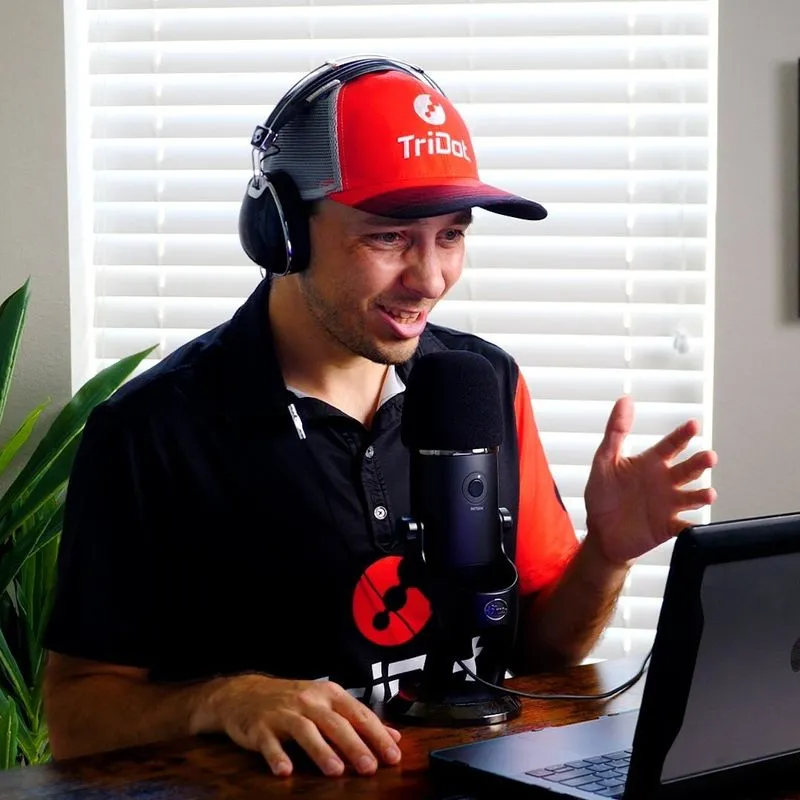
The Official TriDot Podcast 2025 Holiday Gift Guide


Inspired by the passion many triathletes have for shopping, we proudly present the official 2025 TriDot Podcast holiday gift guide! Whether you are a new or seasoned athlete, getting new gear or replacing something old, our team has ideas for you! Coaches Ken Presutti and Ben Sommerville join Andrew Harley and Vanessa Ronksley to share their favorite gift ideas for any athlete across multiple budget amounts. From training calendars and planners to bike upgrades, recovery tools, triathlon coaching, and even strategic gift cards; after listening to this you will have a plentiful wish list!
TriDot Podcast Episode 322
The Official TriDot Podcast 2025 Holiday Gift Guide
Andrew Harley: Welcome to the TriDot Podcast. Fun episode today. This is the official 2025 TriDot Holiday Gift Guide. We've got a roundtable with four members of the TriDot team, all coaches and triathletes ourselves, all here to share five items each that we think could make a great add to your own gift wish list. So trying to give you some shopping ideas here, from us here at TriDot. I'm joined by Podcast Host Vanessa Ronksley, Coach Ken Presutti from Victory Multisport, and Coach Ben Sommerville from Precision Coaching, all here to share some triathlete gift ideas, five each, 20 in all. I'm Andrew, the average triathlete, voice of the people and captain of the middle of the pack. We treat the show like any good workout. We'll start with a fun warm-up question, settle into our main set conversation, and then wind things down by having one of our coaches answer an audience question on the cool down. Lots of good stuff. Let's get to it.
Announcer: This is the TriDot Podcast, the triathlon show that brings you world class coaching with every conversation. Let's get started with today's warm-up.
Andrew Harley: Now guys, as we slip into holiday season, no matter what holiday our listeners and viewers celebrate, there's often gift giving of some kind throughout the holiday season. So that's what this episode is for. We're putting this out in mid-November to try to beat the Black Friday sales and beat the holiday shopping rush, get some ideas out there. But while we're slipping into this end of the year holiday season, a lot of triathletes start thinking about their races for the following year. And so my question to you guys today, as our warm-up question, what is one race in 2026 that you, personally, have on the calendar, or plan on putting on the calendar, that you're most excited to participate in? Coach Ben, what are you racing? What are you excited about?
Ben Sommerville: I'm so glad you asked me this question this week rather than before, because I've only just been entering races. So first up for me is a half marathon local to me, in my local city of Bath, in England, next March. It was a race I was meant to do this year, but I had to pull out because of an injury. So I'm going back for vengeance, targeting a sub 1:20 for the first time. So I'm really excited, and all my friends and family can be there because it's just down the road.
Andrew Harley: Yep. Great pick. Glad we recorded this week and not last week. Vanessa, what are you doing in 2026 that you're most excited about?
Vanessa Ronksley: Well, I am most excited about not being injured, which has been the fall of plenty for me. So I have one race that's currently on the calendar, and I'm crossing my fingers that I'll be able to do it. I will be at Little Elm in Dallas, in March. I think it's in March. I don't even know when it is.
Andrew Harley: Yeah, March. Yeah.
Vanessa Ronksley: Yeah? Okay good. That's the one that I'm looking forward to. There's a big team meetup. There's going to be tons of TriDot people there, and it's going to be really, really awesome.
Andrew Harley: I was late to the party on signing up, admittedly, so I looked it up, Vanessa. The beach where the start line is, is 21 minutes from my house. So that is local to me, right up the road. And when I saw them announce it, I was like, “Oh, that's close. I got to do this.” And a couple of weeks goes by and you plan on registering, and you just don't circle onto the computer to do it. And all of a sudden they announced it sold out. Well, darn. Maybe 2027 that'll be my answer for this question. But I'll be there hanging out, but I won't be racing personally. Coach Ken, 2026, what are you doing?
Ken Presutti: IRONMAN Lake Placid always calls to me, and I owe it something. After five flats last year on the course, I've got my tubeless tires ready to go for this upcoming season. So I think that's the big one that I'm most looking forward to.
Andrew Harley: If any race, if you have it go like that, right? Just that poorly on the bike, five flat tires, you got to go back and get that redemption story. That's a feels like an easy answer here, for you, but we wish you all the best with your tubeless tires. This answer for me, I have not raced since my daughter was born. My daughter, at the time of this recording, is two and a half, coming up on three years old. And I've played some sports, and I've been running, and I've been cycling upstairs in the pain cave, but I have not gotten back to the race line, and I plan to in 2026. And so I know, beyond a shadow of a doubt, I am going to do the Caveman Triathlon in Flower Mound, Texas. It's in my hometown. It's six minutes away from my house. It's a local sprint here, in the Dallas/Fort Worth area. I think it's in late March or early April, but I'm going to do that one for sure. It's close to my house, and I've never done it. And I’m like, manI just want to do a triathlon again. So, let's sign up for that, easy slam dunk, right up the road. So that's my answer here. There's a 70.3 that I, in theory, might be doing. I'm not going to say which one it is right now in case it doesn't happen, but I know you guys are planning your 2026 races. You got your eyeballs on something. Let us know. We’re going to throw this question out on all of the social media platforms. If you're watching us on YouTube or Spotify, pop your answer, right now, in the comments below, and let us know from all of the races you're doing in 2026, which one are you most excited about?
Announcer: Let's go.
Andrew Harley: On to our main set where whatever holiday you celebrate in the holiday season, we're going to give you some ideas of some potential triathlon gifts that you could add to your personal wish list. And you see on the screen, we got a roundtable of four of us. And so we're just going to kind of go around the horn, and I'm going to lob it to one coach. They're going to share the five ideas they've brought, and then we'll go to another coach and hear the five ideas they brought, and another coach, and another coach, and then we'll be done for the day. I'm a gentleman, so we're going to start off ladies first with Vanessa. Vanessa, what are the five items? And go one-by-one. Ben, Ken, if you got a thought, if you got a joke, if you got a response to what Vanessa's sharing, please jump in when you want to. Vanessa, what's your item number one?
Vanessa Ronksley: Alright, so it was really tough to only choose five. I think I sent a message to the group beforehand, it had like 30 things on it. So I chose my favorite ones. So the first one is Monkey Sox. If you are not aware of Monkey Sox, they are so awesome. They have bright colors. They're really special. Each sock in a pair is different, so they're not technically a pair, which is part of why I love them so much. And they're just really, really fun. And they're comfortable to put on. They last a really long time. I haven't worn out a pair yet, and I just love Monkey Sox. But on the same line as socks, another one -- because they are harder to get in North America, the Monkey Sox, you have to ship them over from the UK. So all of you UK people, this one's for you, the Monkey Sox. But icebreaker Socks are pretty amazing, too. They don't ever smell. You can wear them like five times in a row. I've only tested this out once on a hike, where we hiked for like seven days and couldn't wash the socks. Anyways, icebreaker Socks are amazing. They offer a full warranty, so if you get a sock like 10 years later -- or a hole in your sock 10 years later, you can just email them and say you got a hole in your sock, and they'll give you a credit. But do keep your receipt, if you're going to do that. So that's the first one. Socks. I just love socks they’re amazing.
Andrew Harley: Guys, what do you think of socks? Ken, Ben?
Ben Sommerville: You can’t go wrong. I think I was going to put it on my list, but I'm so glad Vanessa said it, because otherwise I would still be talking about socks. I’d talk about socks for an hour. Spotty, stripy, pink, green, just anything and everything. The more outrageous, the better. And obviously Monkey Sox, obviously, being in the UK and Europe, I can get hold of Monkey Sox really easy. They're such a great company, great socks. And the best thing is that all the profits and proceeds go towards a really incredible Multiple Sclerosis charity, here in the UK, doing some really amazing work for some incredibly vulnerable people. So if you are in the UK and looking for a pair of cool socks, please do go and have a look at Monkey Sox. It's a great choice.
Ken Presutti: I've not heard of Monkey Sox before. I will absolutely look them up. I think socks are so important and can cause so many issues when you have the wrong socks. But I file this under the category, very similar to a lot of my nutritional items. I hate spending my own money on things like these, but I really want then.
Andrew Harley: Such a good point.
Ken Presutti: So this is such a good gift because it's something I need, it's something I'm going to use, but I don't want to spend my own money on it.
Andrew Harley: Something that's cool -- I hadn't heard of Monkey Sox either. So, Vanessa, as you were talking, I went to their website. They have a subscription box. So if you're into that kind of thing, you could get your loved one, or the triathlete in your life, a 6-month or 12-month subscription box, where every month they get a new pair of socks in the mail from Monkey Sox. That's a cool touch. That’s a really cool touch. Subscriptions can be really cool, and Monkey Sox does that. Vanessa, what is your item number two?
Vanessa Ronksley: Alrighty. So we're going to the bookshelf for this one. And one is not a very traditional book. There's an item called the Believe Training Journal, which I find to be very enticing. I'm the type of person who likes to write about all of the sessions that I do and to record things. And this training journal seems like a really great place to keep it all in one space. You get a year of undated weeks. There's an annual calendar, there's worksheets, there's quizzes, there's tips, there's tools. And you can record any aspect of your training journey. And there's just really lovely mindfulness tips, and lessons, and takeaways that are added in there. So I think that it's a really wonderful addition for any kind of athlete in someone's life.
Ken Presutti: 100% agree. And I, personally, try as best as possible to maintain a journaling habit. And at a very minimum, I have my athletes always journaling reflections from each of their workouts into their training app. I think that’s important for me to see, as a coach, but I think there's more power in writing out pen and paper and having it really resonate with you. So I love it.
Ben Sommerville: Another -- Vanessa, you're so good at this. Like, you said it was hard, but you've got this nailed.
Andrew Harley: Next year will be Vanessa's 39 Christmas Gift Ideas. It'll just be her. No me, no Ben, no Ken, just Vanessa, solo, for a full hour. Vanessa, what is your idea number three?
Vanessa Ronksley: Okay, so as most of you know, I'm living in a very cold climate. And so winter running is a thing. It's cold, and you need to get outside and get some fresh air and some sunlight, but you have to dress properly. So I have two items for the winter runner in you. And this can apply to, it's just dark outside. Maybe you have to run early in the morning or later in the evening. And for me, it gets dark, currently, at 4:45pm, so ‘later in the evening’ is pretty early. So the first one is the Night Ize Slap Armband. And it is a band that you legitimately slap on your arm. And it's a rechargeable LED light, and they have them in red and in yellow, and they're super fun. And they blink. There's one that blinks, and then there's one setting that is just totally regular flat. And it's very fun. I sometimes even just put it on for my kids when they're outside and it's dark out. So that's number one for winter running. And then number two, this is legitimately on my Christmas list, because I already have the Night Ize Slap Armband. But there are these convertible running gloves, and they're called TrailHeads -- TrailHeads Convertible Running Gloves. And so basically, there's a glove that goes on your hand, and it's breathable, it's warm, it provides protection. But then there's this little cover that you pull over, and it's waterproof. And so if it's snowing or raining, then you have this waterproof cover so your hands aren't getting soaked. And when you're not using that cover, you can stuff it in the back of the glove. And they're just a really cool product. They also have this magnet that keeps the mittens, and gloves, together so you don't lose them. Which is something that I struggle with regularly, is losing all sorts of things. So that's something that I definitely want to see from somebody. TrailHeads Run Gloves.
Ben Sommerville: I think the next best thing after those reflective items and gloves -- the best present I think I've ever bought my now fiancé, last year for Christmas, was a headlight for running outside. And you can even put it on your bike helmet. And it probably cost me 30, 40 pounds, maybe $50 in total. I think I got it off Amazon. Spoiler alert to my fiancé, who probably thought I got it from somewhere fancy. Just Amazon. But it's one of those LED strip lights, so it goes right across your forehead. You could pretty much blind someone who's living five miles away. But just for that safety and that comfort, going out for those early morning runs here in the UK, where it's both dark early in the morning, and unfortunately, dark in the early- to mid-afternoon. So best present I've ever gifted my triathlete fiance was a headlamp. So for winter running, those of us who are brave enough to do it, get a headlight on. It's for safety more than anything. But also, they look really cool. You like an IRONMAN from a distance, because you've got this really bright light.
Andrew Harley: Vanessa, your item number four.
Vanessa Ronksley: Okay. So I'm thinking if you've been living in a cave, you might not have noticed that the front-end hydration systems that are popping up on the triathlon scene are crazy. So I was looking into it. There's some people that say it's a bunch of baloney, and whatever, forget it. But there's other people who are like, hey, it's going to save you eight watts if you put your bottle systems in front of you, in between your arms. So there are these things called BTA Systems, which is a bottle, or between the arms bottle system. And if it's going to gain like one watt -- I don't know how hard it is for you guys to gain watts on your FTP, but it's really hard. So I'm going to take one or two watts wherever I can get. So there's a couple of options that I looked into. The one was the AeroGain Double Bottle BTA System, and it looks pretty good. It seems like it's pretty popular, a little bit more challenging to fit onto various types of cockpits. So you have to make sure that the one that you're looking at actually fits the specifications of your bike. But then there's another option that's called the TriRig BTA Elevator, which looks like it allows for a wider variety of setups. And not only can you put on one bottle, but you can put on two, three, or four. Four bottles up front. And it's got -- you have to get a special – what is it called. It’s called the Multi-Bottle Rail. So you have to get the elevator and then you have to get the multi bottle rail, as well. But when you get that, you can literally put four bottles on the front. So drink to your heart's desire with this setup. And it looks pretty cool. So I think that's the thing that I'm going to put on my Christmas list.
Andrew Harley: I've got a TriRig item on my list. I've talked about TriRig in the past. They do some cool stuff. But yeah, all of the pros, all of our age groupers that are going to a lot of the big races, qualifying for stuff, I've seen in more and more people's pictures, more sophisticated-- There's always been between the arm hydration solutions, right? But they're getting more and more sophisticated, where they're more streamlined, they can hold more bottles. And I don't know about you guys, for me, if that bottle is right in front of my face, I drink way more, and way easier, without breaking aero, than if I have to reach behind me and get the bottle, reach below me and get the bottle. I am much more likely to not under drink, and to drink properly, if it's right in front of my nose. And so I love the solutions that are coming out that help people do that a little bit better. Vanessa, your idea, item number five?
Vanessa Ronksley: Okay, five is my favorite number, and I left my favorite item for number five. It is some form of red-light therapy. I've been doing a lot of research on recovery, and rhythms that happen within the body that are natural, and how we can improve them, and all sorts of things. So red-light therapy seems to be something that has been researched. I went on to Google Scholar and found a bunch of articles that were talking about the pros and cons of red-light therapy. So this one, if you don't know anything about red-light therapy, I'll just give you a few areas of where it might be able to help you. So it might help with recovery between sessions. It might help with your mitochondrial efficiency, which basically means that you're going to delay fatigue in sustained workouts. Then you might also have more efficient energy production during aerobic workouts, as well. It can also impact your VO2 max, which is kind of cool. And so that would allow you to sustain higher outputs at faster aerobic efforts. And then the last area, which I think we're starting to clue into as endurance athletes, is sleep and the importance of sleep. And some studies have shown that red-light therapy can help with sleep. And it's mostly because of the effect that it can have on melatonin production and regulating the cycle during which melatonin is produced and then decreases throughout the night. So red-light therapy is definitely something that I'm interested in. There's a wide range of prices. You could literally spend $100, you could spend thousands of dollars on these different items. So you just have to be a little bit mindful about which one you're looking at. Generally, we're looking at quality over quantity, and you want to look for one that has a decent amount of light range within that red wavelength. But some of the red-light therapies that are coming out actually have up to four different types of wavelengths. And so it seems like there's the infrared and there's the red light, and the infrared is going to be able to penetrate a little bit deeper. So the one that I have my eye on has these four different wavelengths, and you can get them in these mini travel sizes, that's a tiny little panel. And then you can also get ones that are on stands, that are like three feet tall, that affect more of the surface area of your body. But for it to work, it has to shine light onto the area of your body that you're trying to target. So if you're going for your full body, then stand in front of it, front, and then turn around and stand in front of it on the back, and you'll be done in 10 minutes at a time. So that's what I'm thinking of in terms of a huge item. And I showed my husband. I'm like,”Hey, look at what I'm putting on my Christmas list.” He's like, “As if I'm going to get that for you.”
Andrew Harley: Of course. Of course you did. The first time I was exposed to this was actually when I first joined the TriDot staff. We had a lot of staff gatherings in person. And Elizabeth James, who's a TriDot coach, professional triathlete, comes on the podcast regularly, she had just broken her hand. She raced Tri Waco, an olympic distance race in Waco, Texas. She won the race, overall female. Along the way on the bike, she had a wreck, broke her hand in a couple places, finished the race as the overall winner, and then, “Okay, let’s go to the hospital to fix my hand.” So for a while, she had a little hand device, where she would slip her hand in it, red light would shine all around her hand. And so, like you said, it was for that specific need. That was the perfect device for her recovering from that injury. Ken, Ben, what do you guys think about red-light therapy?
Ken Presutti: Sounds super cool. It's been on my eye – it’s been on my radar, I should say, to take a look at for a long time, but just haven’t--
Andrew Harley: It's been on your eye. Yeah, the red lights.
Ken Presutti: Yeah we don't want it on the eye, I don't think. I think it's something that I've long heard a lot of biohackers that I follow talk about. And it's just one of those things I've not been able to get to yet. So maybe it'll go on my Christmas list, as well.
Andrew Harley: Alright, we're going to move on to Ken, and see what five items Ken brought to our little gift guide for the year. Ken, item number one?
Ken Presutti: Awesome. So first one is going to be Bivo water bottles. I was exposed to these during IRONMAN Lake Placid last year. They're stainless steel. You can get them insulated. And I see Vanessa is holding--
Andrew Harley: Vanessa’s got one. She's got one on camera.
Ken Presutti: Yes. And I first picked it up, I thought, no, this will never work. It's hard. I want to be able to squeeze the water into my mouth, or whatever I'm drinking. Nothing is going to be able to come out of here. The technology that they use is phenomenal. You pop open that lid, and the water just flows right out. And then you don't have to worry about having nasty water bottles, when do I need to throw these away and buy new ones because the plastic is leaching into my beverage. And so I just feel so much better about using the Bivo water bottles. I got two of them. They're a little pricey, and so they make a perfect gift because, again, it's one of those things I don't necessarily want to spend money on myself, but if somebody else is giving it to me, or I'm giving it to somebody, I think it's a great item.
Andrew Harley: I've got the website up.
Vanessa Ronksley: I obviously love them.
Andrew Harley: Vanessa has one on her desk. So Vanessa, is this kind of your go-to bottle of choice, as well?
Vanessa Ronksley: I decided to give it a go, just because when someone tells me that something is amazing, I usually listen very well, and then I go purchase that thing. I went in to buy a package of honey stickers at a bike shop, and I came out with a $60 water bottle. So it's really awesome. It's very lightweight, as Ken said. I have dropped it. It does have a dent in it, which is typical of any kind of metal bottle. But I also like that you can get the insulated or the non-insulated. I went for the non-insulated, just because it allows for more liquid to be in the bottle. The insulation takes up a little bit of the volume. But yeah, it's great. It's really awesome. And I do really like that if you put electrolytes in it, it's really easy to clean. And the taste of that electrolyte is gone when you wash it. It doesn't stay in the bottle. And so you know that it's actually getting clean, which is awesome.
Andrew Harley: This is going on my list right now. I've got it up. This solves a problem I've been trying to solve, because I like the traditional sports bottle. I like that nozzle. But then a lot of people are encouraging consumers to go away from plastic things that touch your food and go towards things like metal. So I've been using some Yeti water bottles, just around the house. But then when I get in a sports application, I want that sports bottle lid. And so this is the water bottle I've been searching for and didn't know existed. So thank you, Ken. I've got it up. They're 44 bucks on their website, and if I order three, I get free shipping. So I got to just get three right now.
Ken Presutti: And the other thing is, too, they also fit in your bike cages really well. I never thought I would bike with that bottle. It fits in the cages so well. It's so lightweight. It keeps things cold. I use it. I don't use it in racing, but I use it for all other training.
Vanessa Ronksley: Can I just say here, too? It's so much better for the environment. Yes, it's better for us, but it's also better for the environment. It's going to last a lot longer than plastic. And then it doesn't have to go in the landfill and not degenerate for the eternity. So love it.
Andrew Harley: I'll spend the rest of the episode picking what colors I'm going to buy with my three for free shipping. Ken, what is your item number two?
Ken Presutti: Item number two. Everybody has loved the Shokz Headphones for a long time. I did as well. But I always thought, do I do the OpenRuns? Do I do the Swims? I stayed away from the Swims because you had to use MP3 mode, but they now have an OpenSwim version that you can use Bluetooth with, too. So it's perfect for running, and swimming, and phone calls. So I love them for in the pool. I love them for -- when I'm on the bike, I don't want anything over my ears. I just want to be able to answer a phone call, if somebody calls, easily. And they work fantastic, with the Bluetooth, for that. So that is my number two, the Shokz Headphones OpenSwim model.
Andrew Harley: Yep. I've got a pair of Shokz. I got my wife some Shokz, just for her to use for her work calls. And she loves them, I love them. Lightweight, easy to do all the workouts with. And there's a couple brands now doing these bone conduction headphones. And I don't think you mentioned they're bone conduction. I hate – I know Apple AirPods are like the thing, everybody’s got them, they come with so many devices. I personally hate having an earbud in my ear. I always have. But then obviously, the headphones I'm wearing now to podcast with, these are not practical for a workout. And so yes, the bone conduction Shokz Headphones are so wonderful. So lightweight, so easy to use. Great suggestion here, Ken. And something a lot of triathletes might not already have to amplify their workouts. Item number four, Ken? Item number four?
Ken Presutti: Item number four?
Andrew Harley: Item number three. We are on your three. Sorry. I’m rushing you.
Ken Presutti: Item number three, okay, they’re different. Item number three is, how about me? Right? So I'm a form coach.
Andrew Harley: Ooo! Buy Ken.
Ken Presutti: I teach Pool School. I work with athletes on chi running and improving their form. And I obviously don't mean me necessarily, but if you can get your special somebody time with a form coach, a swimming coach, a pass to one of our Pool Schools, maybe some lab testing, just some of those things that are a little bit more hands on, one-on-one with somebody, I think they have huge benefits. I know I've worked with a number of different athletes whose spouse gave them a package and said, hey, go work with Coach Ken on improving their form. And we've been able to get them into their early racing season. Again, they've got now January through March to focus on form, and then they can take that form and translate it to speed for their upcoming summer schedule.
Andrew Harley: Ben, what do you think of this?
Ben Sommerville: I'm so glad Ken mentioned this, because I had something similar on my list to start with. I was going to suggest maybe a sweat test that PF&H do, Precision Fuel & Hydration. Any kind of test or hands on opportunity. Some of the best gifts I've ever received were when someone's booked me in to go and see a running gait specialist so I could go and have my running form analyzed. They could recommend the best types of shoes. I took my physio notes with me so they had an understanding of my injury history, and they were just able to best recommend how to improve my running for whatever my goal was. At the time, it was preparing to go from short distance triathlon onto middle distance. So obviously I needed to learn how to become a little bit more rigid and durable over longer periods of time. So getting that hands on time, finding out what kind of shoes would be good versus not good can make a huge amount of difference. And yeah, sweat test, if you want to go into really granular detail about how you perform under pressure, sweat test is really cool. Obviously, you can't just necessarily do that at home on your own. You've got to go and see someone. But if it's available in your area, then it's potentially something for sure to put on your wish list. It's a great gift.
Andrew Harley: And there's a lot of folks that maybe don't have the budget for month-to-month, a full time coach. And we just forget that an option is a more a la carte situation, right? Where you just see a coach a couple times, or you see a specialist once, to get eyes on your swim form, eyes on your run form. It's like going to a bike fitter, right? You go to a bike fitter to get your bike fit situated for the next six months or so. Let's get some guidance so that then you can take some principles you've learned. Obviously, a month-to-month full time coach is an ideal solution but just having some lab testing or having a coach look at you once or twice. This is a really great suggestion, Ken, that I really like. That will benefit a lot of people that they might not have thought of themselves. So good one there. Ken, now we're on your four. Now we are on idea four, from Coach Ken.
Ken Presutti: Alright. Item number four. Vanessa talked about a journal; I also like a good planner. And so for me, I really like the Full Focus Planner. And that's because it's not just a planner, but it's a whole productivity system. And I'm actually a certified coach through Full Focus, too. So when I'm coaching my athletes, oftentimes we dive into what are your highest priorities, how do you balance life and athletic training, and then how do you set up your calendar to support that balance, so that you're not running out every weekend, destroying the relationships that you've invested so much time in building up, and that you're able to make sure that triathlon and endurance training, as a whole, adds to your life and doesn't just add stress to your life. So a good productivity system, whether it's through Full Focus or through -- I think there's a really fun calendar out there called the Big Ass Calendar, where you can draw out the whole year, just to help you think about what's coming up, what's important, how do I prioritize those things so that I can get the right training in when I'm able to do it?
Andrew Harley: One thing that I've looked at for our household a couple times, and haven't bought yet but plan to at some juncture, is – I’m looking at it right now, online -- the Skylight Calendar Photo Frame. Wonderful reviews, seems like it's a great product. It's that, but it’s digital. And so you just add a meeting to the app, you add an event to the app, and then boom, it appears on the calendar on your wall. And I think of that when you mention this, because it's been on my radar to buy for us for a while. And you can have your training sessions on there, you can have your family events on there, keep everything in perspective at a glance. And Ken, much like the journal you're mentioning, help you keep your priorities in order. Vanessa, this is a big thing to you. I know you love thinking about tools like this, so jump in, girl.
Vanessa Ronksley: How can you tell? I'm like, oh my gosh. So I have the, what is it Ken, the Full Focus Planner pulled up on my computer. I'm looking at it, I'm like, “Oh my gosh, I love writing things down. This is so amazing.” And then Andrew comes on and he talks about his calendar and I'm like, I don't like apps. Like, I'm done with computers. I need to start getting back to writing, because I love writing. But then you say it just shows up on the wall, Andrew? That's incredible. Now I have to go look this up. What's it called again?
Andrew Harley: The Skylight Calendar Photo Frame. There's a 27-inch one that goes on the wall, and it's expensive. They have little countertop ones that are 15 inches that are a little cheaper, but they do the same thing. I'm drawn to the wall one, because it's going to replace what we already have on the wall, and I like spending money, so it's a problem. But anyway. Ken, I think you have one more left. What is your idea number five?
Ken Presutti: Bring it home. So same thing. After you've got your calendar planned out and you've got all of those things that you're trying to prioritize, what -- at least for me, what I found I didn't have time for was lawn care.
Andrew Harley: Hot dog. Talk about it.
Ken Presutti: Yeah, right. So if Saturday comes around, and I got to spend two hours in the yard, and then I got to spend another three hours training, and then we've got soccer practice, we've got dinner plans, we've got friends -- just taking that grass, lawn care, off the table for me freed up two hours, made things a lot less stressful. So if you've got somebody in your life that's a triathlete -- also probably somebody that you care about, and you want to spend more time with them -- maybe you can find some of those things that they might not personally love to do and find ways to help alleviate that. So maybe it's a lawn service. Maybe it's somebody to help take care of the house a couple days of the week. Maybe it's -- I think there's an app called Hamper that will handle laundry. Just some of those things that, again, you don't necessarily -- you know your person doesn't get joy out of doing. You don't have time to do them. How can you make things a little bit easier for them, so that they can fill their life with the things that do deliver that joy?
Ben Sommerville: I think what this calls back to is the fact that just time is the greatest gift that someone could give to us. And also at the same time, we could give to somebody else. So if we take the less, sort of, ‘asking’ mindset away and think about what we could give, as triathletes, to our loved ones -- there's a big temptation over the holiday season, if you do have time off work, if you're lucky enough that's your situation, that we go, we get fully locked in and do more training because we have the time. I think, to be honest, in moderation, everything is a balance, of course. The best gift we could give to our loved ones is not going and doing a crazy amount of training just because we can, and actually not taking for granted the quality time we could spend with our loved ones. That's what Christmas and the New Year always boils down to for me. I will take myself out, when I have time off, to do some training and to enjoy my fitness, my wellness, my activity. But at the same time, I tell myself and my athletes, just don't worry about it. Spend time with your family, because that's the greatest gift we can give to everybody else. I'm not very good at asking for things. I'm much more of a giving person. So I always think about that first and foremost. What can I gift my loved ones? They've already not seen me all year because I spend 10, 15 hours a week training, 40 plus hours of working, and I've got a week off at Christmas. The least I could do is spend some time with them, even if it's just sat on the sofa and just having a laugh.
Vanessa Ronksley: Yeah, I love that, Ben. You're always so full of such deep wisdom, and it makes me seem very trivial when I am about to say that I would love this kind of gift. I think it is so amazing. It is so thoughtful. And if someone gifted me some kind of a service like that -- I write in a gratitude journal every single night, and if that service were on that day, I can assure you that I would be grateful for that every single time it happened. If someone cleaned my bathroom for me, it would be amazing.
Andrew Harley: It's not as instantly gratifying as getting a new pair of carbon-plated running shoes, but when it finally hits, you're like, oh my god, that was amazing. Alright, over to Ben. Ben has brought five additions for this list. Ben, what's your number one?
Ben Sommerville: Number one for me, and there's a little bit of a pattern here, because I don't like asking for things. So when it comes to Christmas and the holiday season, I ask for something that I want, something that I need, something to wear, and something to read. So it's a nice little song and rhythm there. So the number one, something that you want, I think most triathletes, if they haven't already, a new bike, obviously, but it's not necessarily attainable for everybody to be gifted a new bike. And so when I thought about this, I got gifted – when I got a Whoop, I got gifted Whoop, because I'm quite a technological nerd, so I love the idea that you can't manage what you can't measure. So if the person is really into that, gifting them a Whoop subscription for 3, 6 months might be something that really helps them really tune into their body, really tune into their lifestyle, in sort of collaboration with a great journal or a planner. A Whoop can make a huge amount of difference, just to how you manage your day-to-day energy, and your time, and your training progression. So I love Whoop. I think it's a really great tool for those who really want to lock in on the details. So that's my number one, something that you might want.
Andrew Harley: Alright. Ken, Vanessa, what do you guys want? Red-light therapy for Vanessa?
Vanessa Ronksley: A bike. Obviously. A bike.
Ken Presutti: A bike. Obviously. Obviously, a bike. I love my Whoop, too. So I mean, even if you know somebody has a Whoop, or some other type of subscription, you sneak in and you figure out how to extend that subscription for them, I think that's a really cool gift.
Vanessa Ronksley: I also think, if you go in with something heavy, like a bike, and you say that's the thing that you would love to have, and then you also put something on, like a red-light therapy tool that seems a lot less expensive, you might actually get it. But if you ask for just the red-light therapy tool, they'll be like, “Well, that's way too expensive.” But start high. Start high with your request, with a new bike.
Andrew Harley: I'm playing this back for PJ, your husband, just so he knows your strategies. Ben, what is your -- something you need was the second category you said. What's your something you need?
Ben Sommerville: Yes. Number two, something that you need. And when I think about the triathlete in all of our lives, and even the triathletes ourselves, it's the everyday essentials. It's a good product of a good shammy cream, a good anti-chafe balm, because whether you're swimming, cycling, or running in the winter or during the summer, you're probably going to be using it every day, if not most days. And a good shammy cream, a good anti-chafe balm, will make a huge amount of difference. I can't tell you how much I go through. And I'll spare the details, but it's just an everyday essential. And you don't have to spend a lot of money, but I'm sure every endurance athlete will appreciate a top up of their shammy cream, for sure.
Andrew Harley: Yeah. Yep. Great idea. And even if you don't know what their go to is, there's so many products out there. If I got one that I haven't tried before, I'd be excited about that. I'd be like, “Hey, I haven't tried this one. Maybe it's better than what I'm using now, or maybe I'll like it.” And so, yeah, shammy cream sounds like a really fun stocking stuffer. Can we say that? Coach Ben, number three.
Ben Sommerville: Number three, which is something to wear. And it's not an ugly Christmas jumper, although we've all probably got one somewhere, lying around. Something to wear for me, I think every cyclist, and triathlete, would appreciate a good pair of bib shorts. You can never have too many. They can never be too outrageous in color or design. Just as long as they've, A, got good padding, they fit really well. Whether you use them indoors, outdoors, you can just never have too many pairs of bib shorts. It's on my Christmas list every single year. I think my parents just sort of buy them because they know they have to, rather than because they want to, because they know I will use them. And every cyclist, or triathlete, will appreciate a good pair of bib shorts, whatever brand. I'm sure we've got some favorite brands amongst the coaches here, so interesting to hear what bib shorts you guys like.
Andrew Harley: Ken, what's your favorite bib shorts?
Ken Presutti: I mean, if you've got the right shammy cream, it doesn't matter what bib shorts you're wearing.
Andrew Harley: There you go.
Ken Presutti: I like Zoot. I like anything from Zoot and Rocket Science. Those are the two for me.
Andrew Harley: Vanessa?
Vanessa Ronksley: Yep, same. Zoot is my first pick, absolutely. And Rocket Science is good, too.
Andrew Harley: I've discovered over the years, when I first came in, I would buy everybody's most padded bib shorts, thinking more padding is better. And I've found over time, I get along better with next to no padding. You want something there, but not a lot. So I've got some bib shorts from Varlo, from Zoot, from Rocket Science. I've got a pair from REI, that's REI brand. And I get along with all of them, just so long as when I buy them, they have a very thin shammy. Number four from Ben? Number four?
Ben Sommerville: Yes, number four, which is your something to read. I'm a huge book fan. As I said earlier, I'm writing a book at the moment, or trying to, painstakingly, I might add. And so obviously, you've got to really know the person, what kind of books they like to read. I like to read about sporting people who've got great stories, who have overcome great challenges, or can help me in some way. So someone who the gift receiver, who you intend to give to, might look up to or is interested by. Some great reads for me, I've got a couple of examples here, not least because he was part of my inspiration to get into the sport, is Relentless: Secrets of the Sporting Elite by Alistair Brownlee, a great British triathlete icon. Just because he's hilarious, Geraint Thomas from the professional cycling peloton, recently retired, he has a series of books called The World of Cycling According to G, Mountains According to G. And it's just a great global look at just the ins and outs of the professional cycling peloton, if that's something that is of interest to the person you're gifting to. And then a couple of really shameless plugs for some close friends and mentors of mine: Achieve the Impossible by Professor Greg White. It's a really great book just about how to set and achieve goals and take on challenges in a really accessible way. So whether someone's new to triathlon, or they've been in it for a long time, sometimes just a fresh perspective can be really helpful. And then, again, I'm really about the details and the granular stuff. So talking about a Whoop or using planners, really optimizing your time and your effort. This one, Inside Out by Charlie Unwin. He's worked with the England football squad, with Gareth Southgate, quite famously, when they were doing really well before they ended up doing not really well. It's just a great book on training your mind and mental fitness. It's a term he uses a lot. So we train our physical fitness, but how can we best train our mental fitness? So that's called Inside Out. And you can get all these books on Amazon, or local retailers. They're usually pretty good books. And at this time of year, there's always a cheeky little holiday season discount on most of these, because they're quite famous authors. So a good book, especially if you've got time off over Christmas, put your feet up, have a mince pie if that's what you're into, and read a good book. It's always worthwhile.
Andrew Harley: A book and a mince pie. What a combo.
Vanessa Ronksley: You know, Ben, yeah, sounds pretty amazing. I actually have books on my list. I have a running list of books that I would love to read, and I can just assure you, Ben, I've put all of those on my book list. And some other ones that I've just recently put on my book list: Unlimited, The Ultra Mindset, The Champion's Mind. And then this one is coming from a different sport, from the world of basketball, but I think the Kobe Bryant book, called The Mamba Mentality, looks really, really fascinating. And I do love looking at mentality, or mental aspects of sport, from different areas because they often have different strategies that can be implemented, and sometimes those strategies can be adapted and work even better than what's suggested in the endurance world or anything like that. So those are the books that are on my list, in addition to the new ones that Ben just put on there, as well.
Andrew Harley: Number five from Ben. So this is Ben's fifth and final addition to the list.
Ben Sommerville: Yes. And this is my bonus addition, because I've run out of rhyming things. I've gone past wear and read. So now I'm just on the bonus. The theme's ended. This is just me being cheeky and adding one more and asking for one more thing. And I think for the sentimental amongst others, gift givers and then the gift receivers, potentially, if someone's done a really big race for the first time, or they've been to a world championships maybe, or completed their first IRONMAN -- one of those really cool medal display frames where you can put your medal, your bib number in, again, if you were one of the lucky few who qualified for a World Championship, perhaps your certificate and little token that you get from IRONMAN, for example. Spoiler alert to my fiancé, she's probably going to be getting one of these next year, after she competes in Nice for her first 70.3 World Championships. So I hope she's both listening and not listening to the podcast, as she hears this. We'll see. Because I just think it would be a really great way just to help someone who's special in your life just remember, look back on something. However hard the training was, or however hard the day was, look back at it and put some pictures in it and go, “That was our day. That was my big day, where we did something really cool.” I've never had one, so maybe it's a secret hint to somebody to get me one. Maybe.
Andrew Harley: Hint, hint. Everybody in the Precision Coaching family over in the UK, Ben needs some sentimental medal frames. Yeah, good idea. I think one that even came up last year, on our last year version of this episode, and one worth coming up again because what a great thing. We spend so much time in this sport training and racing, and to celebrate our biggest wins is part of the point, right? And something really cool here. Alright, so taking inventory, we're 56 minutes into this podcast recording. We got a few minutes left. I wanted to spend more time on y'alls and less time on mine, so I'm going to try to fly through my five. Hold your commentary towards the end. I'll get through my five. Each of you can share what sticks out to you from my list, and then we'll move on to the cool down. But my five -- my number one, I bring this up every year because I think it's so essential. I have it right on my desk, is my latest pair of TriRig Scoops. So I promised there’d be a TriRig product. I’m holding the box on camera. Basically, what these are -- if you are a triathlete and you have old-school, rounded, pretty small elbow cups on your bike, there are so many brands now that have more real estate, more padding, bigger, longer things that you can sink your arms into when you get aero on the bike. And whether you're doing a sprint that's going to take you 30 minutes or an IRONMAN that's going to take you six hours, being comfortable on the bike elevates the experience so much. And these days, for anywhere from $50 to $1000, you can upgrade what your arm cups are like. Some of them are carbon, lightweight, and have padding all the way up the length of your arm to your shifters. Some of them just have a little bit extra real estate down by your arms. But there's a lot of products, like the ones I have on the screen right now, at a variety of price points that can just give you more comfort on your arms. You have such few touch points between you and your bike that if you can upgrade one of those touch points, upgrade one of those touch points. I cannot recommend TriRig Scoops, or a similar product, enough to helping you be comfortable in aero, stay in aero longer, and have a better time on the bike ride. My number two. There's always new recovery products coming out, and I usually just kind of stick to my foam roller and let that be that. But I saw this right here, it's called the Chirp RPM, and here's the Chirp RPM Mini. It's like a foam roller that rotates for you and massages whatever you're trying to foam roll. And I saw this footage on their website of somebody rolling this thing across their calf and rolling their foot along it, and those are the two things that always hurt me the most. My calves are always tight, and my feet are dainty and are always hurting. And I saw, I think on Instagram, an ad for these, and I just let out a moan, like, “Oh my god, I need that in my life.” It might be helpful, it might not, but I've got to try it. This is going on my list. The Chirp RPM or the Chirp RPM Mini. There's obviously tons of different types of machines out there that can help stimulate your muscles' recovery in different ways. We've talked with BJ Leaper on the podcast before. You got to find what works for you. I want to buy one of these and see if it works for me. So that's going on my list. I wanted to show that one, that I’ve seen. Number three on my list. I'm going to put on the screen the Zwift Ride Smart Frame. I don't have this. I have Garmin's version, which is the Garmin Tacx Neo Indoor Trainer Bike. Admittedly, that's $4,000. I got a deal on it, through working for TriDot, that made it more affordable. But I can tell you this: getting off of my actual bike in my pain cave has been a revelation. Not putting that sweat on my bike, not putting that time on my bike frame, not having to take my bike on and off the trainer every time I want to ride indoors, outdoors, indoors, outdoors, indoors, outdoors. Letting my outdoor bike just chill until it's time to go right outdoors and keep it outdoor ready. And having something like the Zwift Ride Smart Frame you’re seeing on the screen be my indoor solution, it's not cheap, but it's been a revelation for my pain cave. It makes it that much easier for me to go upstairs, hop on, and start pedaling with power. Garmin and Wahoo both have a really expensive, full on bike version of this. I'm putting the Zwift one on the screen. I think it's $700 at the time of this recording. It's a much more affordable price point. I've seen TriDot Coach Jeff Raines has this exact model. I've seen a lot of people start posting on Instagram they have this exact model, so it's clearly good enough. But man, just having this thing in your pain cave, kitted out, ready to ride at a moment's notice, without putting those miles on your actual expensive, carbon bike frame, I think it's a great investment if you're just looking for that kind of a toy, and that's in your budget. Number four. These have been on the market for a little while, and I've just never pulled the trigger on them. But I'm more interested lately, and I'll tell you why. This is the brand Omius. They have the Omius hats, and they have the Omius headbands. They have these little rock crystals. We talked to their founder in Kona a few years ago, and he was telling us how the crystals help draw heat away from your body. And so you put them on touch points on your body where your body dissipates heat while working out, and it helps you dissipate heat faster. So you've seen a lot of pros, and some age groupers, have the headbands and have the hats. I've never wanted that on my head. I've just never -- and that's why I've never bought this. I've been interested. I don't do well in the heat as an athlete, so this has interested me. I think I've seen enough pros wearing this that I believe that it works, because why would they wear that extra weight if it didn't do something for them? So anecdotally, it seems pretty proven. I've just never wanted it on my head. But they've just come out with new versions. There's like a neck wrap, where it gets those crystals on your neck, which is a spot where your body dissipates a lot of heat. And they have a wrist wrap that gets those crystals on your wrists, which is a spot where your body dissipates a lot of heat. And so I'm very interested, specifically in those two models. But if you haven't tried this, and you're somebody who does summer races, does races where it's going to be hot, getting these rock crystals on your head, on your wrist, on your neck can just be one more tool in your arsenal to keep yourself that much cooler while you're in race mode. Last thing for me, I'm going to kick it over to you guys for feedback: gift cards. I know a lot of people are hesitant to give somebody a gift card because they think it's just cheap and lazy, and maybe sometimes it is cheap and lazy. “I don't have an idea, here's a gift card.” To me, a gift card is empowering. You give me a $25 gift card to a store I like to shop at, that's empowering me to go do a shopping trip where I'm going to spend more than that and have an excuse to do so. Please give me a gift card. I love a good old fashioned gift card, especially if it's to a place. And a couple of my favorites: TheFeed.com, Running Warehouse, Tennis Warehouse, TriSports.com, PlayTri.com, REI -- any of these stores that sell a lot of different endurance sports products. I'm on board for any monetary amount of gift card to that store, because I'm going to go and overspend it, but feel like I'm getting a deal because of the gift card you gave me. What do you guys think of my list? That's it. I'm done rambling. That took me eight minutes.
Vanessa Ronksley: I love your list.
Andrew Harley: That took me eight minutes. Man, longer than--
Ken Presutti: I've not seen the Zwift frame yet. I'd be super interested in checking that out. Man, it is such a nice price point for what you're getting there. Absolutely will share that, even with my athletes who I know have been looking for an indoor solution.
Vanessa Ronksley: Yeah, I have it pulled up on my screen when you mentioned it, Andrew, and it looks amazing. For that kind of a price point, you pair that with a trainer, and boom, you are not having to switch back and forth, as you said, between bikes. And mostly, which is the most important point, is you're not putting miles, or even just kind of fake miles, on your bike -- wear and tear from the sweat, and inside stuff, and chains, and all that kind of stuff. So I agree with that. And I do have one of the Omius headbands. I ended up with the visor version, and I love it. I think that it's really wonderful to get that nice, refreshing cooling sensation when you throw water on it at the aid stations. It's really great. And I've used it even in cold races, to be honest, not even hot races. I've used it, because it just provides that tiny bit of stimulus from somewhere else to smack you in the face and be like, okay, what am I doing? Oh yeah, there we go. Keep running, keep going. So I like it for that fact, as well. It's a little bit of a distraction and gets you thinking about something else, even if it's just for a moment.
Ben Sommerville: I'm just blown away by all of our suggestions. Andrew, your list is amazing.
Andrew Harley: Thank you.
Ben Sommerville: I've seen so many pros wearing this headband that I'm starting to look at it and go, is this something that I might be interested in? Can't go wrong with a gift card. I had a gift card earlier this year, for my birthday, for my local bike shop. I can't tell you how good it feels, for some reason, to use a 50-pound gift card on many thousands of pounds worth of bike. But I had a gift card, so it made it that much more affordable, apparently. But yeah, just kudos to all of us. It's been such a great set of suggestions. If somebody wants to gift me all of these for Christmas this year, I will be a very happy triathlete.
Andrew Harley: Ben needs a personal angel investor in his triathlon career.
Ben Sommerville: I do, yes. I have expenses. I am high maintenance. I'm a very high maintenance triathlete. Yes.
[Transition Sound Effect]
Andrew Harley: Onto the cool down of today's show, we'll try to keep this brief because we talked about some fun things to buy. Triathletes love shopping. It just goes hand in hand, this sport and shopping. So a quick cool down question from our audience. Today's question was posted in the I AM TriDot Facebook group by Sandra, and she said, "Does anybody in the group have experience with one leg being slightly shorter than the other, particularly as it pertains to the bike? What interventions worked well? I constantly find myself sliding slightly to one side of my saddle. I do have a bike fit in the near future, but looking for some ideas on this before my fit." And Coach Ben, I know you personally, fitting your athletes and working with your athletes, have some experience in this area. So what would you tell Sandra?
Ben Sommerville: Yes, so I do have a lot of personal experience with this. I have this exact issue myself. So the first thing to you, Sandra, is you're doing the right thing, and you've made the smart choice, by going and getting a bike fit. Unfortunately, there aren't a lot of interventions that I would recommend as a not-bike fitter to do beforehand. Obviously, it's not an ideal situation. It can be uncomfortable, it can be painful, it can lead to just unenjoyable cycling. If you are feeling that discomfort and that leg discrepancy, what I will share with you is the outcome of my bike fit, and what kind of things you might expect, and how you should approach that. If you are experiencing pain as a result of your leg discrepancy when you are on the saddle, just think back and take a mental note. Is it when you're climbing in the saddle, out of the saddle? Is it when you're sat in the saddle? Is it painful? Is it just uncomfortable? And then just make sure your bike fitter does a really good biomechanical assessment well before they put you on the bike. And the kinds of things that they might suggest and they might implement -- Andrew and I have both got experience of this. First and foremost, they may put what we call a shim between your cleats of your shoe and the actual base of your shoe. They will just screw into the middle. I have one, it's quite a thin one, so I’ve not necessarily got a huge discrepancy.
Andrew Harley: Show and tell. I’ve got mine right here.
Ben Sommerville: Great. So he's got quite a large one, I've got quite a thin one. But mine, in particular, has got an angle to it.
Andrew Harley: So the blue is the shim.
Ben Sommerville: I think, obviously, your overall bike fit, so where and how you're sat on the saddle, will have a huge impact. A lot of it can also be due to your range of motion, mobility, flexibility in a range of joints from your hip down. So, as I said, I've got a shim both for height a little bit in my right foot on my right shoe, but it's also got an angle to it to try and raise my ankle -- or not raise my ankle, but just bring my foot up, because my arch drops a little bit. So those kind of tiny details you should expect to see as a result of your bike fit. There's not much more that I'd want to recommend in the meantime because the bike fit is the real expert, and they'll be in the best place to help you.
Announcer: Thanks for listening to the TriDot Podcast. Help us out by leaving a rating and review on your listening platform of choice. For more opportunities to learn from our coaches, check out our YouTube channel and follow @TriDotTraining on social. Ready to train with us? Head to tridot.com and get started for free. Until ne